
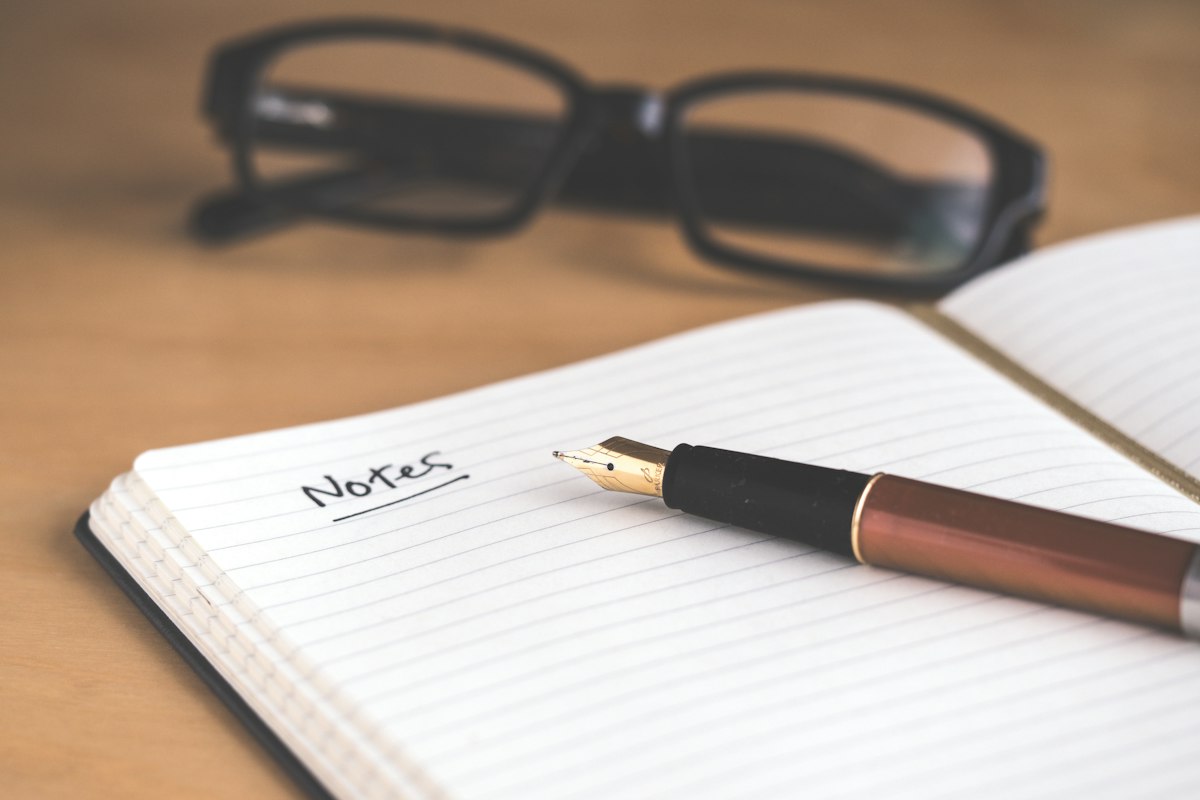
The Page Before the People
There is a version of social confidence that looks like walking into a room full of strangers and charming every one of them. That version exists, but it is rare, and for most of us, it is not the goal. The confidence most people actually want is quieter: the ability to show up as yourself, to say what you mean, to listen without performing, and to leave a gathering feeling better than when you arrived.
That kind of confidence does not come from social skills workshops or motivational podcasts. It comes from knowing yourself — understanding your patterns, your anxieties, your needs, and the stories you tell yourself about who you are in relation to other people.
Journaling is one of the most effective tools for building that self-knowledge. And while it might seem like a solitary practice — the opposite of social connection — the research tells a different story. People who journal regularly tend to have better relationships, greater emotional intelligence, and a stronger sense of social wellbeing. The page, it turns out, is not a retreat from people. It is preparation for them.
The Research: Why Writing Changes Your Brain
Pennebaker's Expressive Writing Studies
The modern scientific case for journaling begins with Dr James Pennebaker, a psychologist at the University of Texas at Austin. In 1986, Pennebaker ran a deceptively simple experiment: he asked participants to write continuously for 15 minutes a day, over four days, about their deepest thoughts and feelings regarding a stressful or traumatic experience. A control group wrote about neutral topics.
The results were striking. The expressive writing group made significantly fewer visits to the doctor in the following months. They reported decreased anxiety, lower blood pressure, reduced muscle tension, and less pain. Through the 1980s and 1990s, Pennebaker expanded this research, discovering that people who experienced trauma and kept it secret were more likely to develop health problems — and that writing about those experiences reversed the pattern.
By 2009, over 200 studies had been published in English-language journals building on Pennebaker's original work. The evidence is now robust: expressive writing reduces anxiety, mediates symptoms of depression, and relieves post-traumatic stress, among other benefits.
What makes Pennebaker's work particularly relevant to social confidence is the mechanism. Writing about difficult experiences does not change the experiences themselves — it changes your relationship to them. You process emotions that were previously stuck on a loop. You create narrative structure from chaos. You move from feeling overwhelmed to feeling understood — even if the only person doing the understanding is you.
Dr James Pennebaker's research, now supported by over 200 published studies, shows that writing about thoughts and feelings for just 15 minutes a day can reduce anxiety, lower blood pressure, and decrease doctor visits. The key is writing about genuine emotional experiences, not surface-level observations.
Self-Reflection and Wellbeing
A study published in Behaviour Change by Cambridge University Press examined how self-reflection moderates the effects of journaling on psychological wellbeing. The research found that people with a disposition toward self-reflection gained significantly more from journaling interventions — but also that the practice of journaling itself cultivated greater self-reflection over time. In other words, journaling both benefits from and builds the capacity for self-awareness.
A separate study on positive affect journaling, published in the journal JMIR Mental Health, found that participants who wrote about positive experiences showed improvements in mental distress and wellbeing, with the intervention group reporting greater social integration by the end of two months. That last finding is crucial — journaling about positive social experiences did not just make people feel better privately. It made them more socially connected.
Gratitude Journaling and Social Autonomy
Research on gratitude journaling has uncovered something unexpected. Regularly writing about things you are grateful for does not just make you more appreciative — it increases your autonomy. Specifically, it boosts confidence in your own opinions and your ability to be independent of social pressures. The researchers suggest that gratitude practice helps you focus on your core values, which in turn makes you more confident in who you are and less reactive to external judgement.
This is a powerful finding for anyone who struggles with social anxiety or people-pleasing. The practice of noticing and recording what you value does not make you more compliant or agreeable — it makes you more authentically yourself.
How Journaling Improves Your Social Life
The research paints a clear picture, but the practical mechanisms are worth spelling out. Here is how a regular journaling practice translates into better friendships and greater social confidence.
Processing Social Anxiety
Social anxiety thrives in the unexamined mind. The same worries cycle endlessly — Did I say something stupid? Do they actually like me? Why did I feel so awkward? — without ever resolving. Writing these thoughts down does something neurologically different from thinking them. It externalises them. It creates distance. It turns a spiralling internal monologue into words on a page that you can look at, evaluate, and — often — recognise as distorted.
By documenting social interactions and your feelings about them, you begin to identify patterns and triggers. Perhaps you always feel anxious before events but fine once you arrive. Perhaps certain social settings drain you while others energise you. Perhaps your anxiety peaks on specific days or in specific contexts. This kind of pattern recognition is the first step in managing social fear, and it is almost impossible to achieve without writing things down.
Tracking Friendship Patterns
Friendships, like any relationship, have patterns that are often invisible from the inside. Who initiates contact? Who cancels? Which friendships leave you energised and which leave you depleted? Where are you investing time and where are you neglecting connections that matter?
A journal creates a record that your memory alone cannot. Over weeks and months, you begin to see the shape of your social life — not as you imagine it, but as it actually is. This clarity can be uncomfortable (you might realise you have been neglecting someone important, or that a friendship you cling to is consistently one-sided) but it is always useful.
If you have been exploring the relationship between social routines and mental health, journaling gives you the data to design a social life that genuinely supports your wellbeing, rather than one that just fills your diary.
Gratitude for Connections
Gratitude journaling focused specifically on relationships is one of the most underrated social practices. Writing three sentences about a friend who made your week better, a conversation that surprised you, or a moment of genuine connection does something subtle but important: it trains your brain to notice the good in your social life.
Most of us have a negativity bias when it comes to social interactions — we replay the awkward moments and forget the warm ones. A gratitude practice counteracts this, building a mental archive of positive social experiences that makes you more likely to seek connection and less likely to withdraw.
Preparing for Difficult Conversations
Journaling is exceptionally useful before a difficult social situation — whether it is a conversation you have been avoiding, an event you are dreading, or a boundary you need to set. Writing about what you want to say, what you are afraid of, and what outcome you are hoping for clarifies your thinking in ways that rehearsing in your head cannot.
If you have been working on setting boundaries without damaging friendships, try journaling about the boundary before the conversation. You will often find that the act of writing reveals what you actually need, which may be different from what your anxiety is telling you.
Journaling Prompts for Social Reflection
Here are ten prompts designed specifically to deepen your understanding of your social life. You do not need to use them all — pick whichever resonates and write freely for ten to fifteen minutes.
-
What social interaction this week left me feeling most energised? What was it about that interaction that worked?
-
Is there someone I have been meaning to contact but keep putting off? What is holding me back?
-
When I think about going to a social event, what is the first feeling that comes up? Fear? Excitement? Obligation? What story am I telling myself about what will happen?
-
Who in my life makes me feel most like myself? What do they do (or not do) that creates that feeling?
-
What is one friendship I have been neglecting? What would it take to reconnect?
-
Think about a recent social interaction that felt awkward or uncomfortable. What actually happened, factually? Now — what story did I add on top of the facts?
-
What social situations consistently drain me? Are there patterns — time of day, group size, location, type of conversation — that I could plan around?
-
Write about a moment of genuine connection you experienced recently. Where were you? What were you doing? What made it feel real?
-
If I could design my ideal social week — the right balance of people, solitude, activity, and rest — what would it look like?
-
What am I grateful for in my friendships right now? Be specific.
Do not worry about quality when journaling. The research is clear: the benefits come from the act of writing, not from writing well. Spelling, grammar, and coherence are irrelevant. What matters is honesty and regularity. Ten minutes, three times a week, is enough to see a meaningful difference.
The Best Journaling Apps
If you prefer digital to paper — or want something you can use on the go — these apps are well-suited to social reflection journaling.
Day One
Day One is widely regarded as the gold standard for digital journaling. Available on iPhone, Android, iPad, and Mac, it offers a beautiful, distraction-free writing experience with end-to-end encryption protecting every entry. You can add photos, locations, and tags to entries, making it easy to search and review your social reflections over time. The passcode and fingerprint lock mean your journal stays private. There is a free tier, with premium features available via subscription.
Daylio
Daylio takes a different approach — it is less a traditional journal and more a mood tracking app with journaling capabilities. You can log your mood multiple times per day and tag activities, building a colourful visual map of your emotional landscape over time. This makes it particularly useful for tracking how social interactions affect your mood. If the idea of writing long entries feels daunting, Daylio's tap-and-tag approach lowers the barrier beautifully.
Presently
Presently is a simple, completely free gratitude journal with a minimalist interface. It is open-source, keeps all data locally on your device, and has no ads, subscriptions, or distractions. It is only available on Android and has a deliberately basic feature set, but for focused gratitude practice — particularly gratitude for social connections — it is a lovely, unpretentious tool.
The Best Physical Journals
There is something about putting pen to paper that a screen cannot replicate. The tactile experience of writing by hand has been shown to engage different cognitive processes than typing, and many people find that a physical journal encourages deeper, more honest reflection.
Leuchtturm1917
The Leuchtturm1917 is a favourite among serious journalers. Founded in Germany over a century ago, the brand produces notebooks with numbered pages, two woven ribbon bookmarks, and paper that resists ink bleed — a crucial feature if you use fountain pens. The A5 size is ideal for journaling, and the dotted grid option gives you structure without constraining your writing. Available from most good stationery shops across the UK.
Moleskine
Moleskine needs little introduction. The Italian brand's classic notebooks — with their rounded corners, elastic closure, and expandable inner pocket — have been used by writers and thinkers for decades. They are slightly smaller than Leuchtturm1917 in their "large" format (13 x 21 cm versus A5), and the paper is thinner, but they are beautiful objects and widely available.
Stamford Notebooks
For something properly British, Stamford Notebooks produces handbound journals in Stamford, Lincolnshire, using bespoke British-made paper. Every notebook is handcrafted using traditional bookbinding techniques, and the quality is exceptional. They are more expensive than mass-produced alternatives, but if you want a journal that feels like an heirloom, they are worth every penny.
Vent for Change
If sustainability matters to you, Vent for Change makes notebooks in the UK from recycled materials. They combine ethical production with genuinely attractive design, and a portion of proceeds supports education projects. Their journals are a thoughtful choice for anyone who wants their writing practice to align with their values.
Building the Habit
The biggest challenge with journaling is not starting — it is continuing. Here are practical strategies for making it stick.
Anchor it to an existing habit. The most reliable way to build a new habit is to attach it to one you already have. Journal with your morning coffee. Write for ten minutes after you brush your teeth at night. Journal on the train. The anchor provides a trigger that makes the practice automatic.
Start absurdly small. If ten minutes feels like too much, write for two. If a full page feels overwhelming, write three sentences. The goal is consistency, not volume. You can always write more once you sit down — but you have to sit down first.
Do not reread immediately. Write and close the journal. Rereading too soon invites self-criticism, which kills honesty. Review your entries once a month, looking for patterns rather than judging the prose.
Keep it private. The benefits of journaling depend on honesty, and honesty depends on privacy. Do not share your journal with anyone unless you actively want to. This is a space where you can be completely yourself, without performance or curation.
Forgive the gaps. You will miss days. You will miss weeks. This does not mean you have failed. Pick the journal up again whenever you are ready. There is no streak to protect and no score to maintain.
The Bigger Picture: Know Yourself, Show Up Better
There is a line often attributed to Socrates — "know thyself" — that has become so familiar it has lost its force. But in the context of friendship and social confidence, it is genuinely practical advice. The better you understand your own emotional patterns, your needs, your triggers, and your values, the more honestly and generously you can show up for the people in your life.
Journaling does not make you more interesting at dinner parties. It does not give you witty one-liners or teach you how to work a room. What it does is quieter and more fundamental: it helps you understand who you are, what you need, and what you have to offer. And that understanding — that grounded, unperformative self-awareness — is the foundation of every genuine friendship.
If you have been looking for ways to support your social wellbeing or wondering why connection sometimes feels like hard work, the answer might not be out in the world at all. It might be on the page in front of you.
Research consistently shows that journaling for just 15 minutes, three to four times per week, is sufficient to see measurable improvements in mood, stress levels, and social wellbeing. You do not need to write daily — consistency over time matters more than frequency.
Pick up a pen. Open an app. Start with one of the prompts above, or simply write whatever comes to mind. The people in your life will benefit from the clarity you find — even if they never read a word.