

In short
Exeter's best book clubs include Silent Book Club (no set book, just reading together), the Waterstones Exeter Book Group, the Devon and Exeter Institution's members' group, and the library's Shared Reading Group. Writers can join Exeter Writers or the Silent Writing Club at Exeter Phoenix.
Why Book Clubs Are the Perfect Social Format
There is a reason book clubs have endured while so many other social formats have come and gone. They solve, almost by accident, the three biggest problems adults face when trying to build a social life: frequency, structure, and something to talk about.
A good book club meets regularly — usually monthly — which gives you the kind of repeated contact that turns acquaintances into actual friends. It has a built-in agenda, so nobody needs to carry the conversation or worry about awkward silences. And the book itself acts as a bridge between people who might otherwise never have found each other. You do not need to have anything in common beyond a willingness to read the same book and show up to talk about it. That is a remarkably low bar, and it works.
For anyone who finds open-ended social events exhausting — the pub nights where you are expected to just chat, the networking events where every conversation feels transactional — a book club offers something more forgiving. You are there for the book. The friendships are a side effect. And for many people, that removal of social pressure is exactly what makes genuine connection possible.
Exeter, as a UNESCO City of Literature, is exceptionally well served. Whether you want a formal reading group with curated lists, a silent reading session in a cosy venue, or simply a reason to browse an independent bookshop and stay for an event, there is something here for you. And beyond the city itself, Southwest Devon has its own thriving literary calendar — from the Budleigh Salterton Literary Festival on the Jurassic Coast to Appledore's 20th-anniversary celebrations in North Devon.

The Exeter Book: Why Our Literary Heritage Runs a Thousand Years Deep
Before we get into the 2026 book clubs and festivals, it is worth pausing to understand why Exeter holds its UNESCO City of Literature status at all. The answer lives inside a glass case in Exeter Cathedral, and it is a manuscript so important that UNESCO placed it on the Memory of the World Register in 2016.
The Exeter Book — formally Exeter Dean and Chapter Manuscript 3501, sometimes called the Codex Exoniensis — is a 10th-century anthology of Old English poetry copied by a single scribe around the year 970. It contains roughly forty poems, including the elegies The Wanderer and The Seafarer that inspired both Ezra Pound and JRR Tolkien, alongside nearly a hundred riddles (several of them gleefully bawdy). It is one of only four surviving manuscripts of Anglo-Saxon poetry anywhere in the world, and almost certainly the oldest. The other three live in the British Library, the Bodleian in Oxford, and the Capitolare Library in Vercelli. Exeter, somehow, kept hers.
The manuscript was donated to the cathedral by its first bishop, Leofric, who died in 1072, and it has been cared for in the Cathedral Library ever since. That is an unbroken thousand-year custodianship of a single book — the kind of continuity that is genuinely rare. UNESCO cited it as "the foundation volume of English literature" when it added Exeter Book to the Memory of the World Register, and it is the anchor point for Exeter's 2019 City of Literature designation.
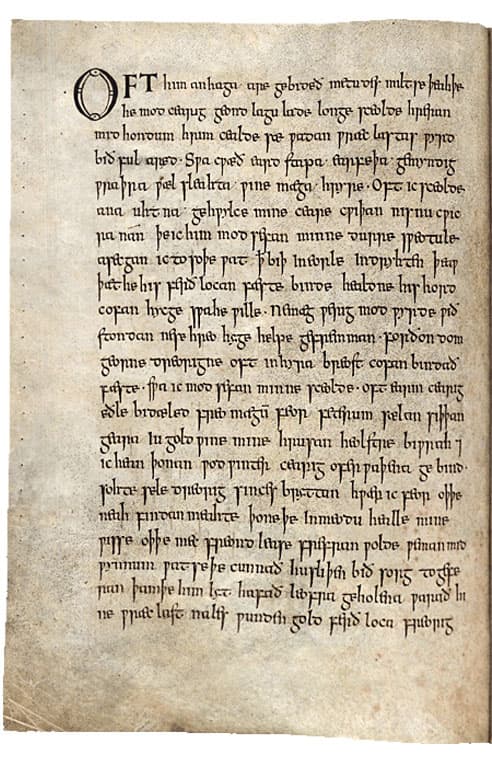
You can see it for yourself. Exeter Cathedral's new Treasures Exhibition opened in 2024 in a purpose-built space, and the Exeter Book sits alongside the cathedral's foundation charter of 1050, medieval wax votives found nowhere else in England, and Exon Domesday — the only surviving source for parts of the Great Domesday Book. Admission to the cathedral includes access to the exhibition and a guided floor tour. For anything more serious, the Library and Archives run research appointments Monday to Friday, 10am to 4pm, and host regular "In Focus" study sessions throughout the year — check the cathedral's events listing for upcoming sessions.
If you have lived in Exeter for years without seeing the Exeter Book, treat the Treasures Exhibition as homework. Knowing what is in that glass case changes how the rest of this guide feels. You are not just joining a monthly reading group — you are participating in a literary tradition that has been quietly compounding here for over a thousand years.
The Book Clubs
Silent Book Club Exeter
If the phrase "book club" makes you think of having to finish a specific book by a deadline and then defend your opinion to a room full of strangers, Silent Book Club will come as a relief. The format is beautifully simple: bring whatever book you are currently reading — novel, non-fiction, graphic novel, poetry, audiobook, textbook, anything — sit down, and read in companionable silence for an hour. Then, if you feel like it, stay for a drink and a chat about what you have been reading. Nobody is judging. Nobody has assigned homework.
Silent Book Club was founded in San Francisco in 2012 by Guinevere de la Mare and Laura Gluhanich, and has since spread to chapters in dozens of countries. Exeter City of Literature launched the local chapter in April 2024, and by 2026 it has expanded to three sessions a month — a telling sign of just how much demand there is for this kind of low-pressure social reading.
The current 2026 schedule is:
- First Wednesday of every month, 6pm to 8pm, at Topsham Brewery
- Third Monday of every month, 6pm to 8pm, at Topsham Brewery
- Last Thursday of every month, 6pm to 8pm, at 12 Bar Music & Social
Every session follows the same rhythm: 6pm to 6.30pm to arrive and settle in, an hour of silent reading from 6.30pm to 7.30pm, and then half an hour of post-reading chat, drinks and often pizza until 8pm. It is free to attend. Exeter City of Literature can even arrange a book token if you would like to buy a new release to read at the session — they genuinely want people there.
It is especially good for introverts, for people new to the city who want a gentle way in, and for anyone who simply misses the feeling of reading in a room full of other people who love books. The atmosphere is warm and unpretentious. You will leave having had a genuinely restful evening and — if you want it — a good conversation.
Silent Book Club is one of the easiest social activities in Exeter to turn up to alone. There is no expectation to talk, no assigned reading, and no pressure to perform. Just bring your book, find a seat, and read. If you are new to the city and looking for a low-stakes way to meet people, this is an excellent first step.
When: Three sessions per month (first Wednesday, third Monday, last Thursday). Format: Bring your own book, read in silence, optional socialising afterwards. Cost: Free. Best for: Introverts, solo attendees, anyone who wants a social evening without the pressure.
Waterstones Exeter Book Group
Waterstones Exeter at Roman Gate runs a long-standing monthly book group that is open to everyone — no booking required, just turn up. The group reads a mix of contemporary fiction and non-fiction, with the current month's pick displayed in store and available to buy with staff recommendations alongside it. The group meets on the first Thursday of each month from 6.30pm to 7.30pm — worth confirming in store, as bookshop groups do move.
What makes the Waterstones group work is its accessibility. It meets in a bookshop, surrounded by books, with staff who are genuinely passionate about reading and happy to chat about what is on the shelves. There is no membership fee, no waiting list, and no expectation that you have read the entire book from cover to cover. If you got halfway through and want to talk about why you stopped, that is just as valid a contribution as a detailed literary analysis.
The Exeter branch also runs a separate Science Fiction and Fantasy Book Group each month — a newer addition that has been building a loyal following — plus regular author events, book signings, storytimes for children, and even a board game night. It is worth keeping an eye on their events page or asking in store what is coming up; the staff will happily point you toward events that match your interests.
Where: Waterstones Exeter, Roman Gate, 252 High Street, EX4 3PZ. When: First Thursday of each month, 6.30pm–7.30pm (main book group); SFF group runs monthly. Cost: Free. Best for: Casual readers who want a no-commitment book group in a welcoming space.
Devon and Exeter Institution Members' Book Group
The Devon and Exeter Institution is one of Exeter's most treasured and least-known cultural assets. A subscription library and learned society founded in 1813, it occupies a beautiful Grade II listed building on Cathedral Close and houses a substantial collection of books and periodicals. If you have never been inside, it is worth joining for the building alone — the reading rooms look out onto the cathedral, the spiral iron staircases are original, and the quiet is the kind you cannot buy. But the book group is what will keep you coming back.

Members compile the annual reading list together, taking suggestions and voting on the final selection, which ensures a genuine variety of genres and voices. The discussions are thoughtful and wide-ranging, the kind of conversations that go well beyond small talk and into territory you would not reach at a pub quiz or a casual dinner.
The group has historically run at capacity with a waiting list, which tells you something about the quality. If you are serious about joining, put your name down and use the waiting time to enjoy the Institution's other benefits — the library itself, the programme of public lectures, the Saturday morning Bookworms Club for junior members, and, as of 2026, the fact that the DEI is now acting as a writing-space partner for the Exeter City of Literature Greenway Residency that runs from 25 September to 16 October 2026. Membership involves a one-off joining fee plus an annual subscription; ask the Institution about current rates and about access for University of Exeter students and staff.
Where: The Devon and Exeter Institution, 7 Cathedral Close, EX1 1EZ. When: Regular meetings (contact the Institution for schedule). Cost: Membership required (joining fee plus annual subscription). Best for: Serious readers who want intellectually stimulating discussion in a historic setting.
Exeter Library Shared Reading Group
Devon Libraries runs shared reading groups at Exeter Library on Castle Street, meeting every Thursday from 11am to 12pm in the Rougemont Room, alternating between shared reading and shared music weeks. These are not traditional book clubs — instead, a trained facilitator reads a short story or poem aloud, and the group discusses it together in the moment. There is no homework, no need to have read anything in advance, and no literary background required.
The format is based on The Reader's Shared Reading model, which has strong evidence behind it for improving wellbeing and reducing social isolation. The Reader is the UK's largest Shared Reading charity and runs hundreds of groups across the country. In Devon, the programme operates under the banner "Reading Together in Devon" and includes both the "Feel Better with a Book" sessions at Exeter, Tiverton and Cullompton libraries and dedicated Library Memory Groups for people living with dementia. It is funded by Devon County Council and is free to attend.
The emphasis is on the experience of reading together, hearing language spoken aloud, and responding honestly to what you have heard. It is gentle, inclusive, and often surprisingly moving. If you are retired, working from home, or simply have a free Thursday morning, this is a lovely way to break up the week with something meaningful and social. Contact Exeter Library on 01392 407027 for the next meeting date.
Where: Exeter Library, Castle Street, EX4 3PQ (Rougemont Room). When: Every Thursday, 11am–12pm, alternating reading and music weeks. Cost: Free. Best for: Anyone who wants a gentle, accessible introduction to reading as a social activity.
Exeter Writers (for the ones who want to write their own book next)
If joining a book club starts to make you want to write your own, Exeter Writers is the obvious next step. Founded around 1950, it is one of the longest-running writing groups in the UK, and in 2025 celebrated its 75-year anniversary with "A Celebration of Words with Exeter Writers" — a special one-day festival run in partnership with Literature Works. Members include both traditionally published and indie authors, short story writers, and non-fiction specialists.
The group runs a rolling programme of write-ins, manuscript readings with critique, and workshops led by members with particular areas of expertise or by guest speakers. They also run an annual Short Story Competition open to professional and amateur writers, and they sponsor the well-regarded Exeter Novel Prize. It is a serious, welcoming group — the kind where you leave a meeting with three pages of useful notes and a reason to actually finish the chapter you have been avoiding.
Where: Exeter. When: Monthly. Cost: Membership. Best for: Anyone who wants to go from reading books to writing them.
Raw Writing Meetup
If formal writing groups feel a step too far, the Raw Writing Meetup at The City Gate pub is a gentler entry point. This Meetup group gathers monthly on Friday evenings for relaxed, sociable sessions where writers, readers, and storytellers meet to chat about what they're working on. The emphasis is on connection rather than critique — think of it as a book club for people who are making the books. No experience required, and the atmosphere is warm and unpretentious.
Silent Writing Club at Exeter Phoenix
Exeter Phoenix, the city's independent arts centre on Gandy Street, now hosts a Silent Writing Club in collaboration with Raw Writing. The format mirrors the Silent Book Club concept — bring whatever you are working on and write in companionable silence for an hour, with optional socialising afterwards. Sessions alternate between lunchtime (12.30pm to 1.30pm) and evening (6.30pm to 7.30pm), and there is no need to book. It is a lovely way to break up a working day or ease into an evening, and the Phoenix cafe-bar is an excellent reward for an hour of focused writing.
Chapter 25 Book Club
The Chapter 25 Book Club meets on the second Wednesday of each month from 7.30pm to 9.30pm at Browns on Haven Road. It is a friendly, contemporary book club that draws a sizeable crowd and reads a good mix of fiction. If the Waterstones group is your first-Thursday option and you want a second-Wednesday option too, Chapter 25 fills the gap nicely. The two clubs rarely overlap on their picks, so you can easily belong to both without doubling up on reading.
The Independent Bookshops
Bookbag, McCoys Arcade
Bookbag is the kind of bookshop that makes you want to read more. Tucked into McCoys Arcade in Exeter's independent West Quarter, it has been curating a thoughtful, distinctive selection since opening in 2020 — fiction, non-fiction, children's books, nature writing, art, poetry, and zines, with a deliberate focus on local and global stories, writers of colour, women's voices, and LGBTQ+ books.
But Bookbag is more than a shop. It is a cultural space that hosts author events, book launches, poetry nights, and co-produces the Echoes festival, which celebrates stories from Africa and the diaspora in partnership with the University of Exeter and creative hub Roots Resistance. Since 2020 they have welcomed writers including Lyse Doucet, Paterson Joseph, Sheena Patel, Travis Alabanza, JJ Bola, Noreen Masud, and local talent like Fiona Williams, Sophie Pavelle and Poppy Okotcha. They also run creative projects that connect literature to the wider community — Poems For Hope and The City, a city-wide display of poetry, and Fore Street Stories, a writing residency that paired young people with local businesses.
Sign up to their newsletter for event announcements and their regular "What To Read" recommendation email. Even if you never attend an event, browsing Bookbag is an education in itself — the staff picks are consistently excellent, and you will always leave with something you had never heard of but immediately need to read.
Bookbag is at the heart of Exeter's independent literary scene. Their events tend to sell out, so sign up to the newsletter early. And if you are looking for a gift for a reader, the staff's personal recommendations are worth more than any algorithm.
Where: 7-10 McCoys Arcade, Fore Street, Exeter EX4 3AN. Website: bookbag.shop. Best for: Discovering new voices, attending intimate author events, supporting independent bookselling.
Waterstones Exeter
Beyond the book group mentioned above, Waterstones Exeter at Roman Gate is worth a visit in its own right. The Exeter branch programmes a solid calendar of author events and signings throughout the year, and the staff are genuine readers who will happily spend twenty minutes helping you find your next book. It is also the most central bookshop in the city, making it easy to combine a browse with a coffee or a meal nearby.
Topsham Book Fair
If you love the smell of secondhand paperbacks and the chance of turning up something rare, the Topsham Book Fair (formerly the Exeter Book Fair) runs three times a year — in May, August and November — at Matthews Hall in the centre of Topsham. It is the only PBFA (Provincial Booksellers' Fairs Association) fair in Devon, and dealers from across the South West bring a full range of secondhand, rare and antiquarian books, ephemera, maps and prints. Prices span the modest to the highly collectable. It is also an excellent excuse to spend the day in Topsham — combine it with a browse of the high street and a long lunch by the Exe.
Literary Events and Festivals
Exeter City of Literature Events
Exeter was awarded UNESCO City of Literature status in 2019 — one of the few cities in the world to hold the designation, and a recognition of its extraordinary literary heritage. The Exeter Book, as mentioned above, is the foundational artefact, but the city's literary credentials run deeper still: Charles Dickens based Mr Pecksniff in Martin Chuzzlewit on a Topsham resident, Thomas Hardy called the city "Exonbury" in four of his novels (including Jude the Obscure and The Woodlanders), and Agatha Christie, JK Rowling, Hilary Mantel and Michael Morpurgo have all lived, worked or studied in and around the city.
Exeter City of Literature programmes and supports a year-round calendar of events, from the Silent Book Club sessions to the annual Book Market, author residencies, the inaugural Greenway Residency (running 25 September to 16 October 2026 at Agatha Christie's former holiday home near Galmpton), and collaborations with Barcelona's UNESCO City of Literature. World Poetry Day on Saturday 21 March 2026 saw Exeter join Granada, Dunedin, Edinburgh, Heidelberg, Milan, Nottingham, Seattle and Wrocław for a co-ordinated global celebration — the kind of programming you would not stumble across by accident, but which is genuinely worth seeking out. Keep an eye on their website and social media for event announcements.
The Exeter Book Market, Exeter Quay
Every summer, Exeter City of Literature hosts the Book Market on Exeter Quay — a day-long celebration of independent bookselling that brings together a dozen indie bookshops from across Devon alongside free literary activities, author talks, crafts, and food and drink. The 2025 edition featured bite-sized bibliotherapy sessions, a wheelchair-powered letterpress, memoir-writing tasters, and a multi-sensory VR storytelling experience.
It is free to attend, and the combination of browsing independent bookstalls by the water, listening to authors talk about their work, and stumbling across activities you would never have thought to try makes it one of the best free cultural events in the city. The Author Tent is a particular highlight — intimate conversations with writers in a setting that feels personal rather than performative. The 2026 edition took place on Sunday 7 June 2026, 11am to 4pm, in its new home on Exeter Quay; the 2027 date has not yet been announced.
When: Summer, on a Sunday — watch Exeter City of Literature for the next date. Where: Exeter Quay. Cost: Free. Best for: Book lovers, families, anyone who wants a cultural day out in a stunning setting.
Quay Words at Exeter Custom House
Quay Words is a live literature programme hosted at the historic Exeter Custom House on the Quayside — a 17th-century building that is worth visiting in its own right. Delivered by Literature Works on behalf of the Exeter Canal and Quay Trust, and supported by Arts Council England, Quay Words runs a seasonal programme of writer events, workshops and literary salons throughout the year.
The salons are particularly good: atmospheric evening events in the Custom House's historic rooms with writers exploring stories of place, narrative threads through objects, puppetry and the everyday. Quay Words is a core project of Exeter as a UNESCO City of Literature, and also offers a bookable Writers' Room for people working on their own projects. Many events are free; contact [email protected] for availability.
University of Exeter Public Lectures
The University of Exeter runs a varied programme of public lectures, talks, and festivals that are open to everyone — not just students and staff. Topics range from science and climate to literature and philosophy, and the quality of speakers is consistently high. Many events are free, and the university's beautiful Streatham Campus is worth visiting in its own right. The Digital Humanities Lab at Exeter worked with the Cathedral to produce the digital Exeter Book in 2021, and the university continues to run public-facing research events on early English literature, medieval manuscripts, and contemporary fiction.
Check the University of Exeter events page or sign up to their public engagement newsletter to hear about upcoming lectures, family events, and festivals. It is one of the most underused cultural resources in the city.
Beyond Exeter: Devon's Literary Festival Calendar for 2026
One of the quieter pleasures of living in or near Exeter is how many major literary festivals sit within an hour's drive. Here is the 2026 calendar worth building into your diary.
Budleigh Salterton Literary Festival
The Budleigh Salterton Literary Festival — "Budlitfest" to regulars — is the big one on the East Devon coast, and in 2026 it runs across two dates. The Spring Weekend took place on 13-14 March 2026 at the Temple Methodist Church and Public Hall, and the main autumn festival returns from 23 to 27 September 2026, drawing impressive names from fiction, non-fiction, history and journalism to this elegant seaside town on the Jurassic Coast. Tickets tend to go fast for the biggest events — book early. And if you are already planning a trip, our Budleigh Salterton day-out guide covers the walks, the food and the pebble beach you should build the rest of the day around.
Appledore Book Festival
Further north, the Appledore Book Festival in this pretty North Devon maritime village is celebrating its 20th anniversary in 2026, with almost 100 events running across 10 days from 18 to 27 September 2026. The festival was founded in 2006 by Horrible Science author Nick Arnold as an emergency fundraiser to save Appledore Library from closure — which is possibly the most literary origin story a literary festival has ever had. 2026 also happens to be the Year of Reading, so the programme is especially ambitious. Confirmed returning patrons include Jeremy Vine, Ann Cleeves (of Vera and Shetland fame) and Veronica Henry. It is a full day's drive from Exeter but worth it — the setting, right on the Torridge estuary, is as good a place to listen to a writer talk about their work as any festival in England.
Ways With Words at Dartington — A Historical Note
If you are wondering why this guide does not list Ways With Words at Dartington, the answer is that it sadly ceased running events in 2024 after 30 years, citing "plummeting" ticket sales post-pandemic and the broader financial squeeze on arts events. It had been known as "the Glyndebourne of literature festivals" and its loss is genuinely felt. Dartington Hall itself remains an active cultural venue running classical music festivals and other events, but the literary festival is, for now, in the past.
The Regional Picture
Beyond the headline festivals, Devon's literary calendar includes Africa Writes Exeter, a rotating programme of one-off events at venues across the South West, and the residencies, festivals and writing prizes that Exeter City of Literature partners on throughout the year. Between Exeter itself and the coastal festivals in Budleigh and Appledore, there is genuinely something literary worth leaving the house for in almost every month of 2026.
How to Start Your Own Book Club
If none of the existing groups quite fit — perhaps you want to meet on a specific evening, read a specific genre, or gather in your own neighbourhood — starting a book club is simpler than you might think. Here is what works:
Keep it small. Six to ten people is ideal. Enough for varied perspectives, small enough that everyone gets to speak. Any larger and you end up with a lecture rather than a conversation.
Set a regular schedule. Monthly is the sweet spot — frequent enough to build momentum, infrequent enough that life does not get in the way. Pick the same day and time each month (first Tuesday, third Thursday) and stick to it. Consistency is what turns a one-off gathering into a ritual.
Share the choosing. Rotate who picks the book each month. This prevents any one person's taste from dominating and introduces books nobody would have chosen for themselves — which is often where the best discussions happen.
Choose a venue that works. Rotating between members' homes is cosy but can become burdensome. A pub with a quiet corner, a cafe with evening opening hours, or a community space like the Exeter Community Centre are all good options. Somewhere with drinks is ideal — a glass of wine loosens the conversation beautifully.
Do not stress about finishing the book. The purpose is conversation, not completion. Some of the best discussions happen when someone explains why they abandoned a book at page fifty.
Agree on the ground rules early. The unwritten expectations that trip up new book clubs are the same ones that trip up adult friendships in general: who replies to the group chat, how quickly you RSVP, whether it is OK to cancel on the day, who gets to choose the next book. We have written the whole unwritten rulebook in our guide to the etiquette of modern friendship — worth a read before your first meeting.
If you want to start a book club but do not know enough people yet, try attending a few Silent Book Club sessions or Waterstones book group meetings first. You will quickly find people who share your taste in reading, and a casual "would you be interested in starting a small group?" is all it takes.
How a Book Club Becomes a Dinner Club
There is a pattern that repeats in almost every book club we have heard about. It starts as a group of strangers meeting over wine in someone's living room to talk about a novel. Somewhere around month four, the wine starts to be accompanied by cheese — and if you are going to do it properly, you are going to want a board built from Devon's artisan cheesemakers: a bit of Quicke's clothbound cheddar, some Sharpham Brie, a wedge of Beenleigh Blue. Around month six, someone suggests they should all go out for a proper meal together after the discussion. And by the end of the first year, the book has become the excuse, and the dinner has become the point.
This is not a failure of the book club. It is the book club succeeding.
What is actually happening is the natural arc of a well-run social ritual. The book provides the structure that gets people through the awkward early months, when nobody knows each other well enough to hold a free-flowing conversation. Once the trust is there, once the running jokes have formed, once people know each other's kids and jobs and dogs, the book matters less and the people matter more. The group has done exactly what every friendship-building exercise is trying to do — it has used repeated low-pressure contact to manufacture genuine intimacy. The book was a trellis. The friendships grew up it.
This is also why shared meals and book clubs work on the same underlying mechanism. Both are what anthropologists call commensal rituals — activities that feel small and ordinary but are actually doing enormous social work beneath the surface. There is a whole body of Oxford research on why this is so effective, which we have written up in the psychology of sharing food. The short version: you show up regularly, you have something to talk about, you eat or drink something together, you leave feeling lighter than when you arrived. Do that twelve times in a year and you have built something that did not exist before.
If you are in a book club that is quietly turning into a dinner club, let it. And if you do not want to join a book club at all but you still want the same outcome — a small group of people, a regular evening, good conversation, a warm room — you are describing a supper club, and we can help with that.
Frequently asked questions
- What book clubs are there in Exeter?
- Silent Book Club Exeter, the Waterstones Exeter Book Group, the Devon and Exeter Institution Members' Book Group, Exeter Library's Shared Reading Group and Chapter 25 Book Club all meet regularly, alongside writing groups like Exeter Writers.
- What is Silent Book Club?
- A book club with no assigned reading: everyone brings whatever they are reading, reads quietly together for an hour, then chats. Perfect if you dread set-book deadlines or want a low-pressure way to meet readers.
- Are Exeter book clubs free to join?
- Most are free or the price of a coffee. The Devon and Exeter Institution group requires membership of the Institution; Waterstones and library groups are free.
- Why does Exeter have UNESCO City of Literature status?
- Exeter's literary heritage runs a thousand years deep — the Exeter Book, the oldest surviving anthology of English poetry, lives in the cathedral library — and the city's designation recognises that living tradition.
Books as Social Glue
There is something about reading that makes people more interesting to each other. When you discuss a book with someone, you are not making small talk — you are sharing how you see the world. A character's decision that seemed obviously wrong to you might seem perfectly reasonable to someone else, and understanding why reveals something real about both of you. That is the kind of conversation that builds genuine connection.
Exeter is a city that takes reading seriously without taking itself too seriously. From the UNESCO designation to the indie bookshops, from the cathedral archives to the silent reading sessions in city-centre venues, literature is woven into the fabric of the place. And that heritage does not just live in glass cases — it surfaces every week in a library reading group in Castle Street, every month in a pub in Topsham, every summer on Exeter Quay. Taking advantage of that — joining a group, attending an event, or simply sitting in Bookbag and letting the staff recommend something you would never have found on your own — is one of the simplest ways to turn a solitary hobby into a social life.
Practical Tips for Getting Started
If you have never joined a book club or attended a literary event, the barrier is almost entirely psychological. Here are a few things worth knowing.
You do not need to be a fast reader. Most book clubs meet monthly, which gives you four weeks to get through a single book. And at Silent Book Club, there is no assigned reading at all — you bring whatever you are currently enjoying.
Going alone is normal. The vast majority of people at these events arrived on their own. The format is designed for exactly that. If the idea still feels daunting, our guide to making friends at events where you don't know anyone has practical strategies that genuinely help.
Exeter rewards the curious. Between the best coffee shops in the city (several of which are excellent reading spots), the independent shops on Gandy Street, and the quayside walks that are perfect for post-book-club strolls, there is no shortage of ways to build a day around a literary event. If you are new to Exeter, combining a book club visit with a wander through the city is one of the most pleasant ways to start getting to know the place.
And if the conversation is really flowing, perhaps it is time to continue it over dinner. Our social clubs guide covers the broader landscape, and if you fancy something specifically food-focused, the best restaurants in Exeter are always worth exploring.