
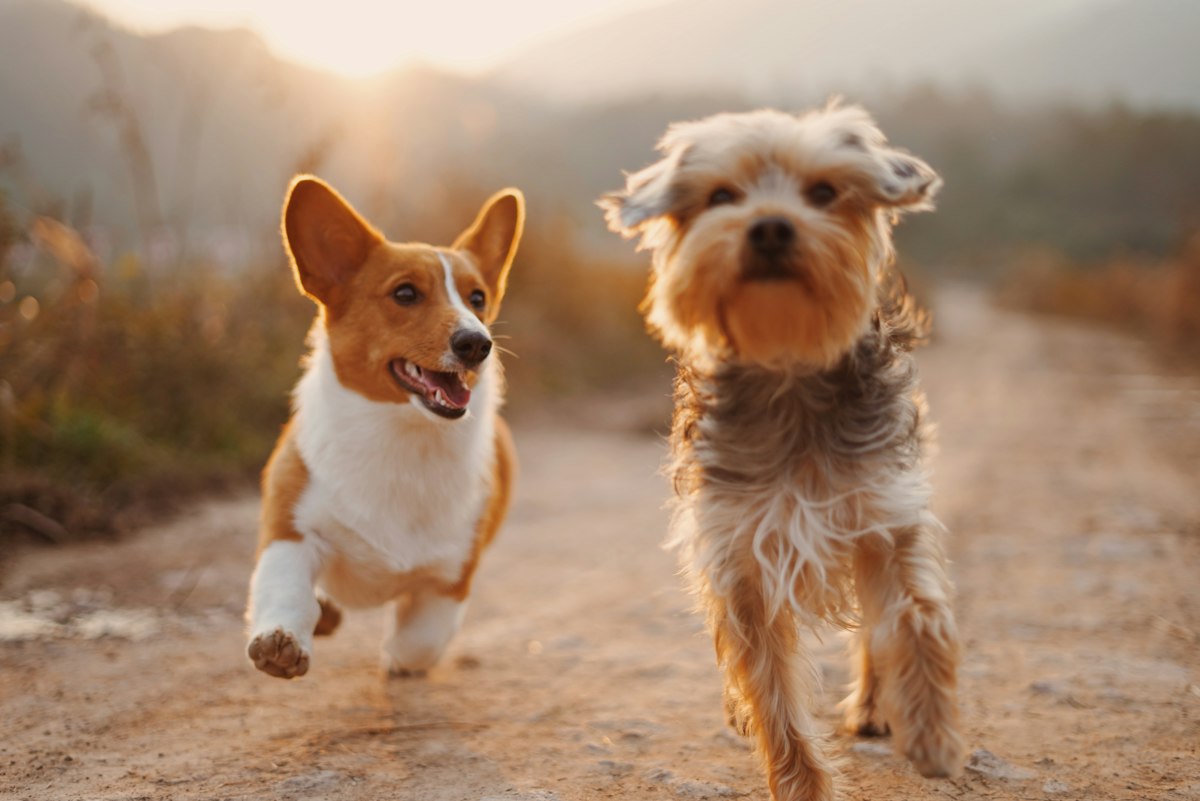
The Four-Legged Icebreaker
There is a particular kind of conversation that happens only in the presence of a dog. Two strangers, who would ordinarily walk past each other with nothing more than a tight-lipped British nod, suddenly find themselves chatting freely about breeds, temperaments, favourite walking routes, and the time their spaniel ate an entire birthday cake off the counter. Within three minutes, they know more about each other than they know about some of their colleagues.
This is not a coincidence. It is one of the tidier findings in social psychology: pets — dogs especially — are powerful social catalysts. They start the conversations we are too reserved to start ourselves. They create reasons to leave the house, visit the same places at the same times, and build the kind of low-stakes, repeated interactions that, over time, become genuine friendships.
In a country where 54% of households own a pet, and where loneliness remains one of our most persistent public health challenges, the social dimension of pet ownership deserves far more attention than it gets.
Britain: A Nation of Animal People
The numbers are substantial. On the PDSA's PAW Report figures for 2025, the UK dog population stands at a record 11.1 million, the cat population is steady at around 10.5 million, and the rabbit population continues to fall, at roughly 700,000. Beyond those, Britain keeps horses, guinea pigs, reptiles, fish, and the occasional ferret that escapes into the neighbour's garden.
Dog ownership in particular has surged since the pandemic, when millions of people found themselves working from home and decided that a puppy would solve the problem of empty days and quiet houses. While some of those pandemic puppies were sadly rehomed as offices reopened, the overall trend has been upward. Dogs are more popular in the UK than they have ever been.
But what is less often discussed is how dramatically pet ownership reshapes people's social lives. Owning a dog does not just change your morning routine. It changes who you talk to, where you go, and how connected you feel to your local community.
The Research: Pets as Social Bridges
The evidence for pets as social connectors is remarkably robust.
The foundational work here is June McNicholas and Glyn Collis's study at the University of Warwick, published in the British Journal of Psychology in 2000 under the title "Dogs as catalysts for social interactions: robustness of the effect". They used a highly trained dog precisely so that the dog itself would not solicit attention, and they collected data across ordinary daily activities rather than confining it to dog-walking areas. Being accompanied by a dog increased the frequency of social interactions, especially with strangers. In a second study the handler was dressed either smartly or scruffily; smart dress did draw more interactions, but the biggest difference by far was simply dog versus no dog. The dog was the catalyst.
Research from the University of Liverpool, published in Scientific Reports, has found dog owners substantially more likely to meet physical activity guidelines than people without a dog — but the benefits extend well beyond exercise. The regular, repeated nature of dog walking creates something like "familiar stranger" relationships: you see the same faces at the same park at the same time, and over weeks and months, those nods become chats, those chats become friendships, and those friendships become a support network.
A University of York and University of Lincoln survey of around 6,000 people in the UK during the first lockdown found that more than 90% said their pet had helped them cope emotionally, and 96% said their pet helped keep them fit and active. Having a pet was linked to maintaining better mental health and to lower loneliness during isolation. It was not all upside: 68% said they had worried about their animal, over things like access to veterinary care or who would look after the pet if they fell ill.
During the lockdowns, this social function of pet ownership became even more visible. While much of the country was confined to their homes, dog owners still had a legitimate reason to go outside twice a day. Those walks became lifelines — not just for exercise, but for human contact. The brief exchanges at the park gate, the wave from across the field, the shared commiseration about muddy paws — these micro-interactions kept people tethered to their communities when everything else had fallen away.
The Dog Walk: Britain's Most Underrated Social Activity
Think about the places where you regularly see the same people and have low-pressure conversations. The school gate. The gym. The local pub. For dog owners, the daily walk is all of these things and more.
Dog walking creates a uniquely fertile environment for social connection because it combines several ingredients that psychologists identify as essential for friendship formation: proximity (you are in the same place), frequency (you come back day after day), unplanned interaction (you bump into each other naturally), and a shared interest (your dogs are already socialising, which gives you an instant topic of conversation).
People do not just walk their dogs for the dog's benefit. They walk because it connects them to their neighbourhood, their community, and other people who understand the particular joy and chaos of life with an animal — which is why shared dog-walking areas end up functioning as community assets rather than simply as green space.
There is also something about the format of a walk that makes conversation easier. You are side by side rather than face to face. There are natural pauses — throwing a ball, untangling leads, apologising when your retriever attempts to befriend someone who clearly does not want to be befriended. These pauses remove the pressure of sustained eye contact and continuous dialogue that makes many social situations uncomfortable. You can be companionably quiet, and that is fine.
As we explored in how sharing a meal can change your social life, the format of social interaction matters enormously. Just as eating together creates warmth and belonging, walking side by side gives conversation somewhere to go without demanding anything of it. Add a dog to the mix, and you have a near-perfect recipe for social bonding.
Beyond Dogs: The Wider Social World of Pet Owners
While dogs are the most obvious social catalysts, they are not the only ones. Pet ownership of all kinds creates communities and connections that non-owners rarely see.
Cat owners might seem like solitary types — the stereotype of the aloof cat person is well-worn — but the reality is more social than you might expect. Online cat communities are enormous and thriving. Cat owners share advice, swap stories, post photos, and form genuine friendships through forums, Facebook groups, and Instagram accounts dedicated to their pets. The UK's cat rescue network alone is a vast, volunteer-driven community that brings thousands of people together around a shared mission.
Horse owners occupy a social world that is almost invisible to outsiders but intensely communal. Livery yards, riding schools, and equestrian events create tight-knit communities where people spend hours together — mucking out, grooming, riding, and drinking tea in draughty tack rooms. The bond between horse people is forged through shared early mornings, shared labour, and the shared understanding that no, you cannot "just pop out" when your horse needs feeding.
Small animal owners — rabbit keepers, guinea pig enthusiasts, reptile collectors — often find their community online, in breed-specific forums and local groups. These are niche communities, but they are remarkably passionate and welcoming. There is something about the specificity of the interest — "my bearded dragon will only eat butternut squash if it is cut into tiny cubes" — that creates an immediate sense of kinship with anyone who understands.
The Veterinary Waiting Room: An Unlikely Social Hub
One of the most underrated social spaces in British life is the veterinary waiting room. It is a place where people are anxious, vulnerable, and sitting in close proximity to other people who are equally anxious and vulnerable — which, as it turns out, is an excellent recipe for conversation.
Pet owners waiting to see the vet talk to each other in ways they would never dream of doing in a doctor's surgery. They ask about each other's animals, share stories of past visits, offer reassurance, and occasionally bond over the shared indignity of explaining to a veterinary nurse that their cat has eaten something unspeakable. The waiting room strips away the usual British reserve because the social rules are different: you are not there as yourself, you are there as your pet's person, and that role gives you permission to be open and chatty in a way that feels unnatural in other settings.
Devon: A Dog-Friendly Paradise
Living in Devon, we see the social power of pets every day. This corner of England is one of the most dog-friendly places in the country, and it is not just about tolerance — it is about genuine welcome.
Devon's pubs are legendary for their canine hospitality. The county is packed with establishments that not only allow dogs but actively celebrate them, with water bowls at the door, treats behind the bar, and in some cases dedicated doggy menus. The Fortescue Inn on Union Street in Salcombe is one of the well-known dog-welcoming pubs in the South Hams. In North Devon, The Pig on the Hill above Westward Ho! relaunched in November 2025 under new operators, Nomad Larder — worth checking the current offer and opening days before you set out, since both have changed. These places are not running a gimmick; they reflect a culture where dogs are part of the social fabric rather than an inconvenience to be tolerated.
The landscape helps, too. Dartmoor, Exmoor, the Jurassic Coast, Haldon Forest, the Tarka Trail — Devon offers some of the finest walking in England, and much of it is gloriously dog-friendly. Walk any coastal path on a weekend morning and you will see the same pattern repeated endlessly: two dogs meet, two owners stop, a conversation begins. By the time the dogs have finished sniffing each other, the humans have exchanged recommendations for the best cream tea in Sidmouth.
If you are a dog owner in Devon looking to expand your social circle, the regular walking groups organised through local Facebook communities and apps like BorrowMyDoggy are brilliant entry points. You do not need to know anyone — just turn up with your dog and let the animals do the introductions. It is the most British way imaginable to make friends: outsource the awkward bit to someone who has no concept of awkwardness.
Pets and the Loneliness Crisis
The UK has a loneliness problem. Analysis of ONS survey data published by the Campaign to End Loneliness put chronic loneliness in Britain at 3.83 million people as of January 2023, up from 3.24 million in the first year of the pandemic, and the numbers have been stubbornly persistent despite government campaigns and increased awareness. Loneliness is not simply about being alone — it is about feeling disconnected, unseen, and without meaningful social contact.
Pets address this on multiple levels. The most obvious is companionship: coming home to a creature that is unambiguously delighted to see you is a powerful antidote to the empty-house feeling that drives so much loneliness. But the less obvious benefit is structural. Pets create routines that get you out of the house. They create reasons to visit the same places regularly. They give you a role — dog walker, cat owner, horse person — that comes with a built-in community.
The Campaign to End Loneliness highlighted the role animals can play in tackling isolation, particularly for older adults, before it closed in 2024 and its evidence base passed to Sheffield Hallam University's Centre for Loneliness Studies. For someone who has lost a partner, retired from work, or moved to a new area, a dog can be the difference between four walls and a world. The daily walk becomes a reason to get dressed, leave the house, and speak to another human being — and those small acts, repeated daily, can hold loneliness at bay in ways that no amount of well-meaning advice to "join a club" can match.
This is something we care deeply about at Dinners With Friends. As we have explored in pieces like the dinner table as sanctuary and why your neighbourhood matters more than your network, the small, repeated, local interactions are often the ones that matter most. Pets are engines of exactly that kind of connection.
Pets Start the Conversations We Cannot
There is a wonderful irony at the heart of all this. The British are famously reserved. We do not talk to strangers on public transport. We apologise when someone else steps on our foot. We would rather miss our stop than ask the person next to us to move. And yet, put a dog between two British strangers, and suddenly we are chatting like old friends.
Pets give us permission. They provide a socially acceptable reason to approach someone, to make eye contact, to ask a question that is not about the weather. "What breed is that?" is the gateway drug. Before you know it, you are discussing schools, restaurants, the new development on the high street, and whether the council is ever going to fix that pothole on Elm Road.
The Warwick research found the dog effect held up across ordinary daily settings, and held up even when the handler was deliberately dressed to look scruffy. In other words, it is not that dog owners are more approachable people. It is that having a dog with you changes how approachable you are.
This matters because so many of us are surrounded by potential friends we never speak to. The neighbour three doors down. The person who always runs past your house at 7am. The couple who sit at the next table in the cafe every Saturday. Without a catalyst — a reason to break the invisible social barrier — those people remain strangers forever. A pet, particularly a dog, is often the catalyst that turns a stranger into an acquaintance, and an acquaintance into a friend.
Not Just a Pet. A Social Life.
If you are thinking about getting a pet and the social dimension appeals to you, a few honest considerations are worth mentioning. A dog will dramatically expand your social world, but it will also demand your time, your energy, and a not-insignificant portion of your income. The social benefits are real, but they are a side effect of responsible ownership, not a reason to take on an animal you are not ready for.
If you love the idea of dog-related socialising but are not in a position to own one, BorrowMyDoggy connects dog owners with people who would like to walk and spend time with dogs — a genuinely lovely service that gives you the social benefits of dog walking without the 6am wake-up calls and the vet bills.
And if pets are not your thing at all, that is perfectly fine. The underlying principle here — that repeated, low-pressure interactions in shared spaces are the building blocks of community — applies just as well to a regular cafe visit, a weekly park run, or a monthly dinner with friends. The pet is just one version of the catalyst. The point is finding yours.