
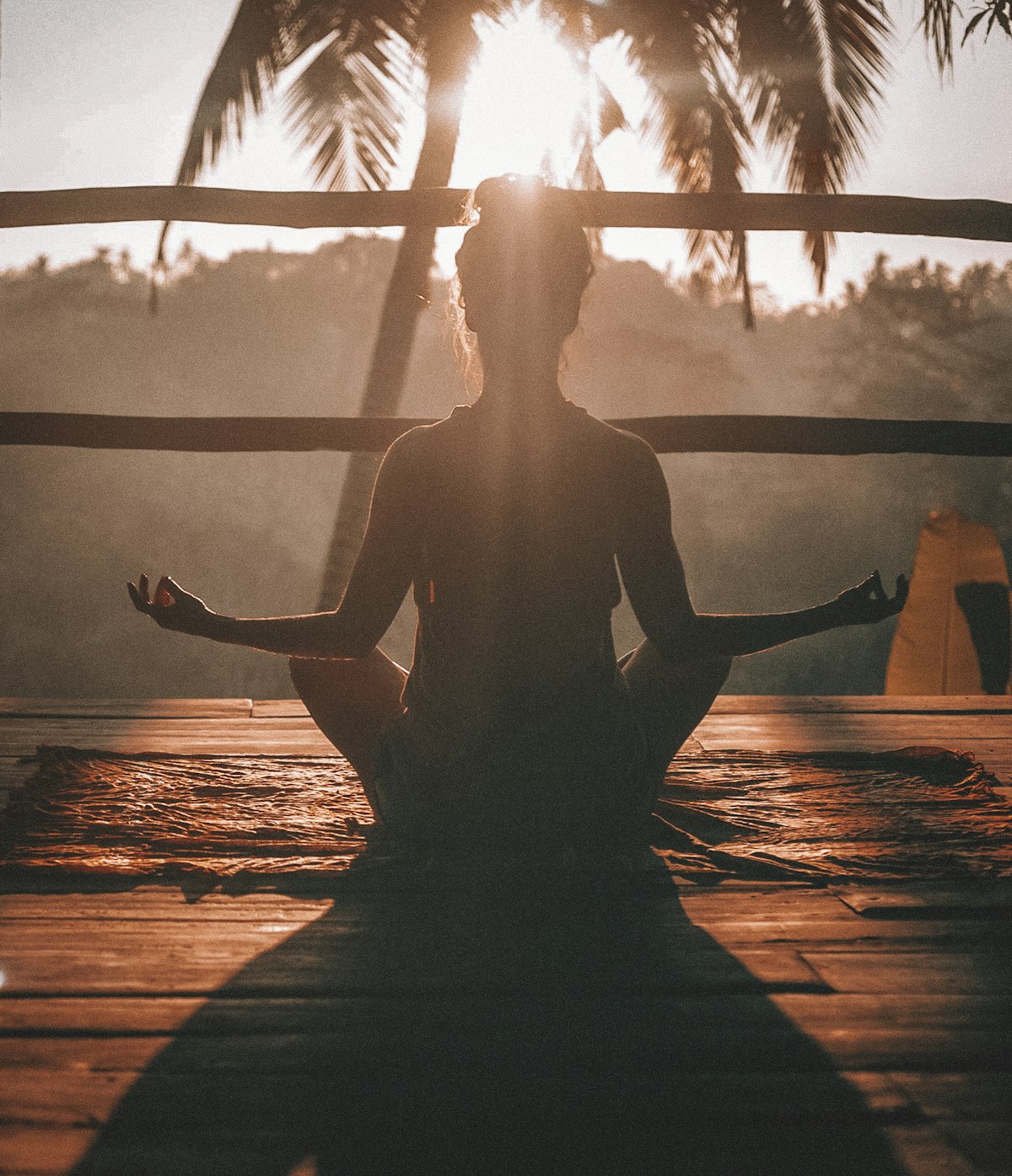
The Paradox of Meditating Together
Here's something that sounds like a contradiction: one of the most deeply social things you can do is sit in silence with a group of strangers.
Meditation, on the surface, is a solitary act. You close your eyes. You turn inward. You follow your breath or a mantra or the voice of a teacher, and for a while, you're entirely in your own head. Nobody speaks. Nobody makes eye contact. There's no small talk, no icebreakers, no awkward "so, what do you do?"
And yet — ask anyone who meditates regularly in a group and they'll tell you the same thing. There's something about sharing stillness with other people that creates a bond you can't quite replicate anywhere else. It's not the kind of connection that comes from conversation. It's quieter than that, more felt than spoken. You sit together in the same room, you breathe together, you struggle with the same wandering thoughts, and when it's over, you open your eyes and look at each other with a peculiar sort of understanding.
The University of Exeter's own Mood Disorders Centre is one of the leading UK research groups working on mindfulness-based approaches, and the practice has a long clinical track record. But the group element is something most practitioners describe experientially rather than clinically: when you meditate alongside other people, you are not just practising a technique, you are sharing an experience with them.
If you're in Exeter or the wider Devon area and you've been curious about meditation — or you already practise alone and want to find your people — this guide is for you. We've mapped out the best meditation groups, classes, and retreat centres across the region, covering everything from traditional Buddhist practice to secular mindfulness and everything in between.
Buddhist Meditation Centres
Kadampa Meditation Centre Exeter
The Kadampa Meditation Centre at 55 Union Road is one of the most established meditation spaces in the city, and it's an excellent starting point if you've never meditated before. Their classes follow a consistent format: a guided meditation to settle the mind, a short teaching on a topic relevant to everyday life, and a second guided meditation based on that teaching.
What makes Kadampa particularly accessible is the drop-in structure. You don't need to book. You don't need to commit to a full course. You simply show up, and the session is self-contained — you'll get something from it whether it's your first time or your fiftieth. They run sessions mornings and evenings during the week, with a Saturday morning class that includes breakfast afterwards. That post-meditation breakfast is worth noting: it's one of those natural social moments where conversations happen without anyone having to force them.
The centre also runs classes in other towns across Devon, so if you're not Exeter-based, check their website for local options.
Style: Modern Kadampa Buddhist meditation. Guided, structured, beginner-friendly. When: Multiple weekly sessions including mornings, evenings, and Saturday with breakfast. Cost: Check their website for current class prices. Drop-ins welcome, no booking required.
Triratna Devon
Triratna Devon meets every Tuesday at the Exeter Community Centre, and it has a warmth to it that's immediately disarming. The sessions cover the basics of Buddhist meditation — primarily Mindfulness of Breathing and Loving-Kindness (Metta Bhavana) practices — followed by talks and group discussion.
The discussion element is what sets Triratna apart from some of the more silent meditation groups. You'll meditate together, yes, but you'll also talk about what came up during the practice, how it relates to your life, and how Buddhist ideas might apply to the Tuesday-evening reality of living in Devon. It's open to everyone regardless of background or belief, and the group is explicitly welcoming to complete beginners.
Style: Triratna Buddhist meditation with discussion. Friendly, community-oriented. When: Tuesdays at Exeter Community Centre. Cost: Donation-based. No one is turned away for inability to pay.
Diamond Way Buddhist Centre Exeter
The Diamond Way Buddhist Centre offers Wednesday evening meditation sessions in the Tibetan Buddhist tradition. Diamond Way meditation tends to be more visualisation-based than breath-focused, which gives it a different flavour from the other groups on this list. If you've tried breath meditation and found your mind wandering relentlessly, this approach might suit you — having a visual anchor can make the practice feel more engaging.
The group is part of a wider international network, and there's a genuine sense of belonging to something larger. Sessions are free and open to all.
Style: Tibetan Buddhist (Diamond Way). Visualisation-based meditation. When: Wednesday evenings, 7.30pm, at Bury Meadow Cottage on New North Road (EX4 4HH). Cost: Free — all weekly sessions are free of charge.
If you're exploring meditation as part of a wider wellness journey, our guide to the best UK wellness apps for a calmer social life has some excellent tools for building a daily practice between group sessions.
Secular and Mindfulness-Based Groups
Exeter Meditation Circle
If you're drawn to meditation but not necessarily to Buddhism, the Exeter Meditation Circle might be exactly what you're looking for. It's a secular Buddhist group — which means they draw on Buddhist meditation techniques without requiring any religious affiliation or belief. The main meeting is on Zoom on Monday evenings, with fortnightly in-person sessions on Tuesdays.
The online format is worth highlighting. For people with mobility issues, childcare constraints, or social anxiety that makes in-person groups daunting, a Zoom-based meditation group removes a significant barrier. You can participate from your sofa with your camera on or off. It's meditation with a safety net.
The group offers guided meditation, dharma talks, book discussion, and a genuine sense of community that somehow translates through a screen. Regular members speak highly of the warmth and accessibility.
Style: Secular Buddhist. Guided meditation with talks and discussion. When: Mondays on Zoom, plus fortnightly Tuesday sessions in person. Cost: Check with the group — contact details are on their site.
Sahaja Yoga Meditation at Exeter Phoenix
For a completely free in-person option, Sahaja Yoga Meditation holds weekly classes at the Exeter Phoenix on Gandy Street — current day and time are on their Meetup page. As a registered charity, they never charge for their classes — the philosophy being that true meditation should be freely available to everyone.
The Phoenix itself is a brilliant venue: it's Exeter's independent arts centre, and there's something lovely about walking out of a meditation session into a building buzzing with creative energy. The cafe is right there for a post-session cup of tea, which makes the transition from inner silence to social conversation feel natural rather than jarring.
Style: Sahaja Yoga meditation. Seated, guided, gentle. When: Weekly at the Exeter Phoenix, Gandy Street — check the Meetup listing for the current session time. Cost: Completely free.
Mindfulness Courses with Sarah Lane
If you want something more structured than a weekly drop-in, Sarah Lane runs the 8-Week Mindfulness for Life (MBCT-L) Course in Exeter and online, made up of eight two-hour sessions. It follows the Mindfulness-Based Cognitive Therapy for Life framework, which is the same approach used in NHS-recommended programmes for stress, anxiety, and depression.
An eight-week course creates something that a one-off class can't: a cohort. You go through the learning process alongside the same group of people, week after week, sharing experiences and insights as the practice deepens. By the end, you haven't just learned to meditate — you've built relationships with people who understand what the journey feels like.
Sarah also offers a 12-Week Mindfulness: Taking it Further Course for those who've completed an eight-week course and want to go deeper.
Style: MBCT-L mindfulness. Structured course with home practice. When: Eight-week courses run throughout the year — check the website for upcoming dates. Cost: Course fees apply — contact Sarah Lane directly for current pricing.
Sarah also offers day retreats in Devon — intensive sessions that combine meditation, mindful movement, and periods of silence in beautiful rural settings. These are a good middle ground between a weekly class and a full residential retreat. Details at exetercounsellingandmindfulness.com/day-retreats-in-devon.
The University of Exeter's Mood Disorders Centre runs the Exeter Mindfulness Network, which offers Mindfulness-Based Cognitive Therapy (MBCT) and Mindfulness-Based Stress Reduction (MBSR) classes to the public across Devon, as well as regular reunions for course graduates. It's a wonderful way to stay connected with your mindfulness community long after the initial course ends.
Empowered Mindfulness with Alison MacDonald
Alison MacDonald teaches meditation and mindfulness in Exeter, Topsham, and online, with a particular focus on helping people manage anxiety and fatigue. Her classes run at The Practice Rooms in Exeter and in Topsham, making them accessible from multiple parts of the city. If you've found that standard meditation classes don't quite address what you're dealing with — whether that's chronic stress, burnout, or anxiety that makes sitting still feel impossible — Alison's approach is worth exploring.
Style: Mindfulness for anxiety and fatigue. Small group and individual sessions. When: Regular classes in Exeter and Topsham. Check the website for schedules. Cost: Contact Alison directly for current pricing.
Devon Mind Courses and Workshops
Devon Mind offers a range of mental health courses and workshops across Devon, including mindfulness sessions. These are particularly useful if you're approaching meditation as part of a broader effort to look after your mental health — they combine practical mindfulness techniques with peer support and professional guidance. Courses run throughout the year, and some are available online. For more on mental health resources in the area, see our UK mental health guide.
Walking Meditation and Outdoor Mindfulness
Not everyone finds stillness sitting down. If you're the kind of person who thinks better on your feet, Exeter has several options that combine movement, nature, and mindful awareness.
Exeter Wellbeing Walk
Run by Step One Charity, the Exeter Wellbeing Walk runs every Wednesday, meeting at 10:45am and setting off at 11am from the X Centre on Commercial Road, EX2 4AD — a stone's throw from Exeter's historic Quayside. It covers approximately three miles at easy difficulty and is back by about 12:30pm. It's designed specifically to combine gentle physical activity with social connection — two things that evidence consistently shows are among the most effective strategies for lifting mood and reducing anxiety.
The walks are free and open to everyone. No booking required — just turn up.
Exe Nordic Walking
Exe Nordic Walking offers group walks in Exeter's green and open spaces, using the Nordic walking technique that engages the upper body and provides a fuller workout than regular walking. They run beginner workshops to learn the technique, followed by regular weekly group walks. It's a social, active, and gently meditative way to explore the city's parks and green spaces — and the community that builds around a regular walking group is remarkably similar to what happens in a meditation circle.
For more on the connection between walking and wellbeing, our piece on walking therapy explores why a stroll with a friend can be more effective than an app.
Retreat Centres
Gaia House, South Devon
If you're ready to go deeper, Gaia House near Newton Abbot is one of the most respected meditation retreat centres in the country. Set amongst the rolling hills and quiet woodlands of South Devon, it has been offering silent meditation retreats in the Buddhist tradition for decades.
The retreats are predominantly based in Insight (Vipassana) and Loving-Kindness (Metta) meditation traditions, though the centre welcomes people of all backgrounds and beliefs. You don't need to be a Buddhist. You don't even need to have meditated before — though complete beginners might want to start with one of their introductory weekends rather than diving straight into a week-long silent retreat.
What makes Gaia House special from a social perspective is counterintuitive: it's a silent retreat centre. You don't speak during most of the retreat. And yet, the connections you make in that silence can be profound. There's something about spending days alongside the same people — eating together, walking the grounds together, sitting in meditation together — without the usual social performance of conversation. When the silence breaks at the end, the conversations that emerge are often remarkably deep and honest.
The centre operates on a dana (generosity) basis for teacher offerings, with accommodation and food costs kept accessible. Weekend retreats and week-long retreats run throughout the year.
Style: Insight (Vipassana) and Metta traditions. Silent retreats. When: Year-round programme of weekend and week-long retreats. Cost: Accommodation fees plus dana (donation) for teachers. Bursaries available.
Transcendental Meditation (TM) Devon & Exeter Centre
The Devon & Exeter TM Centre offers something quite different from the other options on this list. Transcendental Meditation uses a personal mantra, given to you by a certified teacher, and the technique is learned through a structured introductory course rather than through drop-in classes.
After learning TM, you're invited to attend group meditation sessions, personal check-ins, and refresher courses. The ongoing community element is strong — TM centres tend to foster a loyal and supportive membership. The practice itself is done with eyes closed for twenty minutes, twice daily, and is remarkably simple once learned.
Style: Mantra-based meditation. Personal instruction followed by group practice. When: Introductory courses and group sessions scheduled throughout the year. Cost: Course fees apply — contact the centre for current pricing.
Why Group Meditation Creates Deeper Bonds
It's worth pausing to consider why this works so well as a social activity. After all, you're not talking. You're not collaborating. You're not even looking at each other.
Part of the answer is what psychologists call "co-regulation" — the way a calm body next to you tends to calm your own. Sit in a room of people breathing slowly and you will find yourself doing the same without deciding to. There's a collective settling that happens in a room of people practising stillness, and your body responds to it whether you're conscious of it or not.
If you've read our piece on the mental health benefits of a regular social calendar, you'll recognise the pattern: consistent, repeated contact with the same group of people is one of the strongest predictors of meaningful friendship. Meditation groups provide exactly that structure — a weekly appointment to be in the same room, doing the same thing, gradually building the kind of trust that only comes from showing up.
There's also the vulnerability factor. Meditation is not always comfortable. Your thoughts wander. Your back aches. Emotions surface that you weren't expecting. Sitting with that discomfort alongside other people — knowing they're experiencing something similar — creates a quiet solidarity. It's the same principle that bonds soldiers, sports teams, and anyone who goes through something challenging together.
Looking for other ways to combine physical wellbeing with social connection in Devon? Our guide to forest bathing in Devon explores another practice where silence and nature create unexpected bonds. And if you're interested in how movement and community intersect, check out our Exeter gyms and yoga guide.
Getting Started: Practical Tips
If you've never meditated in a group before, here are a few things worth knowing:
You don't need any equipment. Most groups provide cushions and chairs. Wear comfortable clothing — nothing tight around the waist, nothing that rustles when you move.
You don't need experience. Every group on this list welcomes beginners. The teachers are used to people who've never meditated before, and they'll guide you through it.
Arrive early. Give yourself five to ten minutes to settle in, find your spot, and let the outside world recede a little before the session starts.
Don't judge your first session. The first time you meditate with a group can feel strange. Your mind will race. You'll be acutely aware of the person breathing loudly next to you. You'll wonder if everyone else is doing it better than you are. They're not. It gets easier.
Stay for the tea. This is the single most important piece of advice in this guide. The meditation itself is valuable, but the ten minutes afterwards — when people are making tea and exchanging a few quiet words — is where the social magic happens. Don't rush off. Linger.
Finding Your Practice
Exeter and Devon have an unusually rich landscape of meditation options. Whether you're drawn to the structure of a Kadampa class, the warmth of Triratna's Tuesday evenings, the deep silence of a Gaia House retreat, or the accessibility of a free Sahaja Yoga session at the Phoenix, there's something here that fits.
The hardest part isn't finding a group. It's walking through the door the first time. Everything after that — the settling, the silence, the slow recognition of familiar faces week after week — unfolds on its own.
If you're new to Exeter and looking for ways to settle in, a meditation group is one of the gentlest starting points. For those dealing with social anxiety, the structured, low-pressure format of a guided session can feel far more manageable than a pub quiz or a networking event. And if breathwork interests you as a complement to meditation, we've written a separate guide to simple techniques that can help in social situations.
And if you find that your meditation community starts to feel like it needs a next step — a meal together, a proper conversation, a chance to know each other beyond the cushion — that's exactly what we're here for.