
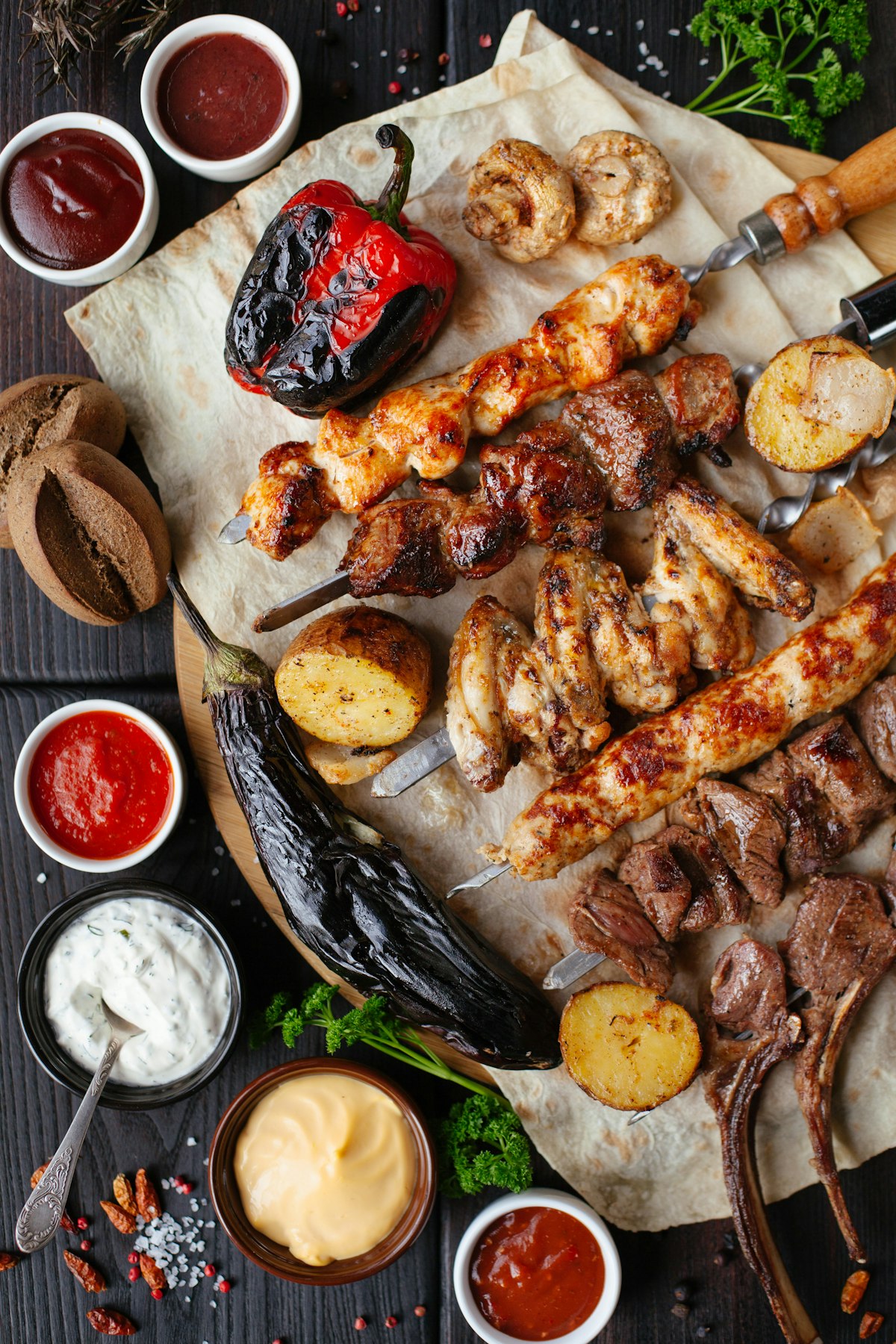
The Great British BBQ
There is no social event quite like a barbecue. No seating plan. No dress code. No starter, main, and dessert arriving in strict order. Just a group of people standing around in a garden, holding drinks, occasionally wandering over to the grill to see what's ready, and talking to whoever happens to be next to them. It is the most democratic form of entertaining there is.
The British relationship with the barbecue is a peculiar one. We spend eleven months of the year waiting for summer, then the moment the sun appears for three consecutive days, we drag something out of the shed and start burning sausages on it. There's a charming determination to the whole thing — a refusal to accept that our climate isn't really designed for outdoor cooking, combined with a genuine love of standing outside with a beer in one hand and a pair of tongs in the other.
But a great British BBQ can be so much more than charred burgers and supermarket sausages. With a bit of thought about what you're cooking, some simple marinades, and a realistic plan for when the weather turns (because it will), you can host a summer gathering that people talk about for months.
This guide covers everything: what to cook, what equipment you actually need, the sides and drinks that elevate the whole thing, and how to make your BBQ a genuinely social event rather than one person sweating over coals while everyone else stands around waiting.
The Equipment Question
The Weber vs. Disposable Debate
Let's address this first, because it's where most BBQ arguments begin.
Disposable barbecues are cheap, convenient, and terrible. The grill is too close to the coals, giving you food that's burnt on the outside and raw in the middle. They're almost impossible to control, they damage grass, and they create a surprising amount of waste. If you're having a BBQ on a beach where there's no alternative, fine. But for a garden gathering, they're not worth the trouble.
A decent charcoal barbecue will transform your cooking. The Weber Master-Touch GBS is a reliable benchmark for a kettle barbecue — it has a lid for indirect cooking, adjustable vents for temperature control, and the Gourmet Barbecue System grate that lets you swap in a pizza stone, a wok, or a griddle. A quality kettle barbecue is a serious purchase, but you will use it for a decade. The classic Weber Original Kettle is a cheaper entry point if you're not ready for that commitment.
Gas barbecues are easier but less flavourful. If convenience is your priority and you don't want to deal with charcoal and lighting, gas is fine. But the smoky flavour that charcoal gives food is genuinely difficult to replicate.
If you're new to charcoal barbecuing, invest in a chimney starter (inexpensive from any hardware shop). Fill it with charcoal, light newspaper underneath, and in twenty minutes you'll have perfectly lit, evenly hot coals with no lighter fluid taste. It's the single best BBQ accessory you can buy.
Beyond Burgers: What to Actually Cook
The best BBQs have variety. Here's a menu that goes well beyond the standard burger-and-sausage offering.
Marinades That Change Everything
The difference between ordinary and extraordinary BBQ food is almost always the marinade. Mix these up the night before and let the meat (or vegetables) soak overnight in the fridge.
Chimichurri for steak. Finely chop a large bunch of flat-leaf parsley, four cloves of garlic, and a red chilli. Mix with 100ml olive oil, 30ml red wine vinegar, a teaspoon of dried oregano, and a generous pinch of salt. Slather over rump or bavette steak before grilling, and serve more on the side. This Argentinian classic is the best thing you can do to a piece of beef.
Yoghurt and harissa for chicken. Mix 200ml natural yoghurt with two tablespoons of rose harissa, a squeeze of lemon juice, a teaspoon of cumin, and salt. Slash chicken thighs (skin on, bone in — always), coat generously, and marinate overnight. The yoghurt tenderises the meat while the harissa gives it a smoky, warming heat. Grill over medium coals for about 25 minutes, turning regularly.
Honey, soy, and ginger for salmon. Whisk together three tablespoons each of soy sauce and honey, a thumb of grated ginger, two crushed garlic cloves, and a splash of sesame oil. Marinate salmon fillets for an hour (no longer, or the acid will start to cook the fish). Grill skin-side down on a well-oiled grate for about six minutes, then flip carefully for another two. Serve with lime wedges.
The Vegetarian BBQ
Vegetarian BBQ food has moved far beyond the sad veggie burger. These dishes hold their own alongside any meat on the grill.
Halloumi skewers. Cut halloumi into thick cubes, thread onto skewers with chunks of courgette, red pepper, and red onion. Brush with olive oil and za'atar (or a mix of dried oregano, thyme, and sesame seeds). Halloumi is one of the few cheeses that won't melt on the grill — it goes golden and squeaky and deeply satisfying. Two minutes per side is all you need.
Whole grilled aubergine. Place a whole aubergine directly on the coals (not the grill) and cook for about 20 minutes, turning occasionally, until the skin is completely charred and the inside is soft and smoky. Split it open, scoop out the flesh, and mash with tahini, lemon juice, garlic, and salt. You've just made baba ganoush, and it's extraordinary.
Corn on the cob. Soak unhusked corn in water for 30 minutes, then grill in the husk for 15-20 minutes, turning occasionally. The husk steams the corn, and you get a slightly smoky sweetness. Serve with butter, lime, chilli flakes, and crumbled feta.
Whole Fish on the BBQ
This is the move that surprises everyone and is far easier than people think. A whole sea bass or sea bream, scored on both sides, stuffed with lemon slices and fresh herbs (dill, parsley, fennel fronds), brushed with olive oil, and grilled for about five minutes per side. Use a fish basket if you have one — it makes turning much simpler. Serve with a squeeze of lemon and a green salad. It's light, impressive, and takes less time than chicken.
The Supporting Cast: Sides and Salads
The sides make or break a BBQ. Here's what to prepare in advance so you're not stuck in the kitchen while everyone else is in the garden.
A proper slaw. Forget the supermarket stuff swimming in mayonnaise. Shred red and white cabbage, grate in a couple of carrots, thinly slice a red onion, and toss with a dressing of Greek yoghurt, cider vinegar, a squeeze of honey, Dijon mustard, and salt. Make it two hours before the BBQ so the vegetables soften slightly. Add toasted fennel or caraway seeds for something special.
New potato salad. Boil new potatoes until tender, halve them, and while still warm toss with a mustard vinaigrette (Dijon, red wine vinegar, olive oil, a pinch of sugar). Add chopped spring onions, capers, and fresh dill. This French-style potato salad is lighter and more flavourful than the mayonnaise version, and it's better at room temperature.
Tabbouleh. Soak bulgur wheat in boiling water for fifteen minutes, drain well, then mix with huge amounts of chopped flat-leaf parsley, mint, diced tomatoes, and cucumber. Dress with lemon juice and olive oil. It's fresh, green, and cuts through the richness of the grilled food perfectly.
Flatbreads. Mix 300g self-raising flour with 300g Greek yoghurt, a pinch of salt, and knead for two minutes. Divide into balls, roll thin, and cook on the hot grill for 90 seconds per side. Brush with garlic butter. These take almost no effort and people go absolutely mad for them.
The golden rule of BBQ sides: make them in advance and serve them at room temperature. Salads wilt and dressings split in the sun. Prepare everything before your guests arrive, keep it covered in the kitchen, and bring it out when the food starts coming off the grill. Your future self will thank you.
Drinks for a Summer BBQ
The non-negotiable: A large cooler or bucket filled with ice, stocked with beer, cider, white wine, and soft drinks. Let people help themselves. Trying to be a one-person bar service while also cooking is a recipe for stress.
Beer. A mix of lager and pale ale covers most tastes. If you're in Devon, local breweries like Salcombe Brewery, Otter Brewery, and Hanlons Brewery all make excellent ales that are widely available and support local businesses. Ask at your nearest food market or farm shop — they'll often stock local craft options.
A pitcher of something. A big jug of Pimm's (Pimm's No. 1, lemonade, sliced cucumber, strawberries, fresh mint, and orange) is the quintessential British summer drink for a reason. Make two jugs. You'll need them. For a non-alcoholic alternative, elderflower cordial with sparkling water, cucumber, and fresh mint is just as refreshing and looks beautiful.
Rosé. A chilled Provence rosé is the wine equivalent of sunshine. Buy it in magnums if you can find it — it's usually better value and looks generous. Anything from Côtes de Provence is a safe bet.
The Plancha: 2026's Biggest BBQ Trend
If there is one piece of equipment worth knowing about this summer, it is the plancha — a flat-top griddle that has been standard kit in French and Spanish gardens for decades and is finally taking off in the UK. Once you have used one, you will understand why.
A plancha gives you edge-to-edge consistent heat across the entire cooking surface. That means you can cook a full English breakfast outdoors, sear scallops without them falling through the grate, char vegetables evenly, or stir-fry noodles in the garden. It is the answer to every BBQ frustration: no more food dropping into the coals, no more uneven cooking, no more struggling with delicate fish.
You can buy a standalone plancha griddle, or get a griddle insert for your existing charcoal or gas barbecue. Griddle inserts are available for the Gourmet Barbecue System grate — check compatibility with your model. For a group gathering, the plancha works brilliantly alongside a traditional charcoal grill — cook your steaks and sausages over the coals for that smoky flavour, and use the plancha for everything else.
National BBQ Week runs each year over the late spring bank holiday — the next one, the 31st, is Monday 31 May to Sunday 6 June 2027. If you have been looking for an excuse to christen a new piece of kit or try plancha cooking for the first time, that is your weekend. Visit nationalbbqweek.info for recipes and event ideas.
Smaller Cooks, Better Evenings
One of the most encouraging shifts in BBQ culture for 2026 is the move towards more frequent, smaller cooks rather than one enormous annual production. People are grilling midweek — Brussels sprouts, fish fillets, quick-marinated chicken — and treating the barbecue as everyday kit rather than something that only comes out for a bank holiday.
This changes the social dynamic too. Instead of one big, high-pressure gathering where everything has to be perfect, you start inviting a couple of friends round on a Wednesday evening. Nothing fancy. Just something on the grill, a couple of cold drinks, and an hour in the garden before it gets dark. If you have been looking for ways to build a regular social rhythm without the pressure of formal hosting, midweek BBQs are a revelation.
For those evenings, keep it simple. Marinated halloumi and flatbreads. A couple of good sausages from your local farm shop or deli. Some dressed leaves and a cold beer. The whole thing takes forty-five minutes from lighting the coals to sitting down, and it is a fundamentally better way to spend a Tuesday evening than watching television.
The British Weather Strategy
Let's be honest. The defining feature of a British BBQ is the ever-present possibility that it will rain. You have three options:
Option one: Denial. Carry on regardless. Stand in the drizzle. Insist it's "just a light shower." This is the traditional British approach and there's a certain nobility to it.
Option two: The gazebo. A 3m x 3m pop-up gazebo is cheap and takes five minutes to put up. It won't survive a gale, but it'll keep the rain off your food and your guests. Anchor it properly with guy ropes and pegs, or weigh down the legs with sandbags or water weights. Having one permanently set up from June to September is not an overreaction — it's good planning.
Option three: The hybrid. Cook outside, eat inside. If the weather turns, simply bring the food indoors and serve it at the kitchen table. The BBQ flavour doesn't disappear just because you're eating it with a roof over your head.
The best approach is to always have a backup plan. Check the forecast, set up the gazebo regardless, and have the indoor table cleared just in case. Then hope for the best.
If rain is forecast but you're committed to the BBQ, cook everything outside as planned, then plate it up and serve it as an indoor feast. The smoky, charred flavour of barbecued food is just as good eaten at a kitchen table. Some of the best BBQs end up as indoor picnics — everyone crowded around, plates piled high, windows steamed up. There's a particular warmth to a plan that didn't quite work out.
The Social Side: Why BBQs Bring People Together
There's a reason barbecues remain one of the most popular ways to socialise in Britain, despite our weather doing everything it can to discourage them. Something about standing outdoors with food cooking over an open flame strips away the formality that can make indoor dinner parties feel pressured.
At a dinner party, you sit in your assigned seat and talk to the people either side of you. At a BBQ, you drift. You start a conversation with someone while waiting for the halloumi to be ready, then wander over to the drinks table and pick up another thread with someone else. You offer to help turn the chicken and end up spending twenty minutes by the grill with someone you've barely spoken to before. The movement, the informality, the fact that everyone can see and smell what's cooking — it all creates a natural ease that's hard to manufacture.
BBQs are also brilliantly democratic. Everyone can contribute. Someone brings a salad. Someone else brings a six-pack. The person who can't cook becomes the designated grill-watcher. There's always something for everyone to do, which means nobody feels like a spare part and nobody feels like they're carrying the whole event. If you've ever felt that organising a dinner party when you're not a natural host is too much pressure, a BBQ is your answer.
And for those of us who find large social gatherings overwhelming, a BBQ offers something valuable: the ability to step away. You can stand by the grill for a few minutes of quiet. You can offer to fetch drinks from inside. You can sit in a quieter corner of the garden. The lack of structure means there's no wrong way to participate.
Your BBQ Checklist
To save you forgetting something crucial, here's what you actually need:
Equipment: Barbecue, charcoal (more than you think — a 4kg bag for a standard kettle), chimney starter, long tongs, a spatula, a meat thermometer (chicken must reach 75°C internal temperature), a brush for oiling the grill.
Prep the day before: Make all marinades, prepare all salads and sides, make the slaw, chill all drinks, check you have enough plates, cutlery, and napkins (paper is fine for a BBQ — this isn't a dinner party).
On the day: Light the barbecue 30-40 minutes before you want to start cooking. When the coals are covered in grey ash, they're ready. Start with items that take longest (chicken thighs, whole fish), then move to quicker items (steaks, halloumi, burgers) as the coals settle into a steady medium heat.
Don't forget: Kitchen roll, bin bags, a first aid kit (minor burns happen), sun cream, insect repellent, a Bluetooth speaker with a charged battery, and — if you're in Devon — a fleece for when the evening cools down.
Summer in this country is short and unpredictable, which is precisely why we should make the most of every good day. A BBQ doesn't need to be complicated. It needs good food, cold drinks, and people you want to spend time with. Light the coals, invite the people, and let the afternoon take care of itself.
Where to Source Your BBQ Ingredients in Devon
A great barbecue starts at the shop. Supermarket sausages and pre-made burgers will get the job done, but if you want to elevate the whole thing, source your meat and produce locally. Devon is blessed with some of the finest farm shops in the country, and the difference between a mass-produced banger and one made by a proper butcher with locally reared pork is enormous.
If you are near Exeter, Darts Farm near Topsham has an exceptional butcher's counter — ask them for their barbecue recommendations and they will set you up with sausages, burgers, and marinated cuts that are leagues ahead of anything in a supermarket. Greendale Farm Shop near Farringdon — on the A3052, about three and a half miles from junction 30 of the M5 — is another outstanding option, with a butchery and fishmonger under one roof. For more options, our guide to the best delis and farm shops near Exeter covers the lot.
For cheese — and you should always have cheese at a BBQ, whether it is halloumi for the grill or a board for after — Devon's artisan cheesemakers are world-class. Our guide to Devon's artisan cheese scene will help you build a cheese board entirely from local producers that doubles as both a pre-dinner snack and a conversation starter.
And for drinks, skip the supermarket lager and pick up something from one of Devon's brilliant craft breweries. Our guide to the best craft beer and taprooms in Exeter has recommendations, or visit the taproom at Sandford Orchards in Crediton for craft cider that pairs beautifully with grilled food. If you are feeling adventurous, a chilled Devon rosé or sparkling wine from Sharpham at Sandridge Barton is a genuine alternative to Provence rosé — and it was made just down the road.
For more ways to eat well and socialise in Devon, explore our guide to the region's incredible local produce and food heritage. And if you'd like to meet new people over a shared meal without having to organise everything yourself, our events take care of the cooking, the venue, and the company.