
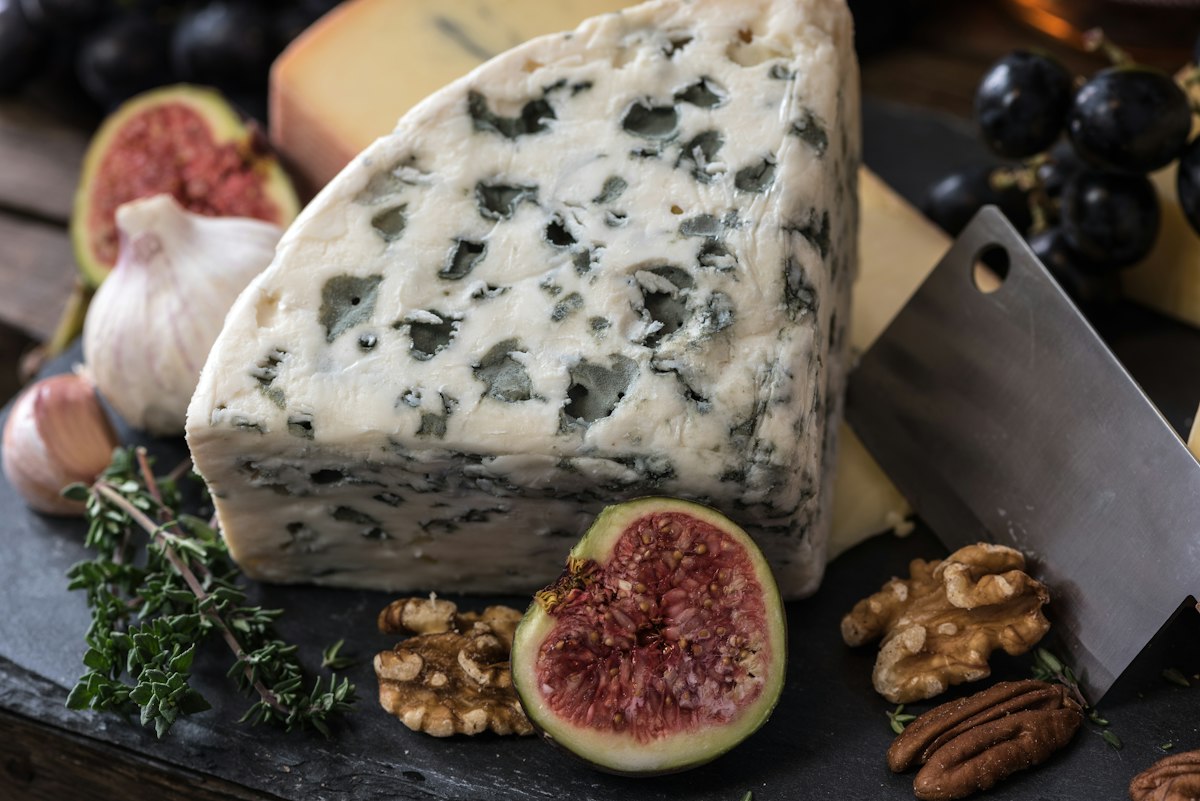
A County That Knows Its Cheese
Devon does not shout about its cheese the way it shouts about its cream teas, but it probably should. This is a county with one of the most impressive collections of artisan cheesemakers in England — producers who have been perfecting their craft for decades, and in one case, since 1540. From clothbound cheddars aged in centuries-old farmhouses to delicate sheep's milk blues that rival anything from the Continent, Devon's cheese is genuinely world-class. It's the same story you see with the county's fish and chips scene: serious sourcing, deep tradition, and producers who have been quietly beating the national average for decades.
What makes Devon's cheese scene particularly interesting is its diversity. The county's geography plays a significant role. The lush, green pastureland of the river valleys produces rich, creamy cow's milk. The higher ground of Dartmoor and Exmoor supports hardier breeds and grassier flavours. The mild climate means cows can graze outdoors for much of the year, and the quality of the grass — fed by that distinctive Devon red soil — comes through in the milk, and ultimately in the cheese.
If you enjoy food, live in Devon, or are visiting, taking the time to understand the county's cheese producers will transform the way you eat. And if you enjoy eating with other people — which, if you are reading this, you almost certainly do — then a well-assembled Devon cheese board is one of the finest centrepieces a table can have.
Why Devon? Red Soil, Grass, and Fifteen Generations of Know-How
Before we meet the makers, it is worth understanding why Devon is such fertile ground for cheese in the first place. The county's famous red earth is ancient sandstone weathered over millions of years, and it produces some of the richest, mineral-dense grazing in Britain. Combine that with a mild, wet maritime climate, gentle river valleys sheltered from the worst of the weather, and a tradition of small mixed farms, and you have something approaching perfect conditions for dairy.
Devon is also one of only four counties — along with Somerset, Dorset and Cornwall — permitted to produce West Country Farmhouse Cheddar under Protected Designation of Origin (PDO) rules. That status, granted by the European Union in 1996 and protected in UK law since Brexit, means real cheddar from this part of the world must be made from local milk using traditional methods. It is the only way to taste cheddar as it was originally intended.
Then there is the human element. Some of Devon's cheesemaking families have been on the same land for generations. Others arrived in the 1970s and 1980s, drawn by the pastures and the possibilities, and quietly built world-class operations from scratch. Either way, the people making cheese here are rarely in it for the money. They are in it because they love the craft, the animals, and the land, and that shows in every wheel.
Quicke's: Fifteen Generations of Cheddar
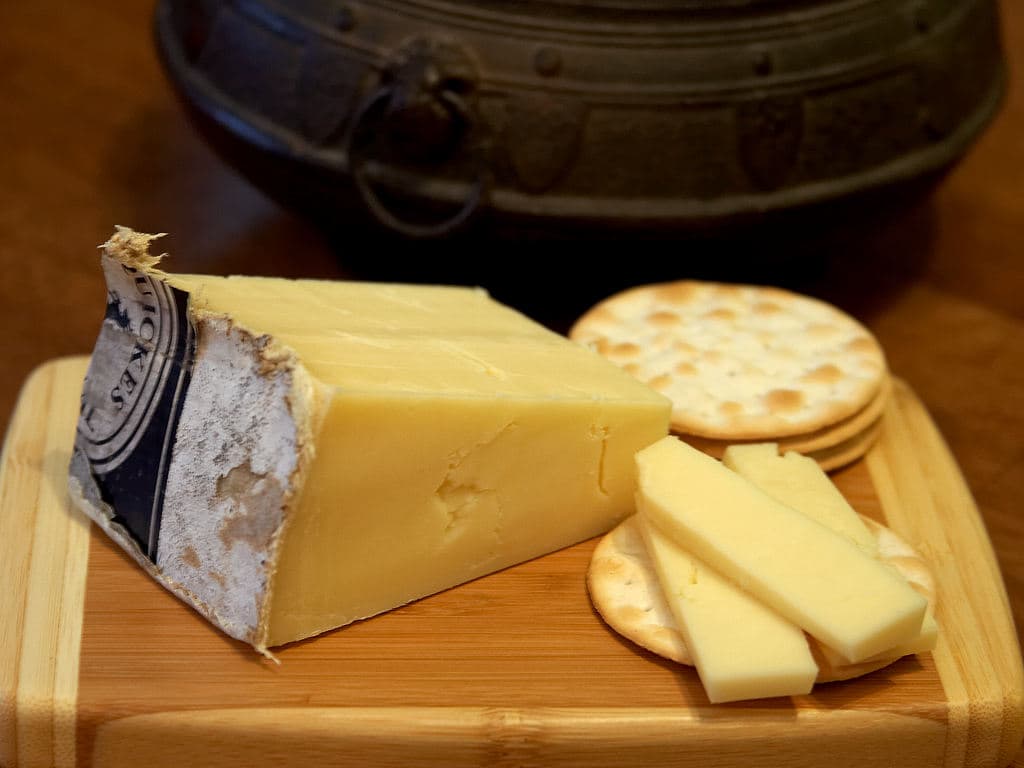
The Quicke family have been farming at Home Farm, Newton St Cyres, just outside Exeter, since 1540 — fifteen generations on the same land, making cheese from the same pastures. It is an almost incomprehensible length of time, and it shows in every wheel they produce.
The current generation is led by Mary Quicke MBE, the Master Cheddar Maker whose purple-clad presence has done more to champion traditional clothbound cheddar than almost anyone alive. She runs the farm with her daughter Jane, continuing a tradition that was revived in the 1970s when Sir John Quicke decided to honour the family's heritage by producing the finest clothbound cheddar in the country.
The cheese is made from milk produced by their own grass-fed herd grazing lush Devon pastures on the family estate. Each day, after milking, the cheese is started with a live culture that has remained unchanged for decades and encompasses the biodiversity of the farm itself. The cheddar is then cloth-bound by hand, larded, and matured for months — sometimes well over a year — developing a complex, nutty, earthy flavour with crystalline texture that is utterly unlike the rubbery blocks you find in supermarkets.
Quicke's produce several varieties. The Clothbound Mature is their signature — rich, deep, and layered. The Vintage (matured for 18 months and upwards) takes it further, with pronounced crystallisation and a lingering intensity. The Smoked Cheddar is gently oak-smoked for a mellow smokiness that works beautifully with cider. They also make a Goat's Milk Clothbound (one of very few in the UK) and a Buffalo Milk Clothbound — both genuinely unusual cheeses worth hunting down. And their Slightly Salted Whey Butter, a by-product of the cheesemaking process made using a rare heritage recipe, has been recognised by the Slow Food UK movement as one of the nation's great Forgotten Foods and sits on its Ark of Taste.
Quicke's cheese is widely stocked across Devon, but for the full range — including seasonal and limited releases — visit Darts Farm near Topsham or Exeter Farmers' Market on Thursdays. Tasting before buying is the best way to discover which maturity you prefer, and most stockists are happy to offer samples.
Sharpham: Brie, Rustic and the Dart Valley
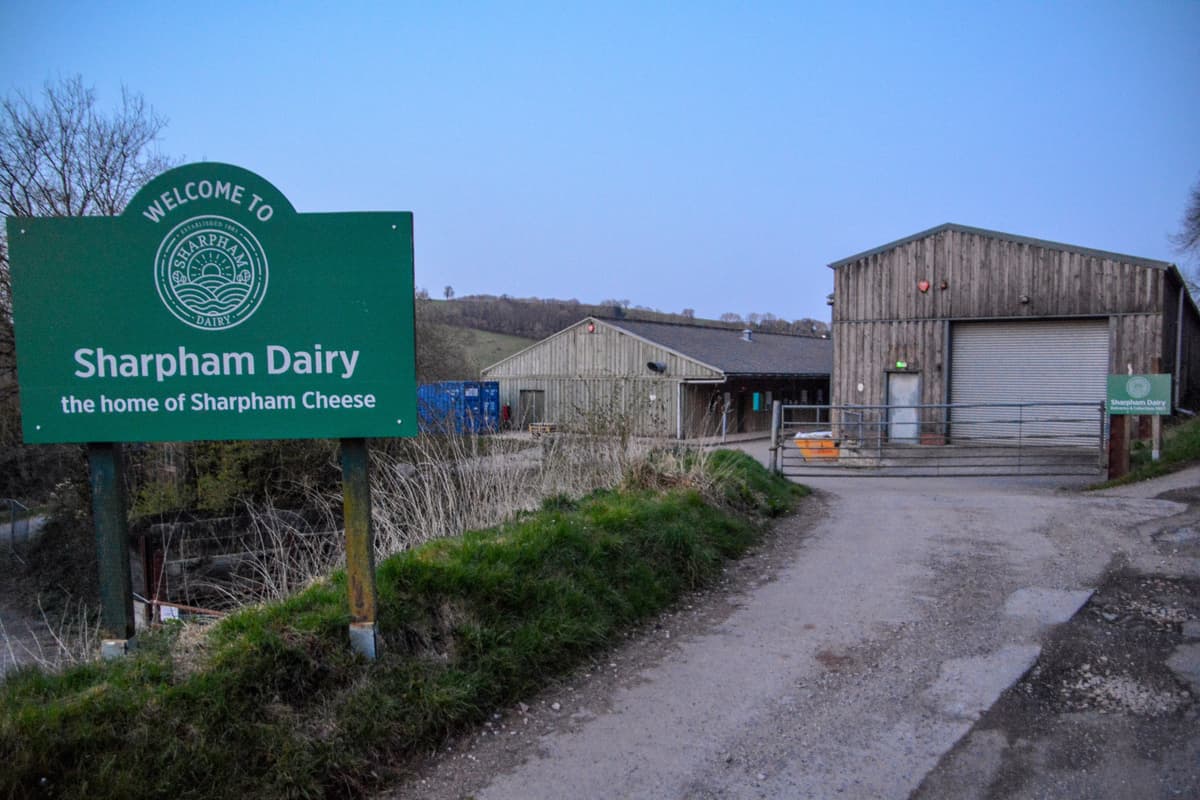
The Sharpham Estate sits on the banks of the River Dart, just three miles downstream from Totnes, and has been producing cheese since 1981. What began as a single brie made by environmentalist Maurice Ash has grown into one of England's most decorated artisan dairies, and winning Gold at the Artisan Cheese Awards, British Cheese Awards, Taste of the West Awards and the Devon County Show in recent years.
Current owners Greg and Nicky Parsons acquired the dairy in 2019, and in 2022 Sharpham became the first cheesemaker in the UK to be certified as a B Corp, recognised for its environmental and social commitments. In 2024 the dairy itself relocated to a brand-new purpose-built facility at the South Devon Food Hub at Longcombe, a collaborative estate shared with other artisan food producers.
Sharpham Brie remains their most celebrated cheese. A Coulommier-style soft cheese made from the rich Jersey milk Maurice Ash first championed, it is buttercup yellow, mould-ripened, and utterly gorgeous — firm, rich, and creamy when young, softening with age into something with mushroomy notes and a chicory finish. It pairs beautifully with a glass of Sharpham wine, which is now made just up the river at Sandridge Barton.
Sharpham Rustic is a semi-hard cheese with a lovely crumbly texture and a refreshing light tang that balances the richness of the Jersey milk. It also comes in flavoured variations — Chives and Garlic, and the rather unusual Dulse and Sea Lettuce, which is made with foraged seaweed from the Devon coast. The estate also produces Sharpham Elmhirst, a luxurious triple cream; Sharpham Cremet, a soft mould-ripened cheese made by blending goat's milk with cow's cream; Sharpham Rushmore, made with cow's and goat's milk; and Sharpham Ticklemore, a semi-hard goat's cheese with a stark white colour and delicate, herbaceous hints — originally created by Robin Congdon at the old Ticklemore Cheese shop in Totnes before the recipe was given to Sharpham.
In 2022, Sharpham Wine relocated to Sandridge Barton at Stoke Gabriel, three kilometres downriver. You can now visit for guided or self-guided wine and cheese tastings, vineyard and winery tours, and lunch in their restaurant. It is one of Devon's finest food destinations, and the views over the Dart estuary are worth the trip on their own.
Curworthy and Devon Oke: Stockbeare Farm
Rachel Stephens has been making cheese at Stockbeare Farm, near Jacobstowe in North Devon, since 1987. The farm sits in the mid Devon countryside under the shadow of Dartmoor, and the cheese she produces is based on a traditional seventeenth-century recipe that she has refined over nearly four decades. Milk is delivered fresh every morning from nearby Dunstaple Farm, and the cheeses contain no colouring or preservatives whatsoever — just milk, culture, rennet and salt.
Curworthy, her original cheese, is a full-fat hard cheese made from pasteurised cow's milk with a natural rind. It has a creamy, buttery flavour with a gentle tang that deepens as it matures. It is the kind of cheese that rewards patience — good at three months, excellent at six.
Devon Oke is Curworthy's bigger, bolder sibling. Ripened for six to seven months, constantly turned in special ripening rooms, and brine-washed, it develops a mature, complex flavour with a creamy texture that has won it a Gold Award at the Taste of the West Food and Drink Awards. If you enjoy a cheese with proper character — something to sit with and think about — Devon Oke delivers. The extra-mature Vintage Oke and the goat's-milk Goatworthy have both been recognised at the Food Drink Devon Awards.
Rachel and her team also produce a range of flavoured variations: Devon Smoake (oak-smoked), Chipple (with spring onions), Haytor, Dartmoor Chillie, Devon Maid (a soft brie-style) and Meldon (with ale and wholegrain mustard). All are available at cheese shops and delis across the South West, at local shows, fairs and markets, at Hatherleigh Market, and through their website.
Beenleigh Blue and the Ticklemore Family
The story of Beenleigh Blue begins with Robin Congdon, who developed the recipe in 1978, inspired by Roquefort. Today, the cheese is made by Ben and Laura Harris and their team at Ticklemore Cheese Dairy — now based at Sharpham Barton Lane in Ashprington, Totnes — a small operation producing three extraordinary artisan blue cheeses.
Beenleigh Blue is made from sheep's milk supplied by farmers locally in Devon. The cheese is crumbly in texture, pale yellow with greenish-blue veins, and has a flavour that is salty, sweet, and tangy with a lemony sweetness. It is genuinely one of England's great cheeses — complex, distinctive, and utterly unlike any blue made from cow's milk. Alongside Beenleigh Blue, Ticklemore produces Devon Blue (a cow's milk blue with a modern, flinty character) and Harbourne Blue (a powerful goat's milk blue with a creamy, melting texture). Together, the three cheeses — one from each type of milk — represent a masterclass in how the same basic process can produce wildly different results depending on the raw material.
Ben Harris started working for Ticklemore Cheese in 2002 and now runs the operation alongside his partner Laura. Their cheeses have picked up gold medals at the Food Drink Devon Awards in recent years. They are quietly doing some of the most interesting cheesemaking in England, and if you see their cheeses at a deli or cheese shop, do not walk past them.
Beenleigh Blue, Devon Blue, and Harbourne Blue are all stocked at specialist cheesemongers and farm shops across Devon. Country Cheeses in Totnes (on Ticklemore Street, naturally) is an excellent place to try them alongside other local cheeses. The shop has been going since the 1980s and carries a deep, almost entirely British range, and the staff really know their stuff — they can guide you through the range and help you build a board that balances flavours and textures.
Vulscombe: Soft Goat's Cheese from the Upper Exe Valley
A little north of Tiverton, in the upper Exe Valley, Joyce and Graham Townsend have been making Vulscombe goat's cheese by hand for nearly four decades. Graham famously started the business with, in his own words, "£1,000, a goat and a wheelbarrow," and settled on a soft goat's cheese that uses an unusual no-rennet process — the curd is set with gentle acidification and then pressed for 24 hours to reduce moisture, which gives the cheese its distinctive creamy-yet-firm texture.
Vulscombe is unlike most soft goat's cheeses you will encounter. The flavour is clean and mild, with none of the barnyard astringency that puts some people off goat's cheese. It comes plain or in a range of flavours including black peppercorn, sun-dried tomato, and herb and garlic (the herbs picked from the Townsends' own garden when in season). You will find it at Greendale Farm Shop, farmers' markets across Devon, and through specialist cheesemongers. It is a good starter cheese for anyone nervous about goat's cheese, and a welcome change of pace on a cheese board dominated by cow's milk varieties.
Norsworthy Dairy Goats: Gunstone and Friends
Near Crediton, in the rolling hills of Gunstone, artisan cheesemakers Dave and Marilyn Johnson have been running Norsworthy Dairy Goats for years, producing a range of seven cheeses from their own herd of Saanen, Alpine and Toggenburg goats. Their signature cheese, Gunstone, is a semi-hard unpasteurised goat's milk cheese made to a Dutch recipe, with a light, buttery, firm texture and a creamy, smooth, delicate flavour that deepens with maturity. The washed rind develops a striking burnt orange colour that makes it instantly recognisable on a cheese board.
You will find Norsworthy cheeses at farmers' markets across Devon — including Exeter, Plymouth, Totnes, Tavistock and Crediton — and at a handful of specialist cheesemongers and farm shops. They are not cheeses you will stumble across in a supermarket, which is part of their charm.
Cheese Tours and Experiences for 2026
One of the best developments in Devon's cheese scene over the last decade is that several producers now offer behind-the-scenes experiences. If you really want to understand why this county's cheese is so good, there is nothing like seeing it made and meeting the people who make it.
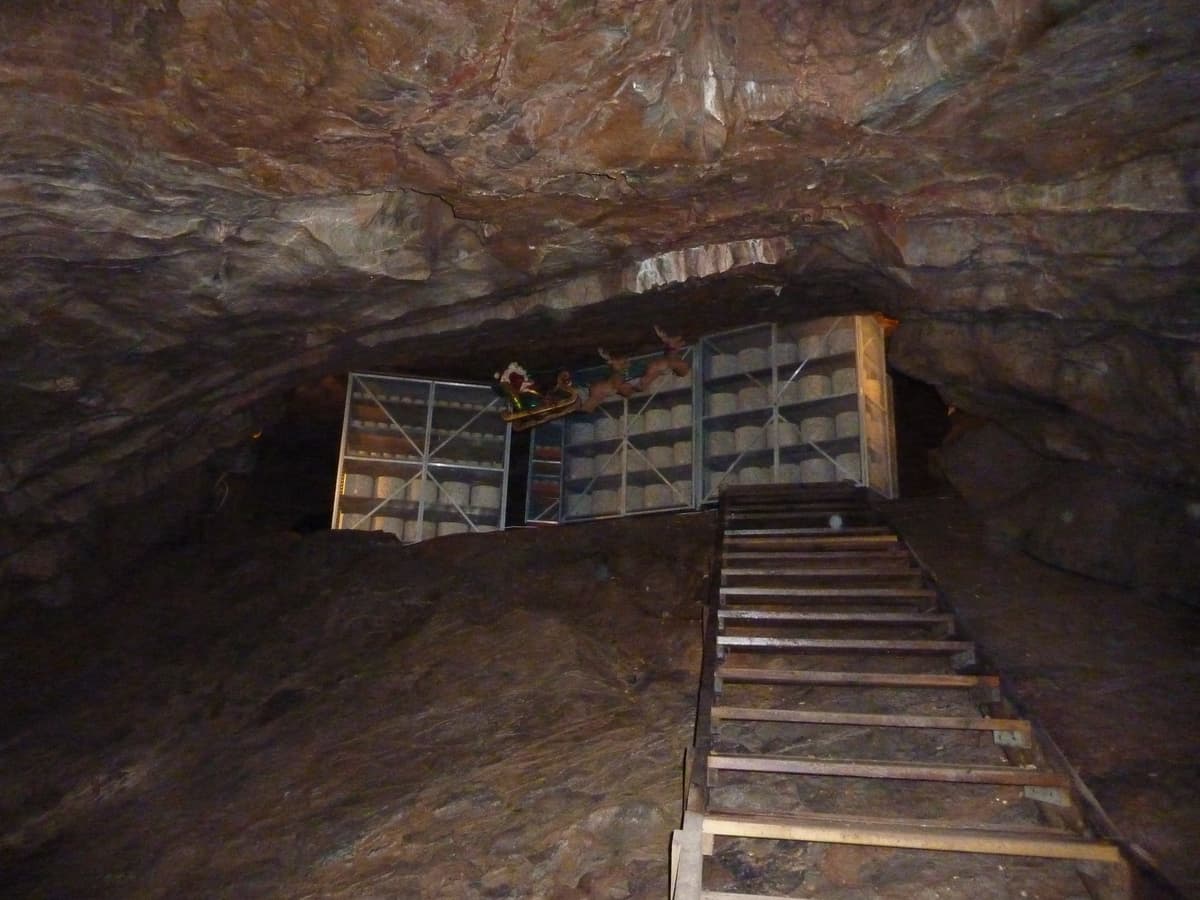
Quicke's Cheese Tours at Home Farm, Newton St Cyres, run on selected Fridays from May through September. The experience is thorough: a welcome talk on the Quicke family history, a dairy viewing room where you watch cheesemakers at work, a tutored tasting through the full Quicke's range, a guided tour of the "Cathedral of Cheese" maturing stores, a walk across the farm to meet the cows and see the milking parlour, and a two-course seasonal lunch at the Beer Engine pub nearby. You also leave with a complimentary tote bag and a handcrafted wedge of cheese to take home. As of late July 2026, the remaining public dates for the year are 14 and 28 August, and 4 and 11 September — everything earlier has gone. Private tours are available for groups of 10 to 24 adults. Book through the Quicke's website.
Sandridge Barton Wine & Cheese Tastings at Stoke Gabriel offer something quite different — a chance to pair Sharpham wines with Sharpham cheeses at the source. The Vineyard Safari lasts around two hours and includes a trailer ride out into the main vineyard, a full winery tour, and tastings of four wines alongside local cheese and charcuterie. A shorter guided tasting covers three wines, a tour of the winemaking facilities, and a cheese sampling, and there is a self-guided option if you would rather explore at your own pace. The visitor centre includes a restaurant, farm shop, and woodland and vineyard trails — check current prices and opening hours on their site before you travel.
Darts Farm Experiences at Clyst St George occasionally run vineyard and food producer tours alongside their farm shop and restaurant offering, and the food hall itself is a kind of self-guided tour of West Country cheese — you can taste before you buy, the staff are knowledgeable, and the whole place is built around celebrating local producers.
Book Quicke's tours well in advance. They sell out months ahead and only run on a handful of Fridays each year. If you cannot make a public tour, gift vouchers are available, or you can gather a group of ten or more and book a private tour on a date that suits you.
Pairing Devon Cheese with Devon Drinks
One of the pleasures of eating local is that everything seems to go together, and Devon's drinks scene happens to be almost as good as its cheese. A few pairings worth trying at your next gathering:
Sharpham Wine with Sharpham Cheese — the obvious pairing, and still one of the best. Sharpham's Dart Valley Reserve (a crisp, Germanic-leaning white with Madeleine Angevine and Bacchus) cuts beautifully through the richness of a ripe brie, while their rosé works wonderfully with Sharpham Rustic or Ticklemore goat's cheese. You can order a cheese and wine box direct from Sandridge Barton, or put one together yourself at Darts Farm.
Quicke's Clothbound with Devon Cider — the traditional English pairing. A properly made dry cider from Sandford Orchards — brewed in Crediton and now also pressed and poured at Darts Farm's Cidery — or a keeved farmhouse cider from one of the smaller Dartmoor producers, will stand up to the complexity of an extra-mature cheddar in a way that wine often cannot. The yeasty, apple-blossom notes of a good cider echo the earthiness of the cheese. For more on Devon's cider tradition see our guide to Devon's food and drink heritage.
Beenleigh Blue with Devon Honey and Port — the classic combination for a blue cheese, but the proximity matters. Devon produces some exceptional single-apiary honeys from Dartmoor heather, and drizzled over a wedge of Beenleigh Blue alongside a small glass of tawny port, it is as close to perfection as a cheese board gets.
Curworthy with Devon Ale — a properly made traditional English bitter from one of Devon's craft breweries pairs beautifully with the creamy, buttery character of Curworthy. Powderkeg, Hanlons or Summerskills all make session ales that work well. For more on local beer see our guide to the best craft beer taprooms in Exeter.
Where to Buy Devon Cheese
One of the pleasures of living in Devon is that you are never far from a farm shop or market where local cheese is taken seriously. Here are some of the best places to build your Devon cheese board.
Darts Farm, Clyst St George — Named Best Farm Shop in the UK more than once, Darts Farm stocks an exceptional range of Devon and West Country cheeses. Their food hall is filled with hundreds of hand-picked local and artisan suppliers, and the on-site master butcher, fishmonger, delicatessen and cider works — now The Cidery, run by Sandford Orchards, who took on Green Valley Cyder's historic press — mean you can source everything for a complete meal in one visit. The on-site Farm Table restaurant is also well worth a meal.
Country Cheeses, Totnes — A small specialist cheesemonger on Ticklemore Street (fitting, given the location) that has been open since 1986. They carry a deep range, almost all British and mostly from the West Country, and the staff will happily cut samples and talk you through it. There are sister shops in Tavistock and at 26 Fore Street, Topsham.
Exeter Farmers' Market — Held every Thursday at the junction of Fore Street and South Street, 9am to 1pm, the market brings together local producers selling directly to the public. Cheese is always well represented, and buying directly from the maker means you get the story as well as the cheese.
The Quayside Farmers' Market — A monthly fixture on the third Saturday at Piazza Terracina on Exeter Quay, with a wide range of traders including cheese producers and bakers. See our Devon food markets guide for the full year's dates.
Greendale Farm Shop, Farringdon — Another excellent Devon farm shop stocking a strong selection of local cheeses, including Curworthy, Devon Oke, Vulscombe, and several of the other producers mentioned here. It has a good on-site restaurant.
Quicke's Cheese Shop — On the farm itself at Home Farm, Newton St Cyres — check current opening hours before you drive out. The best place to taste the full Quicke's range, including seasonal and experimental releases you will not find elsewhere.
For a broader exploration of Devon's food markets and street food scene, there are plenty of opportunities to taste before you buy and discover smaller producers you might not have encountered before. If you are planning a food-focused day out, our guides to Topsham and Dartmouth both point you towards places that take local cheese seriously.
Building the Perfect Devon Cheese Board
A cheese board is the ultimate social centrepiece. It sits in the middle of the table, invites conversation, and gives everyone something to do with their hands while they talk. Building one entirely from Devon producers is not only possible — it is one of the best things you can do for a dinner with friends.
Here is a suggestion for a five-cheese Devon board:
The hard cheese: Quicke's Clothbound Mature Cheddar. The backbone of any British cheese board — nutty, earthy, and complex. Upgrade to the Vintage if you want something with more bite.
The soft cheese: Sharpham Brie. Creamy, golden, and utterly moreish. Let it come to room temperature before serving.
The blue: Beenleigh Blue. That lemony sweetness and crumbly texture cuts through the richness of the other cheeses beautifully. Substitute Harbourne Blue if you want something even bolder.
The semi-hard: Devon Oke. Its mature, complex character bridges the gap between the cheddar and the softer cheeses.
The wild card: Vulscombe goat's cheese, or Sharpham Ticklemore if you can find it. Light, herbaceous, and completely different from everything else on the board — it gives people something surprising to talk about.
Pair it with proper oatcakes, some locally made chutney, a handful of walnuts, a few slices of apple (from a Devon orchard, naturally), and a bottle of Sharpham wine or a couple of bottles from one of Devon's craft cider producers. Then sit down, pass the board around, and let the conversation take care of itself. For more detailed guidance on putting food and drink together, our guide to pairing food and drink like a pro will help — and if you're hosting, our etiquette of modern friendship piece covers the hosting side (greeting guests properly, dietary needs, the unwritten rules of "bring something") that turn a good cheese board into a good evening.
Take your cheese out of the fridge at least an hour before serving. Cold cheese is muted cheese — the flavours and aromas only fully develop at room temperature. This is especially important for soft cheeses like Sharpham Brie, which transforms from pleasant to extraordinary when it has had time to warm up and relax. Cover it loosely with a clean tea towel while it comes up to temperature, rather than cling film, which traps moisture.
The Social Art of Cheese
There is a reason cheese boards appear at the end of a meal, at parties, at gatherings of all kinds. Cheese invites sharing in a way that most food does not. You do not serve yourself a portion and eat it in silence. You lean across, you cut a slice, you say "have you tried this one?" You debate whether the blue is too strong or not strong enough. You discover someone else's taste and find it is different from yours, and that becomes a conversation.
Oxford research by Professor Robin Dunbar has put numbers on exactly what is happening around that board: people who eat together feel happier, trust each other more, and report stronger friendships than people who eat alone. Food that is physically shared from a common plate seems to help, though that part is less firmly established than the headline finding. We have written up the full science of it in the psychology of sharing food. The cheese board has been quietly running that experiment for centuries.
In a county like Devon, where the cheese is made by people you could plausibly meet, from milk produced by cows you could plausibly see from the road, that conversation goes further. It connects you to a place, to a tradition, to the kind of food heritage that makes eating something more than just fuel. If you want to see some of that food production up close, our guide to Devon's best farm experiences is a good starting point.
A Devon Cheese Day Trip from Exeter
If you want to turn your cheese appreciation into a proper day out, here is a route that hits the highlights without requiring any advance booking beyond the Quicke's tour.
Morning: Start at Quicke's Home Farm in Newton St Cyres — just a short detour off the A377 on the way to Crediton. If you have booked a tour, you will spend the morning in the dairy, the maturation rooms, and the farm. If not, the farm shop is open and you can buy the full range.
Late morning: Carry on into Crediton itself — it is five minutes up the road — for a wander and a coffee, or head straight for the Sandford Orchards taproom if you want the cider at source. The Devon cider guide has the full story.
Lunch: Drive back through Exeter and out to Darts Farm near Topsham, roughly forty minutes. This is the stop that does double duty: the Farm Table restaurant is excellent, the food hall will tempt you into buying considerably more cheese than you planned, and The Cidery on site is Sandford Orchards — so if you skipped Crediton, you can still drink their cider where it is pressed. Check our Topsham food guide for more options nearby.
Afternoon: If you still have energy, the Exeter Farmers' Market (Thursdays, South Street/Fore Street junction) often features local cheesemakers selling direct. Or head into Exeter for a coffee and a browse — our guide to the best coffee shops in Exeter will point you in the right direction.
This is the kind of day that works beautifully as a group outing. Food-focused but unhurried. Plenty to taste and talk about. And you go home with enough cheese to host a proper dinner party later in the week.
For those who want to dive deeper into Devon's food heritage, the Devon County Show (held annually in May at Westpoint, Exeter) features a magnificent cheese competition and tasting tent where you can sample entries from producers across the county. It is one of the best food days out in the South West calendar.
The cheesemakers of Devon have been doing this for a very long time. Some of them, like the Quickes, since 1540. The least we can do is sit down, taste what they have made, and share it with the people we care about.