
You Do Not Need Permission to Enjoy Wine
There is a particular kind of anxiety that surrounds wine, and it is almost entirely unnecessary. Somewhere along the way, wine became wrapped up in jargon, ceremony, and the quiet implication that if you cannot identify a Burgundy by postcode, you have no business drinking one. This is nonsense. Wine is fermented grape juice. It has been made for thousands of years by people who mostly did not have tasting notes. The idea that you need a qualification to enjoy it is a modern invention, and not a particularly helpful one.
What is helpful is knowing a few basics. Not because they make you sound clever at dinner parties — though they might — but because they genuinely make wine more enjoyable. When you understand what you are tasting, when you can name what you like and articulate why, wine stops being a thing you drink and becomes a thing you experience. That is the difference between finishing a glass and remembering it.
This guide is for anyone who has ever felt slightly lost staring at a wine list, who has nodded along when someone mentioned tannins without quite knowing what they meant, or who has wanted to visit a vineyard but felt they were not qualified. You are qualified. You have a mouth and an opinion, and that is all you need.
The Five S's: How to Actually Taste Wine
Professional tasters use a method called the Five S's — See, Swirl, Sniff, Sip, and Savour. It sounds formal, but it is really just a way of slowing down and paying attention. Once you have done it a few times, it becomes second nature.
See
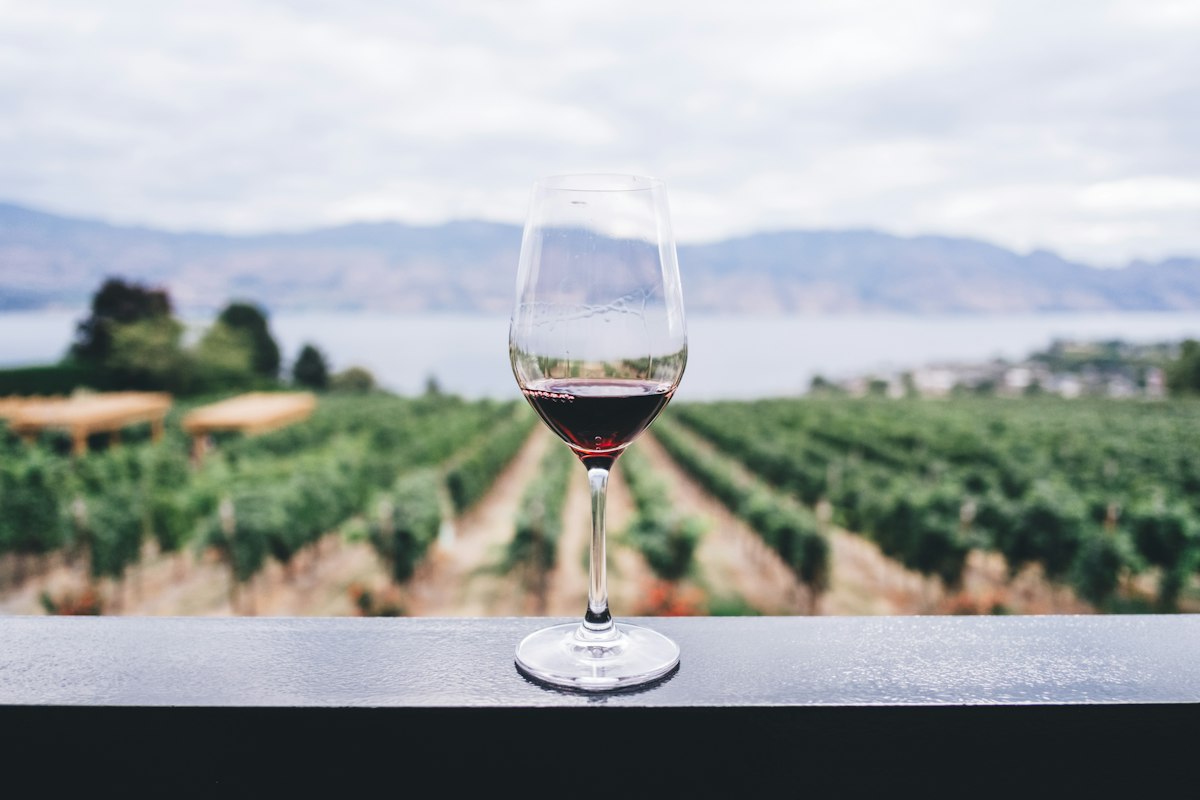
Before you taste anything, look at what is in your glass. Hold it against a white background — a napkin, a tablecloth, even a sheet of paper — and notice the colour. White wines range from almost transparent to deep gold. Reds run from pale ruby to nearly black. The depth and hue of the colour tell you something about the grape, the age, and the winemaking. A pale, straw-coloured white is likely young and light. A deep garnet red has probably spent time in oak or comes from a thick-skinned grape. You do not need to know what every shade means right away. Just start looking.
Swirl
This is the bit that makes people feel self-conscious, but it serves an actual purpose. Swirling introduces oxygen to the wine, which releases its aromas. The simplest way is to keep the glass on the table, hold it by the stem, and draw small circles. You are not trying to create a whirlpool. You are gently coaxing the wine to open up. After a few seconds of swirling, the wine will have more to say when you bring it to your nose.
Sniff
This is arguably the most important step, because the vast majority of what we perceive as flavour actually comes through our sense of smell. Bring the glass to your nose and take a slow, deliberate inhale. What do you notice? Fruit? Flowers? Something earthy or spicy? Do not worry about getting it right. There is no right answer. Wine aromas are divided into three categories — primary aromas from the grape itself (fruit, flowers, herbs), secondary aromas from fermentation (bread, butter, yoghurt), and tertiary aromas from ageing (vanilla, leather, tobacco). But at this stage, just notice what you notice.
Sip
Take a moderate sip and let the wine sit on your tongue for a moment. Try to let it reach every part of your mouth. You are looking for four things: sweetness (detected at the tip of your tongue), acidity (that tingly, mouth-watering sensation), tannin (the drying, slightly grippy feeling you get from black tea — only really present in reds), and body (does the wine feel light like water or heavy like cream?). Then swallow and see how long the flavour lingers. A wine that vanishes immediately is simple. A wine that stays with you for thirty seconds or more has what tasters call a long finish.
Savour
This is the bit most people skip, and it is the bit that matters most. After you have swallowed, sit with the experience for a moment. Did you enjoy it? Would you want another glass? Does it remind you of anything? Wine tasting is ultimately about building a personal vocabulary — a library of flavours and textures that you can draw on the next time you are choosing a bottle. There are no wrong answers, only your answers.
If you are tasting several wines in a row, start with lighter styles (sparkling, then white, then rosé) and move towards fuller ones (light reds, then bold reds, then sweet wines). This prevents a big, tannic red from overwhelming your palate before you have had a chance to appreciate anything delicate.
Six Grapes Every Beginner Should Know
You do not need to memorise every grape variety in existence. Start with six, and you will have a framework for understanding almost any bottle you encounter.
The Whites
Sauvignon Blanc is the grape for people who like things crisp and zesty. It tends to be aggressively citrus-driven — think grapefruit, lime, and cut grass — with a refreshing acidity that makes it an excellent warm-weather wine. New Zealand does it brilliantly, but the Loire Valley in France is where it started, and there are now some very decent English examples too.
Chardonnay is the most famous white grape in the world, and also the most misunderstood. Many people think they do not like Chardonnay because they associate it with heavy, oaky, buttery wines from the 1990s. But Chardonnay is actually a chameleon — it can be crisp and mineral-driven (as in Chablis) or rich and toasty (as in many California and Australian examples). The grape itself is relatively neutral; it takes its character from where it is grown and how it is made.
Riesling is the grape that wine nerds quietly obsess over. It ranges from bone-dry to lusciously sweet, with a piercing acidity that keeps even the sweetest examples from feeling cloying. Germany and Alsace are the classic homes, but Australia's Clare Valley produces outstanding versions too. If you think you do not like sweet wine, a good Riesling might change your mind.
The Reds
Pinot Noir is light-bodied, silky, and often described as elegant. It tends towards flavours of red berries — cherry, strawberry, raspberry — with a delicacy that makes it one of the most food-friendly red grapes in existence. Burgundy is the spiritual home, but New Zealand, Oregon, and — increasingly — England are doing remarkable things with it.
Merlot got an unfairly bad reputation after a certain film, but it remains one of the world's most planted and most approachable red grapes. It is softer and rounder than its neighbour Cabernet Sauvignon, with plummy, chocolatey fruit and gentle tannins. If you are new to red wine, Merlot is an excellent place to start.
Cabernet Sauvignon is the big one — full-bodied, structured, tannic, and built to age. It is the backbone of Bordeaux and the star of Napa Valley. Flavours tend towards blackcurrant, cedar, and tobacco. It can be intimidating when young, but a well-made Cab Sauv with a few years behind it is one of wine's great pleasures.
A useful trick for beginners is to compare grapes in pairs. Try a Chardonnay next to a Sauvignon Blanc and you will immediately understand the difference between texture and acidity. Try a Pinot Noir next to a Cabernet Sauvignon and you will learn what body means more quickly than any textbook can teach you.
The English Wine Boom (and Why It Matters)
Here is something that would have sounded absurd twenty years ago: England is now producing world-class wine. Specifically, world-class sparkling wine. English sparkling wine sales volumes have increased by 187 per cent since 2018, rising from 2.2 million bottles to over 6.2 million. In 2024, English and Welsh wine sales grew by 10 per cent to reach 8.8 million bottles — bucking the trend of declining wine consumption globally.
The UK now has over 1,000 vineyards covering more than 4,200 hectares, with over 220 wineries in operation. The chalky soils of Sussex and Kent bear a geological resemblance to the Champagne region, and the warming climate has made previously marginal sites viable for grape growing. The result is sparkling wine that regularly beats Champagne in blind tastings and has attracted serious investment from the likes of Taittinger, who planted their own English vineyard in Kent.
But you do not need to travel to Sussex to experience this. Devon has its own thriving wine scene, and it is well worth exploring.
Devon's Vineyards: World-Class Wine on Your Doorstep
Pebblebed Vineyard, Topsham
If you live in or near Exeter, Pebblebed Vineyard is practically on your doorstep. Situated on the edge of Darts Farm in Clyst St George, just outside Topsham, this award-winning estate started as a community project in 1999 when eleven local families planted the first half-acre of vines. It has since grown to more than twenty acres, with a modern winery producing close to 50,000 bottles in a good year.
The vineyard sits on a unique geological formation known as the Budleigh Salterton pebble beds, and the vines enjoy some of the highest sunshine hours in the county and the lowest rainfall, sheltered by the rain shadow of Dartmoor and the Haldon Hills. The result is still whites, rosés, and Pinot Noir reds that have won medals in national competitions. Pebblebed is one of very few single-estate wine producers in the country, meaning everything — from vine to bottle — happens in one place.
Tours and tastings are available, and the setting at Darts Farm means you can combine a visit with some of Devon's finest local food shopping. It makes for an outstanding afternoon out with friends, and one of our favourite places to experience Devon's food and drink scene — which we have written about in more detail in our Devon food and drink heritage guide.
Sharpham Wine at Sandridge Barton
Further south, in the rolling hills above the River Dart near Totnes, Sharpham Wine has been producing some of Devon's most celebrated wines for decades. In 2022, the winery relocated to a stunning new visitor centre at Sandridge Barton, a south-facing site with ideal terroir for grape growing.
Sandridge Barton offers both guided and self-guided wine and cheese tastings, as well as full vineyard and winery tours. The guided experience includes a tasting of three wines, a tour of the winemaking facilities, and a sampling of locally produced cheese. Vineyard safaris provide a deeper insight into the winemaking process, from vine to bottle, and typically last around two and a half hours.
The new visitor centre is open six days a week, with extended hours on Fridays and Saturdays. Pre-booking is recommended, especially during summer. If you are looking for a proper day out centred on wine — the kind where you learn something, taste something memorable, and spend unhurried time with the people you are with — Sandridge Barton is hard to beat.
Other Devon and South West Vineyards
The Devon wine scene extends well beyond these two. Lympstone Manor, the hotel and restaurant near Exmouth run by Michael Caines, has its own vineyard and offers tours from May to September. Swanaford Estate near Exeter provides guided tours and tastings throughout the warmer months. Calancombe Estate, Alder Vineyard, and several others welcome visitors for tastings and tours.
Cornwall, too, is getting in on the act. Camel Valley, near Bodmin, has been producing award-winning sparkling wine for years and is one of England's most decorated vineyards.
Wine Tasting as a Social Experience
Here is the thing about wine tasting that nobody talks about enough: it is one of the best social activities you can do. Better, in many ways, than going to the pub or meeting for coffee, because it gives you something to do and something to talk about simultaneously.
When you are tasting wine together, there is a built-in conversation engine. What does this smell like to you? Do you prefer the first one or the second? Have you tried anything like this before? It removes the pressure of having to generate topics from nothing — which is why wine tasting works brilliantly for groups that include people who do not know each other well. It is educational without being stuffy, social without being forced, and — assuming you are not spitting everything out — pleasantly convivial.
This is something we think about a lot at Dinners With Friends. The best social experiences are the ones where the activity and the conversation feed each other, where you are doing something together rather than just sitting opposite each other. Wine tasting, like sharing a meal, creates those conditions naturally. If you have not tried it, our piece on how sharing a meal can change your social life explores why food and drink have this particular power.
You do not need to visit a vineyard to host a wine tasting. Buy four or five different bottles — perhaps two whites and three reds — cover the labels, and taste them blind with friends. Keep it casual, let everyone share what they notice, and you will be surprised how much you learn. Some of Exeter's best wine bars also host regular tasting events that are designed specifically for beginners.
Common Myths Worth Ignoring
"Red wine with meat, white wine with fish." This is a reasonable starting point, but it is not a law. A light Pinot Noir can be beautiful with salmon. A rich, oaky Chardonnay can stand up to chicken or even pork. Drink what you enjoy with what you are eating, and let your own palate be the guide.
"Expensive wine is better wine." Sometimes. Often not. There are extraordinary bottles for under fifteen pounds and mediocre bottles for over fifty. Price reflects many things — brand, region, scarcity, production costs — but quality is only one of them. Some of the best drinking experiences come from discovering a brilliant bottle that costs less than a round of drinks.
"Screw caps mean cheap wine." This has not been true for years. Many excellent producers, particularly in Australia and New Zealand, use screw caps because they eliminate the risk of cork taint. A screw cap tells you nothing about the quality of what is inside.
"You need special glasses." Good glasses do make a difference — a wider bowl allows more air contact and a narrower rim concentrates aromas. But you do not need a different glass for every grape variety. A decent set of all-purpose wine glasses will serve you well for years.
"I don't have the palate for it." Yes, you do. Everyone does. Tasting is a skill, not a talent. The more you taste, the more you notice. The people who seem to have extraordinary palates have simply tasted more wine than you have — and paid attention while doing it.
Where to Start
If this guide has piqued your interest, start small. Visit one of Devon's vineyards. Go to a tasting event at a local wine bar. Buy a bottle of something you have never tried and share it with someone whose company you enjoy. Wine is at its best when it is shared, when it accompanies food and conversation, when it is the excuse for getting together rather than the point of the evening.
And if you are the sort of person who would rather explore with company — who would rather discover new flavours alongside new people — then you might enjoy what we do. Our events bring people together over food and drink in settings designed for real conversation. No pretension, no snobbery, just good wine, good food, and good company.
If you are curious about Devon's craft beer scene, that is worth exploring too. And if cider is more your thing, our Devon cider guide covers the county's finest orchards and taprooms. But wherever you start, the point is the same: the best drink is the one you are sharing with someone.