
Why Devon Is a Forager's Paradise
Devon has something that most English counties can only dream of: extraordinary range. Within an hour's drive you can move from the exposed granite tors of Dartmoor to ancient oakwood river valleys, from the salt marshes of the Exe Estuary to the dramatic cliffs of the South West Coast Path. Each landscape produces its own wild food, at its own time, in its own abundance. The hedgerows are thick, the woodlands are old, and the coastline is rich. If you want to learn to forage, there is no better county in England to start.
But foraging is about more than food. It's about paying attention. Once you start noticing what's growing in the hedgerows you walk past every day — the elderflower in June, the blackberries in September, the sloes clinging to blackthorn in November — your relationship with the landscape changes. You stop seeing a generic green backdrop and start seeing a larder, a pharmacy, a calendar. You notice when the seasons shift because the plants tell you. It's a kind of attentiveness that's increasingly rare in a world designed to keep us looking at screens.
And here's the part that matters most to us: foraging is better with friends. A walk through the woods to find wild garlic becomes an adventure when there's someone else spotting things you've missed. Coming home with bags of blackberries and turning them into crumble together is one of those simple, shared experiences that food makes possible. Foraging connects you to the land and to each other, and both of those connections run deeper than you'd expect.
The Legal Rules: What You Need to Know
Before you head out with a basket and a sense of purpose, you need to understand the law. It's simpler than most people think, but there are important boundaries.
The Theft Act 1968 (Section 4) allows you to pick wild plants, fungi, fruit, foliage, and flowers for personal use without it being classed as theft. This means you can pick blackberries from a hedgerow, gather mushrooms from a field, or collect wild garlic leaves from a woodland — provided you're doing it for yourself and your family, not for commercial sale.
You must not uproot any wild plant without the landowner's permission. This is a critical distinction. Picking leaves, flowers, and berries is fine. Pulling up roots or bulbs is not, unless you have explicit permission from the person who owns the land. This is particularly relevant with wild garlic — you can pick the leaves freely, but digging up the bulbs is unlawful without consent.
Access matters. You have the right to forage on public footpaths, bridleways, common land, and open access land. However, entering private land to forage is trespassing, even if the picking itself would otherwise be legal. Stick to public paths or ask permission.
Protected sites. It is illegal to pick any wild plants or fungi from Sites of Special Scientific Interest (SSSIs) or National Nature Reserves without permission from Natural England. Dartmoor has several SSSIs, so be aware of where you are.
The Countryside Code applies. Take only what you need. Leave plenty for wildlife and other foragers. Never strip a plant bare. A good rule of thumb: take no more than a third of what you can see, and spread your picking across a wide area rather than emptying one spot.
The Woodland Trust and the National Trust both publish clear foraging guidelines on their websites. The National Trust's policy welcomes sustainable foraging for personal use on most of their land, but asks visitors to forage responsibly and leave enough for wildlife. If you're foraging on Trust land in Devon — Killerton, Castle Drogo, or the Dartmoor estates — check their specific guidelines before you go.
A Seasonal Foraging Calendar for Devon
Spring (March — May): The Awakening
Spring is when foraging begins in earnest, and Devon's mild climate means it arrives earlier here than in most of England.
Wild garlic (ramsons) is the star of spring. From late March through May, you'll find it carpeting the floors of damp, shady woodlands in vast, pungent drifts. You'll smell it before you see it — a strong, garlicky scent that intensifies on warm days. The broad, bright green leaves are what you're after. Pick them young and tender, before the white star-shaped flowers appear in late April (the flowers are edible too, and milder). Wild garlic grows abundantly on the Dartington estate near Totnes, in the woods around the River Dart, and in countless hedgerow woodlands across South Devon.
Use the leaves raw in salads, blitzed into wild garlic pesto (with pine nuts, parmesan, olive oil, and lemon juice), stirred through risotto, or wilted into soup. Wild garlic butter — leaves chopped fine and beaten into softened butter with salt — is extraordinary melted over a steak or spread on fresh bread.
Nettles appear from March onwards and are at their best when young — pick only the top four to six leaves from each plant (wearing gloves, obviously). Blanching destroys the sting entirely. Nettle soup is a classic: sweat onions and garlic, add potatoes and stock, throw in a colander of nettles, simmer, blend. It's earthy, mineral-rich, and costs almost nothing.
Three-cornered leek (Allium triquetrum) lines Devon's lanes from March, with its drooping white bell-shaped flowers and mild oniony flavour. It's actually classified as an invasive species, so picking it is doing the local ecology a favour. The leaves, stems, and flowers are all edible — chop them into salads or use as a spring onion substitute.
Summer (June — August): Abundance
Summer is when Devon's hedgerows and coastline come into their own.
Elderflower blooms in June and early July, producing those flat, creamy-white flower heads that smell like summer itself. Pick them on a warm, dry day when the pollen is at its most fragrant — avoid washing them, as this removes the pollen that gives elderflower its flavour. Elderflower cordial (flower heads steeped in a sugar syrup with lemon for 24-48 hours, then strained) is one of the simplest and most rewarding things you can make. A batch costs pennies and tastes better than anything you can buy. Elderflower fritters — the heads dipped in a light batter and fried — are extraordinary.
Samphire is Devon's coastal treasure. Marsh samphire (glasswort) grows in the tidal salt marshes and mud flats around the Exe Estuary and the creeks near Stoke Gabriel on the River Dart. It's at its best from June to August, when the succulent green stems are tender and intensely salty. Pinch off the tips with your fingers or use scissors — never pull up the roots. Blanch for two minutes in unsalted boiling water (it's salty enough already), then toss with butter and lemon. It's one of the finest things the Devon coast produces, and finding it feels like discovering treasure.
Rock samphire grows on the cliffs and rocky outcrops along the South Devon coast from May onwards. It has a stronger, more pungent flavour — aromatic and slightly resinous. It's excellent pickled.
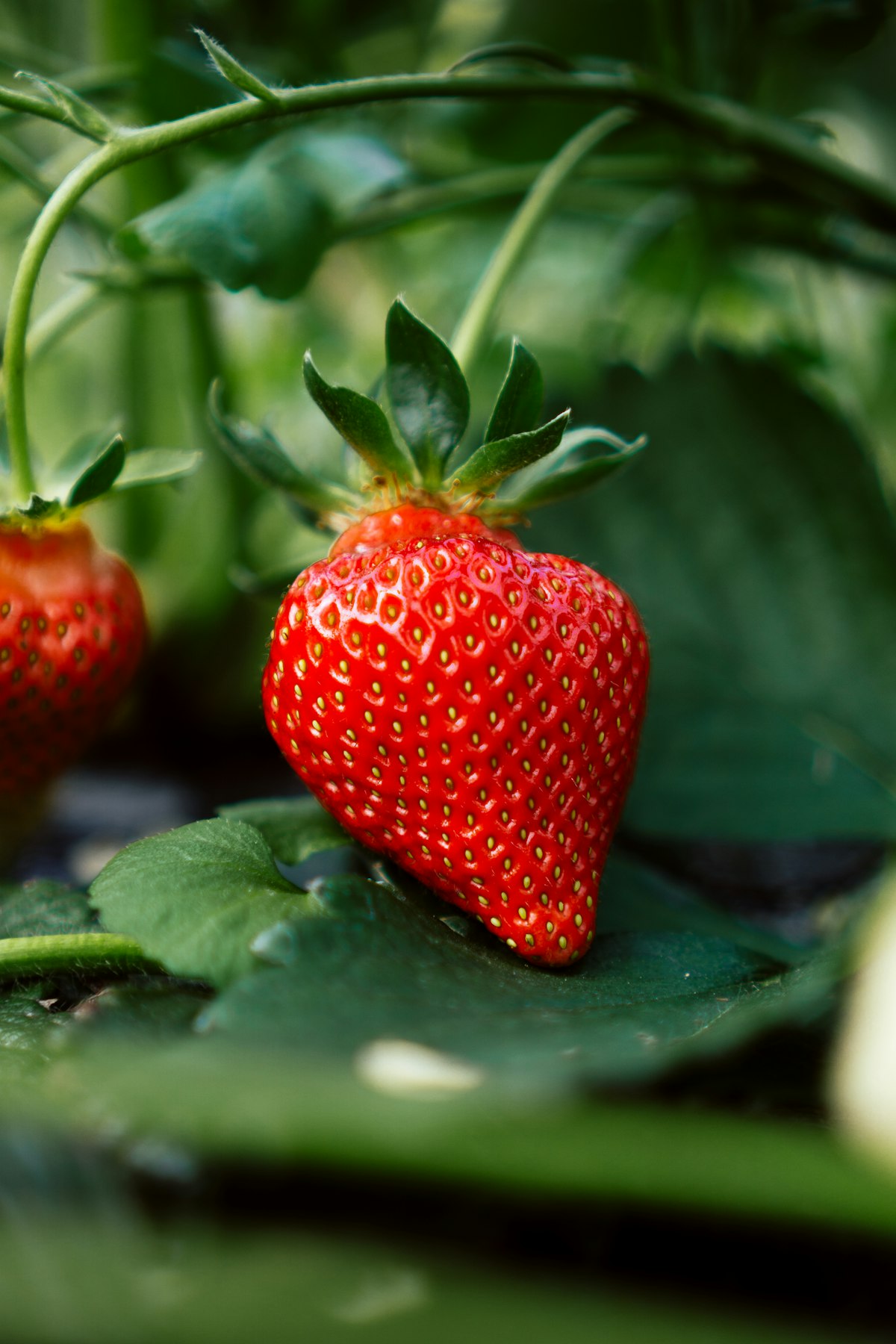
Wild strawberries hide in sunny spots along lanes and woodland edges from June. They're tiny — about the size of a pea — but their flavour is intensely concentrated, far more aromatic than any cultivated strawberry. You'll never find enough to make jam, but a handful scattered over ice cream or eaten on the spot is one of the great pleasures of a Devon summer walk.
When foraging on the coast, always check tide times before heading out to marshes or tidal flats. Samphire beds on the Exe Estuary and around Stoke Gabriel are only accessible at low tide, and the water comes in faster than you'd expect. The BBC Weather app and the UK Hydrographic Office website both provide reliable Devon tide tables. Take a phone, tell someone where you're going, and never forage alone on tidal ground.
Autumn (September — November): The Harvest
Autumn is the grand finale of the foraging year, and Devon delivers spectacularly.
Blackberries need no introduction. From late August through October, every hedgerow, lane, and woodland edge in Devon is dripping with them. The folklore says you shouldn't pick them after Michaelmas (29th September) because the devil has claimed them — in practice, they start to go mushy and flavourless by mid-October, so the folklore isn't far wrong. Pick into a container, not a bag (they crush easily), and use them within a day or freeze them immediately. Blackberry and apple crumble is the definitive autumn pudding, and if you've picked your own blackberries, it tastes twice as good.
Sloes are the small, dark blue-black berries of the blackthorn bush, and they're everywhere in Devon's hedgerows from late September. They're far too bitter and astringent to eat raw, but they're the essential ingredient in sloe gin — one of the finest things you can make in a kitchen. Fill a jar a third full with pricked sloes (freeze them overnight first to break the skins instead of pricking), add sugar to taste (about half as much as the sloes), fill with gin, seal, and shake every day for a month. By Christmas, you'll have something magnificent. Start in October and it'll be ready for Friendsmas.
Mushrooms are the most exciting and most dangerous autumn forage. Devon's ancient woodlands — particularly Haldon Forest near Exeter, the woods around Dartmoor's river valleys, and the beech woods of East Devon — produce an extraordinary variety. Ceps (porcini), chanterelles, and field mushrooms are all found here, but they require confident identification. Never eat a wild mushroom unless you are absolutely certain of what it is. The consequences of getting it wrong can be fatal.
Hazelnuts ripen in September and October. Look for them in hedgerows and woodland edges — the clusters of nuts in their green husks are easy to spot. Get to them before the squirrels do (this is a genuine challenge). Fresh hazelnuts are softer and sweeter than dried ones. Toast them in a dry pan until golden and use them in salads, cakes, or simply eat them as they are.
Winter (December — February): The Quiet Season
Winter foraging is quieter but not empty. Devon's mild climate means there's always something to find.
Rosehips hang on after the leaves have fallen, bright red against bare branches, from November through January. They're too fibrous to eat raw, but rosehip syrup — made by boiling the hips, straining through muslin, and reducing with sugar — is packed with vitamin C and tastes wonderful drizzled over porridge or stirred into yoghurt.
Winter chanterelles (Craterellus tubaeformis) appear from November in damp, mossy woodland, particularly under beech and oak. They're smaller and less dramatic than their golden summer cousins, but their earthy, peppery flavour is beautiful in risottos and pasta. Again, only pick what you can confidently identify.
Gorse flowers bloom even in the depths of winter in Devon — those bright yellow flowers that smell of coconut sunscreen. Pick the flowers (avoiding the vicious thorns) and use them to make gorse flower tea, gorse flower syrup, or infuse them into gin.
Where to Forage in Devon
Dartmoor. The moor itself is open access land, which means you can forage freely on the common land. The river valleys — the Dart, the Teign, the Bovey — are where you'll find the richest pickings: wild garlic in spring, mushrooms in autumn, nuts and berries throughout. The ancient oakwoods at Wistman's Wood and Black-a-Tor Copse are among the most atmospheric places in England, though be mindful that some areas are SSSIs.
The Exe Estuary. The marshes and mudflats around the estuary, from Topsham down to Exmouth, are prime samphire territory in summer. The Exe Estuary Trail makes for a beautiful walk with foraging possibilities along the way.
South Devon hedgerows. The narrow lanes between Totnes, Dartmouth, and Kingsbridge are lined with some of the most productive hedgerows in the county. Blackberries, sloes, elderflower, elder berries, hazelnuts, and crab apples are all abundant in their seasons.
The South West Coast Path. Rock samphire on the cliffs, sea beet on the foreshore, wild fennel growing in sheltered spots — the coast offers its own distinctive larder. The stretch between Budleigh Salterton and Sidmouth is particularly good.
Foraging Courses in Devon
If you're a complete beginner — and especially if you want to learn about mushrooms — a guided course is the best way to start. Devon has four excellent providers.
Wildwood Devon (formerly Escot) offers immersive half-day foraging introductions led by Bex Flintham, an experienced forager and educator with over twenty years in the field. The course runs on Mondays between May and October, and it deliberately excludes fungi for safety reasons, so do not book it expecting a mushroom day. These are particularly good for families and complete beginners. Contact their education department on 01404 822188 for upcoming dates.
Robin Harford at Eatweeds has been teaching foraging in Devon for many years, bringing knowledge gathered from travels documenting how indigenous cultures around the world work with wild plants. His courses focus on the hedgerows and woodlands of Devon and are among the most respected in the South West.
Totally Wild UK runs guided foraging courses at the Escot Estate near Ottery St Mary, where you'll learn to identify and sustainably harvest wild ingredients, from fragrant herbs to seasonal mushrooms.
Ground Up Cookery School at Grealy Barn, Chudleigh, offers a unique combination of foraging and cooking. Led by Colin Wheeler-James, a chef with more than thirty years in professional kitchens, the day begins at the cookery school before a guided foraging walk. Guests then work in pairs to transform their finds into seasonal dishes. It's foraging with a purpose, and the results are consistently delicious.
A foraging course makes a brilliant gift — and an even better group activity. Book one with friends, spend the morning learning to identify plants, then spend the afternoon cooking what you've found together. It's the kind of shared experience that creates memories, and you'll come away with knowledge you'll use every time you go for a walk. Several Devon providers take group bookings — ask when you enquire.
Foraging With Friends: The Social Adventure
There's something about foraging that naturally builds connection. Perhaps it's the shared sense of discovery — the excitement of spotting something edible, the satisfaction of filling a basket together. Perhaps it's the pace: foraging forces you to slow down, to walk at the speed of attention rather than exercise, to stop and examine things closely. It creates the kind of unhurried, side-by-side conversation that builds real friendships.
But the real magic happens afterwards, when you bring your haul home and cook it together. Wild garlic pesto made with leaves you picked that morning. Blackberry crumble with fruit still warm from the sun. Samphire tossed in butter, eaten with bread and white wine, tasting of the estuary where you found it. When you've foraged the ingredients yourself, the meal means something different. There's a story behind every mouthful, and sharing that story is a kind of intimacy that a restaurant meal can never quite match.
If you're looking for a way to spend time with people that doesn't involve a pub, a restaurant, or a screen, foraging is it. It gets you outdoors. It teaches you something. It produces food. And it gives you something to do with your hands and your attention while the conversation takes care of itself.
Devon's landscape is generous. It gives freely, in every season, to anyone willing to pay attention. All you need to do is start noticing — and bring a friend along for the walk.
For more ways to explore Devon's incredible food landscape, our guide to Devon's food and drink heritage covers the producers, farms, and traditions that make this county one of the best places in England to eat. And if you'd like to share a meal with people who care about good food and genuine connection, our events bring small groups together at some of Devon's finest venues.