The Trade-Off Nobody Warned You About
You rolled out of bed at 8:55, made coffee in your own kitchen, and logged on in joggers. No commute, no office politics, no hovering managers. Remote work is, by almost every measure, a better way to spend your working hours.
So why does it sometimes feel like something important is missing?
If you've found yourself going entire days without a real conversation — one that isn't scheduled, agenda-driven, or conducted through a screen — you're far from alone. Gallup's 2024 State of the Global Workplace report, which surveys workers in over 160 countries, found that 25% of fully remote employees reported feeling lonely a lot of the previous day, against 21% of hybrid workers and 16% of those working entirely on site.
The flexibility is real. But so is the isolation.
What We Actually Lost When We Left the Office
Most people don't miss the office itself. They miss what happened between the work — the unplanned moments that nobody thought to value until they were gone.
The morning chat while waiting for the kettle to boil. The colleague who'd lean over the partition to share something funny. The after-work drink that turned into an unexpectedly honest conversation. These micro-interactions weren't just pleasant distractions. They were the scaffolding of your social life.
Asked where their closest friendships began, Britons name work and school above everything else — YouGov puts work at 44% and school at 41%. For many remote workers, one of those two pathways has been almost entirely removed.
Sociologist Rebecca G. Adams identified three conditions necessary for forming close friendships: proximity, repeated unplanned interactions, and a setting where people feel comfortable letting their guard down. The traditional office, for all its faults, provided all three. Your home office provides none of them.
The Zoom Fatigue Paradox
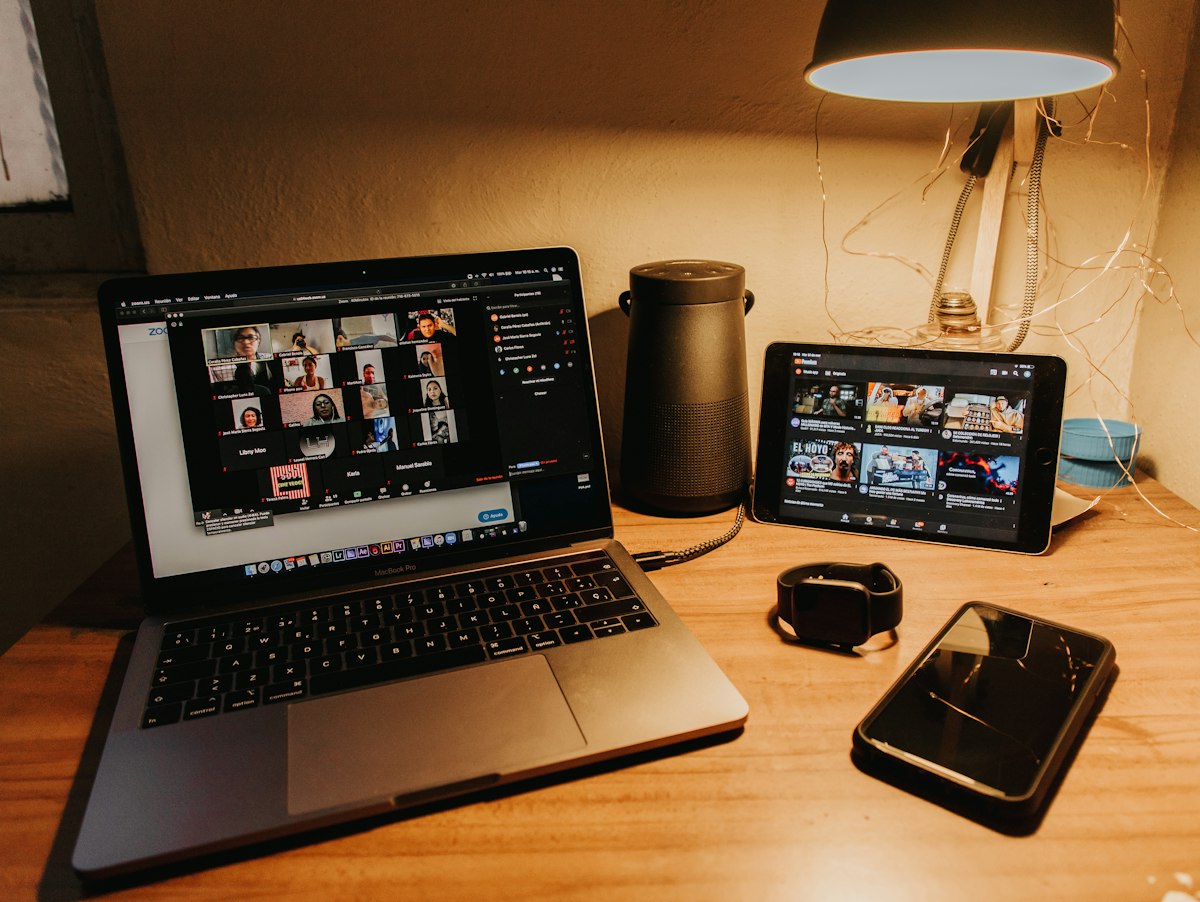
The cruel irony of remote work is that you can spend the entire day on video calls and still feel profoundly disconnected.
Back-to-back meetings create the illusion of social contact. But scheduled, task-focused calls are fundamentally different from the spontaneous conversations that build real bonds. There's no body language, no shared physical space, no comfortable silence. Every interaction has a start time and an end time.
A contact-diary study by Vlahovic, Roberts and Dunbar at Oxford found that the longer an interaction lasted, the happier people felt afterwards — but only for face-to-face contact. Time spent on other channels did not show the same effect. Physical presence triggers the release of endorphins — through laughter, shared meals, even casual touch — in ways that video calls struggle to replicate.
Spending 8 hours on Zoom is not the same as spending 8 hours with people. Digital interaction can maintain existing bonds, but it struggles to build new ones.
The result is a strange kind of exhaustion. You're drained from constant screen time, yet starved of the genuine connection that actually replenishes you. We explore this tension further in our piece on digital fatigue and the return to real-world connection.
The Disappearing "Third Place"
In 1989, sociologist Ray Oldenburg coined the term "third place" to describe the social spaces that exist between home and work — the cafes, pubs, barber shops, and community centres where people naturally gather and connect.
For office workers, the workplace itself functioned as a kind of third place. Strip that away, and remote workers are left bouncing between their first place (home) and... well, that's it.
This matters more than it might seem. Third places are where weak ties form — the casual acquaintances and familiar faces that research shows play a surprisingly important role in wellbeing. Gillian Sandstrom and Elizabeth Dunn found in 2014 that people experienced greater happiness and belonging on days they interacted with more acquaintances than usual. In a companion study, they found that even a brief, genuine exchange with a barista left people feeling happier and more connected than a purely efficient transaction did.
Remote workers who never leave the house don't just lose colleagues. They lose an entire layer of social connection that most people take for granted.
Why This Hits Harder Than You'd Expect
It's easy to dismiss WFH loneliness as a minor inconvenience. But the research paints a more serious picture.
The US Surgeon General's 2023 advisory, Our Epidemic of Loneliness and Isolation, found that the mortality impact of being socially disconnected is comparable to that caused by smoking up to 15 cigarettes a day. That is a comparison of effect sizes, not a claim that loneliness does to you what smoking does. A UCL-led review of eight long-running cohort studies found that adults who described themselves as often lonely had roughly double the odds of developing depression.
American research by Harvard's Making Caring Common project found 30 to 44-year-olds to be the loneliest age group, with 29% frequently or always lonely — the same age group most likely to be in remote or hybrid roles. UK figures are measured differently and come out much lower, but the age pattern is worth noticing.
The demographic overlap is hard to ignore. If you're in your 30s or 40s, working remotely, and feeling increasingly disconnected — you're sitting at the intersection of multiple risk factors. Our article on what loneliness does to your brain and body explains why that nagging sense that something isn't right deserves to be taken seriously.
Practical Ways to Rebuild Connection
Remote work loneliness isn't inevitable, though. It just requires something that office life used to provide automatically: intentional social structure.
Find or Create a Third Place
Plenty of remote workers already do part of their week somewhere that isn't home. If you're not one of them, start small. Work from a cafe one morning a week. Try a coworking space. Pop into the library. The goal isn't productivity — it's proximity to other humans.
Separate "Social" From "Work"
Stop relying on work calls to fill your social needs. They can't. Instead, build separate social touchpoints into your week that have nothing to do with your job. A weekly walk with a friend. A regular class or group activity. Something recurring, not a one-off — the art of the midweek catch-up has practical ideas for building this into your routine.
Lean Into Evening Social Events
Remote workers actually have an advantage here. Without a draining commute or the social fatigue of a full day in the office, your evenings are genuinely free. Community dinners, supper clubs, classes, and meetups become more appealing — and more sustainable — when you haven't already spent all your social energy by 5pm. Browse our upcoming events to find an evening that works for you.
Protect Your Weak Ties
Make an effort to have brief, genuine interactions with people outside your household. Chat with the barista. Say hello to a neighbour. These aren't trivial — research consistently shows that even minimal interactions with acquaintances improve mood and reduce feelings of isolation.
Be Honest About What You Need
Plenty of remote workers feel embarrassed about admitting they're lonely. After all, they chose this arrangement — or at least prefer it to the alternative. But acknowledging the social cost doesn't mean giving up the benefits. It means building something to fill the gap that the office used to fill by accident.
You don't have to choose between the freedom of remote work and a fulfilling social life. You just have to stop expecting one to provide the other.
Why Dinner Tables Beat Video Calls
There's a reason that shared meals have been central to human bonding for thousands of years. Eating together triggers endorphin release, lowers cortisol, and creates the kind of relaxed, unhurried environment where real conversation happens naturally.
For remote workers especially, a dinner with new people offers exactly what the home office takes away: physical presence, unscripted interaction, and the chance to connect with someone you wouldn't have met otherwise. No agenda, no mute button, no "you're on mute."
It's the opposite of a Zoom call. And that's precisely the point.
You're Not Broken — You're Just Under-Connected
Working from home didn't make you antisocial. It just removed the social infrastructure that most of us relied on without realising it. The fix isn't going back to the office full-time. It's building new structures — deliberately, consistently — that give you what the old ones used to. If your closest relationships started at work, our guide on maintaining bonds beyond the workplace is worth a read.
Start with one thing this week. One coffee shop session, one evening event, one honest conversation with someone who isn't a colleague. See how it works if you'd like to try a Dinners With Friends evening.
Your laptop will still be there when you get home.