
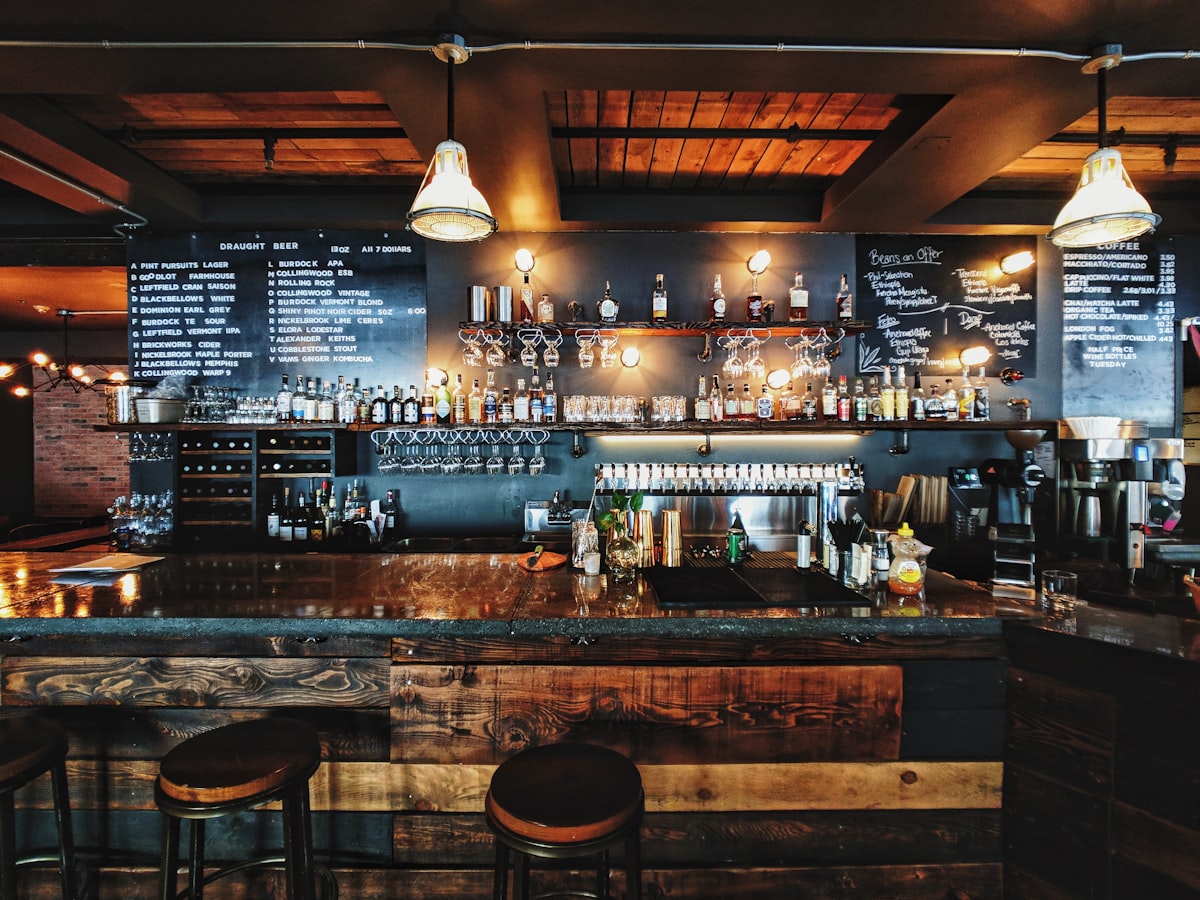
Britain's Original Third Place
Long before anyone coined the term "third place" — the sociological concept of a space that is neither home nor work, where community life happens — Britain already had one. It was on every high street, in every village, at every crossroads. It had a sign swinging outside, a fire burning inside, and a landlord who knew your name. It was, and in many places still is, the pub.
The British pub is not a bar. It is not a restaurant that serves drinks. It is not a branded outlet dispensing corporate lager to a soundtrack of algorithmically selected music. The pub — the real pub, the one that has been there longer than anyone can remember — is a social institution. It is the place where communities form, where news is shared, where arguments are settled, where strangers become regulars and regulars become friends. It is, when it works properly, the living room of the neighbourhood.
And it is in trouble.
A Brief and Incomplete History
The pub's roots go back further than most people realise. The Romans built tabernae — roadside taverns — along their network of roads across Britain. After they left, Anglo-Saxon alehouses emerged, often identifiable by a pole or bush hung outside the door. By the medieval period, inns and taverns were woven into the fabric of daily life, serving as meeting places, courts, post offices, and — occasionally — the only place in a village where you could get a hot meal.
The word "pub" is a contraction of "public house," and the name matters. These were not private establishments in the way we understand commercial hospitality today. They were public spaces — open to all, owned by the community in spirit if not always in law. The pub was where you went when you had nowhere else to go. It was the place that would always have you.
Over the centuries, pubs evolved through coaching inns, gin palaces, Victorian alehouses, tied houses owned by breweries, and the free houses that fought to maintain independence. Each era brought changes, but the core function remained the same: the pub was where people gathered. It was where you watched the football, held your wake, celebrated your engagement, commiserated about your boss, and ate a packet of crisps that had been hanging behind the bar since last Tuesday.
The Numbers Tell a Grim Story
In 2000, there were roughly 60,800 pubs across the UK. By 2020, that number had dropped to around 46,850, according to the British Beer and Pub Association's own series. That is close to a quarter of all pubs, gone in twenty years — approximately 14,000 places where people used to meet, talk, and belong, replaced by flats, supermarkets, or simply left to decay. By the end of 2025 the figure was down to about 44,650.
The decline has not slowed. Analysis of the property-tax register found that 366 pubs across England and Wales closed for good in 2025 — one permanent loss for every day of the year. Pub and bar company insolvencies have more than doubled in five years, from 367 in 2020 to 789 in 2025, and the pressures are not easing.
The reasons are multiple and compounding. Business rates are punishing — the 2026 revaluation lifted the average pub rateable value by around 30 per cent, from roughly £30,945 to £40,245 — and although the temporary 40 per cent retail, hospitality and leisure relief ended in March 2026, what replaced it is a permanently lower set of business rates multipliers for the sector, which does not fully offset the revaluation for larger sites. Energy costs remain elevated. Staffing costs have risen. The price of food and drink from suppliers has increased. And fewer people are going out, squeezed by the cost of living and — particularly among younger generations — drinking less alcohol overall.
The UK has lost roughly 16,000 pubs since 2000 — more than a third of the total. That is not just 16,000 businesses gone. It is 16,000 community spaces, 16,000 places where people used to gather, and countless friendships, traditions, and local identities that went with them.
What We Lose When We Lose a Pub
The closure of a pub is rarely just an economic event. It is a social one. Robin Dunbar's Friends on Tap report for CAMRA, published in 2016, found that people with a "local" they visit regularly have more close friends, trust their community more, and are more contented than those who do not — and argued that pubs give us the chance to meet a wider range of people than we otherwise would, confined as most of us are to work and home. In academic terms, the pub is a space of "weak ties" — those casual, repeated encounters with people you know by sight but might never invite to dinner, which turn out to be enormously important for wellbeing, belonging, and community cohesion.
When a village pub closes, the retired couple who walked there every Sunday lose their routine. The young mum who met other parents at the Friday lunch session loses her support network. The man who lives alone and spoke to nobody else all week loses his only social contact. The quiz team disbands. The darts league folds. The charity fundraiser has nowhere to happen. The community does not just lose a building — it loses the connective tissue that held it together.
This is particularly acute in rural and suburban areas, where the pub may be the only communal space for miles. But it matters in cities too. Urban pubs serve as anchors for neighbourhoods — the place that gives a street its identity, that makes a collection of houses feel like somewhere rather than just an address.
We have written about the broader crisis of disappearing communal spaces in our piece on how sharing a meal can change your social life. The pub is perhaps the most British example of this phenomenon — and its loss is felt more deeply than most people acknowledge.
What Makes a Great Pub
Ask ten people what makes a great pub and you will get ten different answers, which is part of the point. A great pub is not a formula. It cannot be designed by a committee or rolled out by a chain. But there are common threads.
Character. A great pub has a personality. It might be the crooked beams, the uneven floor, the collection of horse brasses, or the inexplicable painting of a dog above the fireplace. It might be the landlord's taste in music or the chalk-drawn specials board with handwriting that is almost — but not quite — legible. Whatever it is, it feels specific to that place and no other.
Regulars. A pub without regulars is just a room with a bar. The regulars are what make a pub feel alive — the nods, the in-jokes, the reserved stool, the way somebody always knows whose round it is. Regulars create atmosphere, and atmosphere is the thing that makes you want to stay for one more.
Good beer. Not necessarily craft beer, not necessarily cask ale, but beer that has been looked after. Well-kept lines, proper cellar temperature, glasses that are clean and the right shape. A pub that serves flat, warm, or stale beer has failed at its most basic duty. Conversely, a pub with three well-kept cask ales is doing more than a pub with twenty neglected taps.
A welcome. This is the one that matters most. A great pub makes you feel like you belong there, even on your first visit. The best landlords and landladies have an instinct for this — they acknowledge you without interrogating you, include you without overwhelming you, and create a space where being alone at the bar is perfectly comfortable. Not every pub manages it, but the ones that do become places you return to for years.
The Micropub Revolution
Against the backdrop of traditional pub closures, something interesting has been happening. The micropub movement — tiny, independent pubs, often in converted shops or units, typically serving only cask ale and cider with no music, no screens, and no food beyond a packet of pork scratchings — has been quietly growing for over a decade.
There is no official register of micropubs, so nobody can give you a reliable count, but pub directories now list them in the hundreds and the number keeps climbing. The model works because the overheads are dramatically lower than a traditional pub. With smaller spaces, fewer staff, and a stripped-back offering, micropubs can operate profitably in locations where a full-sized pub would struggle.
But the appeal is not just economic. Micropubs succeed because they return to what the pub was always supposed to be: a place for conversation. Without background music, without televisions showing sport, without fruit machines or pool tables, there is nothing to do in a micropub except talk to the people around you. It sounds radical. It is, in fact, the oldest idea in the world.
In Devon, Beer Matters Community Micropub on Tuly Street in Barnstaple — North Devon's first, open since December 2022 — offers a rotating selection of cask-conditioned ales in a setting that prioritises conversation above all else. It is a model that other towns and cities would do well to follow.
If you have never been to a micropub, seek one out. The experience is closer to drinking in someone's front room than visiting a conventional pub — and that is entirely the point. No music, no screens, just conversation and carefully chosen beer. It is the antidote to everything that has gone wrong with modern hospitality.
The Community Pub Movement
Perhaps the most inspiring development in British pub culture is the rise of community ownership. When a pub faces closure, an increasing number of communities are clubbing together to buy it themselves.
The Plunkett Foundation, which supports community-owned businesses across the UK, counted 215 community-owned pubs trading at the end of 2025. The model has a remarkably high survival rate — 98 per cent of community businesses are still going after five years, and 94 per cent after twenty — and the movement continues to grow, with 34 new community businesses starting to trade in 2025 alone.
Community-owned pubs are, by definition, run for the benefit of the community rather than for profit. They tend to serve as more than just drinking establishments — hosting events, classes, meals for the elderly, post office services, and whatever else the community needs. They are pubs in the fullest sense of the word: genuinely public houses.
In South Devon, The Tally Ho in Littlehempston became the area's first community-owned pub in 2014, saved from closure by local residents who pooled their resources and refused to let their local disappear. It still trades today, though the community company sold the pub to its tenants in 2023 and wound itself up the following year. That is worth knowing too: community ownership is often the thing that gets a pub through the years it would otherwise have died in, rather than a permanent arrangement.
Pub Culture vs Bar Culture
There is a distinction worth drawing between pub culture and bar culture, because they are not the same thing, even though the words are often used interchangeably.
Bar culture is transactional. You go to a bar to consume a drink, often standing, often briefly, before moving on to the next place. The music is loud. The lighting is low. The cocktail menu is long. The bill is eye-watering. Bars are designed for a certain kind of night out — energetic, social in the broadest sense, but not necessarily conducive to actual conversation.
Pub culture is relational. You go to the pub to be somewhere, not just to drink something. You might stay for one pint or five, but the point is the staying. The pub rewards return visits. It builds familiarity. The bartender who remembers your order, the couple in the corner who you always see on Thursdays, the dog asleep by the fire — these are the textures of pub life, and they create a kind of belonging that no bar can replicate.
This is not to say bars are bad. They serve a purpose. But they do not serve the same purpose as pubs, and when pubs are replaced by bars — or when pubs try to become bars, which is often worse — something irreplaceable is lost. The pub sits inside a wider local food and drink culture, which we explored in our piece on Devon's food and drink heritage.
Devon's Pub Scene
Devon remains one of the best counties in England for pub culture. The combination of ancient buildings, independent breweries, a strong food scene, and a population that still values the pub as an institution means there is no shortage of remarkable locals to discover.
The Cott Inn near Dartington describes itself as a traditional 14th-century thatched Devon longhouse — seven hundred years of history in its cob and beams. The Dartmoor Inn at Lydford has taken Gold at both the Food Drink Devon and Taste of the West awards. Exeter's own pub scene spans everything from centuries-old coaching inns to modern craft beer taprooms — we covered the best craft beer taprooms in Exeter separately if that is more your speed.
But the pubs worth celebrating are not always the famous ones. They are the village locals that have been serving the same community for generations. The ones where the landlord still chalks the specials on a blackboard. The ones where the fire is real, the dog is welcome, and the conversation flows as freely as the beer. Those are the pubs that matter, and those are the ones we should be fighting to keep.
If you want to support your local pub, the single most effective thing you can do is go there. Regularly. Not just for special occasions, but for a midweek pint, a Sunday lunch, a Friday evening wind-down. Pubs survive on regulars, and regulars are made by showing up. The pub that is there for you in ten years' time will be the one you visited this week.
Why It Matters More Than Ever
American researchers have taken to calling it a "friendship recession". Survey work by the Survey Center on American Life found that the share of Americans reporting no close friends at all rose from 3 per cent in 1990 to 12 per cent in 2021, and the share with three or fewer close friends from 27 per cent to 49 per cent. That is US data, not British, and it should not be read across directly. But the direction of travel — fewer close friendships, less in-person contact, thinner community belonging — is one plenty of people here would recognise.
The pub cannot solve all of this. But it can solve some of it. It provides a low-barrier, low-commitment way to be around other people. You do not need to organise anything, RSVP to anything, or commit to anything. You just go. You sit. You drink something. You talk to whoever is there. And slowly, over time, you become part of something — a community of regulars, a network of familiar faces, a place where people know your name and notice when you are not there.
That is worth preserving. Not out of nostalgia, not because of some sepia-tinted fantasy about what pubs used to be, but because the thing that pubs do — bringing people together, across ages and backgrounds and opinions, in a space that belongs to everyone — is something we need more of, not less.
The British pub is the original social technology. It has been connecting people for centuries. It does not need an app, a subscription, or a marketing budget. It just needs customers, a decent pint, and a reason to stay for one more. If you have a local, go there tonight. If you do not, find one. And if the one you find is in danger of closing, ask what you can do. Some of the best things in life are the ones we have to fight for.