The Most Connected Generation That Ever Felt This Alone
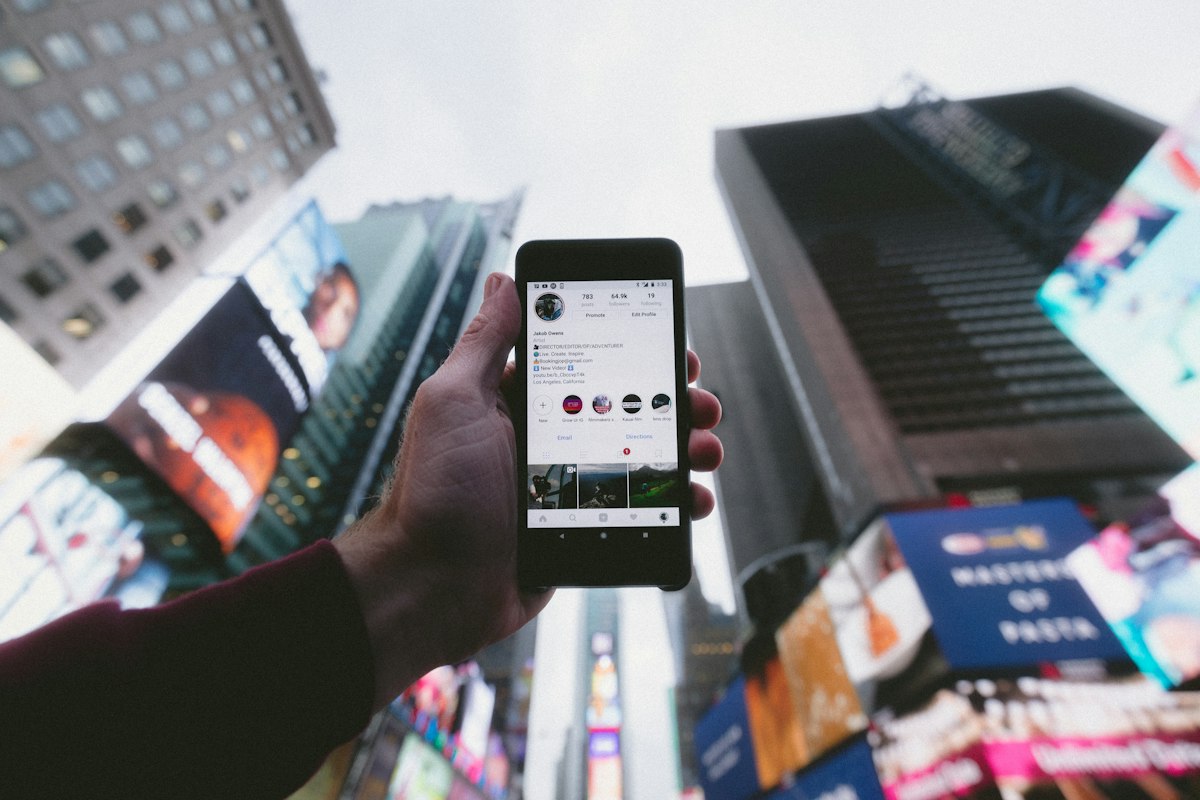
By any reasonable measure, we should be the most socially connected humans in history. We carry devices in our pockets that let us reach anyone, anywhere, instantly. We have access to platforms with billions of users. We can see what our friends ate for dinner, watch their children grow up, and follow their holidays in real time without exchanging a single word.
And yet, the UK's Community Life Survey for 2024/25 reports that 6.6% of adults feel lonely often or always — down slightly on the year before. Adults aged 16 to 24, the generation most immersed in social media, score highest on the survey's indirect loneliness measure: 12% report high levels, against 9% of adults overall. A 2025 BACP survey of 5,150 UK adults found that 72% of 16 to 25-year-olds say loneliness negatively affects their mental health — the highest of any age group, against a national average of 54%. And the World Health Organisation's 2025 Commission on Social Connection found loneliness affecting one in six people globally, connected to an estimated 100 deaths every hour.
Something isn't adding up. We have more ways to connect than ever before, and we feel more disconnected than ever before. This isn't a paradox — it's a category error. We've confused the feeling of connection with the reality of it. And that confusion is quietly devastating our social lives.
The Illusion of Maintenance
Social media's most seductive trick is making you believe you're maintaining your friendships when you're actually just observing them.
You see your old university friend's photos from their birthday party. You like the post. Maybe you drop a comment — "Looks amazing!" You feel a small warm glow of connection. You've engaged. You've participated. You know what's happening in their life.
But here's what you haven't done: you haven't heard their voice. You haven't sat across a table from them. You haven't asked how they're really doing. You haven't shared the kind of vulnerable, unscripted, meandering conversation that actual friendship requires. You've consumed a curated highlight reel and mistaken it for intimacy.
Robin Dunbar, the Oxford evolutionary psychologist whose research on friendship has shaped how we understand human social networks, has been studying this phenomenon for years. His conclusion is blunt: digital media slows the rate at which a friendship decays, but nothing on it will stop that friendship quietly subsiding into an acquaintanceship if you never meet.
Dunbar's research describes concentric layers of relationship — roughly 5 intimates, 15 close friends, 50 good friends, and an active network of about 150 people you have a genuine relationship with. Acquaintances sit further out still, in looser layers of around 500 and 1,500. These numbers are remarkably consistent across cultures and, crucially, across platforms. Having 800 Facebook friends doesn't expand your capacity for close relationships. It just means you have 800 people you're vaguely aware of.
The limitation, Dunbar argues, is not technological but cognitive. We have a finite amount of social energy, and maintaining a close friendship requires regular, meaningful interaction. Social media is extremely good at helping us keep track of people who would otherwise disappear from our lives. But keeping track of someone is not the same as being close to them.
What keeps face-to-face friendships strong is doing the same thing at the same time in the same place. Watching a film alone produces different reactions than watching it with friends. Social media, by its nature, lacks that shared immediacy.
The Like Is Not the Friendship
Let's be specific about what social media interactions actually do and don't accomplish.
A like on Instagram takes approximately half a second. It requires no thought, no vulnerability, no effort. It communicates "I saw this" and nothing more. Yet it triggers a small dopamine response in both the giver and the receiver — just enough to feel like something social happened. Multiply this across dozens of interactions a day and you've created a convincing simulation of social activity without any actual social substance.
Comments are better, but not by much. "Love this!" and a string of heart emojis is not conversation. It's applause. And while applause feels nice, it doesn't build the kind of reciprocal intimacy that protects against loneliness.
Even direct messages — which are closer to real conversation — lack the critical elements that make face-to-face interaction psychologically nourishing. There's no body language. No tone of voice. No shared physical space. No eye contact. No comfortable silences. No spontaneous laughter that catches you both off guard. The richest forms of human communication are analogue, and they don't translate to screens.
Brandon Bouchillon at the University of Arkansas, writing in Telematics and Informatics in 2024, found that people who felt genuine closeness and camaraderie with their social media contacts reported higher self-esteem six weeks later, with gains spilling over into reduced loneliness for younger users. But the key words are "closeness and camaraderie": what predicted the benefit was the quality of the relationships, not the size of the network. Separately, Pollet, Roberts and Dunbar's work on network size found that having more online contacts did not translate into feeling emotionally closer to any of them. Time spent accumulating online connections is time that can't be spent deepening them.
Passive Scrolling: The Silent Drain
Not all social media use is created equal, and the distinction between active and passive use is crucial.
Active use — posting, commenting, messaging, creating content — involves at least some engagement and self-expression. Passive use — scrolling, browsing, lurking — involves almost none. And it's passive use that makes up the vast majority of most people's social media time.
A meta-analysis of 141 studies published in the Journal of Computer-Mediated Communication in 2024, covering approximately 145,000 participants and 897 effect sizes, examined exactly this. Its headline finding deserves reporting honestly, because it cuts against the usual narrative: most of the effects were negligible. The active/passive distinction mattered far less than the debate assumes, and neither pattern was reliably associated with offline support or with loneliness — a null result the authors flag as important in itself. Where effects did appear, active use tracked greater online support and slightly greater wellbeing, and both patterns tracked somewhat higher anxiety.
So the honest position is not that social media is poisoning us. It is that it is doing much less for us than the hours suggest. A nine-year longitudinal study of nearly 7,000 Dutch adults, published in Personality and Social Psychology Bulletin in 2024, put it more starkly. Its lead author, James Roberts of Baylor University, concluded that "extensive use — whether active or passive — does not alleviate feelings of loneliness and may, in fact, intensify them." That challenges the popular idea that social media is fine as long as you're using it "the right way." What it does not do is show that scrolling is what makes you lonely — only that it is not what will fix it.
Ofcom's Online Nation 2025 puts UK adults at around two and a half hours a day on social media, and 18-to-24-year-olds at 6 hours 20 minutes a day online overall — the most of any adult group. That is a lot of hours being technically connected to everyone and meaningfully connected to almost no one.
Try tracking your social media time for one week using your phone's built-in screen time tools. Then ask yourself: how many of those hours involved a genuine, reciprocal conversation with someone I care about? For most people, the honest answer is close to zero. That's time that could be spent on connections that actually nourish you.
The Comparison Machine
Beyond the illusion of connection, social media creates a secondary problem: it distorts our perception of everyone else's social lives.
When you scroll through Instagram on a Saturday evening, you see the dinner parties, the weekend trips, the group photos full of laughing friends. What you don't see is the person who posted that photo spending the rest of their weekend alone. You don't see the three invitations they turned down before saying yes to that one. You don't see the anxiety they felt before arriving, or the low mood that settled in when they got home.
Social media presents a filtered, curated, strategically timed version of reality — and we compare our full, unedited experience against it. The result is a distorted sense that everyone else has a richer social life than we do, which makes our own loneliness feel like a personal failing rather than a shared human experience.
This comparison effect appears to bite hardest on younger adults. The evidence here is genuinely mixed — as the meta-analysis above found, most measured effects are small — but the comparison effect shows up repeatedly in work on younger users, the demographic that uses social media most heavily.
We've written about creating space for joy in a world full of bad news — and one of the most effective steps is reducing your exposure to the curated highlights of other people's lives. Not because their joy isn't real, but because measuring your life against a filtered version of theirs will always leave you feeling inadequate.
What Actually Works: Turning Digital Into Real
The solution isn't to delete all your apps and move to a cottage in the Highlands (though some days, the appeal is undeniable). Social media is a tool, and like any tool, its value depends on how you use it. The problem arises when it becomes a substitute for real connection rather than a facilitator of it.
Here's how to shift the balance.
Use Social Media to Arrange, Not Replace
The single best use of social media is as a coordination tool. Instead of liking someone's post, send them a message: "Saw you went to that restaurant — fancy going together sometime?" Instead of commenting on their story, use it as a prompt to make an actual plan. The platform should be the bridge to in-person contact, not the destination.
The Unfollow-and-Call Strategy
Go through your following list and identify five people whose lives you're passively consuming but haven't actually spoken to in months. Unfollow them (or mute them — less dramatic, same effect). Then call them. An actual phone call. Five minutes of hearing someone's voice creates more genuine connection than a year of liking their photos.
Apply the 5:1 Rule
For every hour you spend on social media, aim for five hours of in-person social interaction over the course of a week. This isn't a scientifically derived ratio — it's a practical framework for ensuring that your digital social life doesn't crowd out your real one. If you're spending around 17 hours a week on social media, which is roughly the UK average, that means actively seeking real hours of face-to-face connection rather than hoping they turn up.
This might sound like a lot, but it doesn't have to be structured. A coffee with a colleague. A walk with a friend. A dinner with your partner without phones on the table. A conversation with your neighbour. These interactions accumulate, and their psychological benefits are profound. We've explored how sharing a meal can change your social life — and it remains one of the most powerful forms of connection available.
Set Boundaries With Intention
Blanket digital detoxes rarely stick. What works better is creating specific phone-free zones: meals, conversations, the first hour of the day, the last hour before bed. These boundaries don't require willpower — they just require a drawer to put your phone in.
There is real research on what a phone does to a conversation. Przybylski and Weinstein found that people rated conversations as less close and less meaningful when a mobile phone was simply visible on the table — not being used, just present. The phone on the table isn't only a distraction. It changes the conversation before anyone picks it up.
Curate Ruthlessly
If you're going to use social media, make it work for you. Follow local community groups, event pages, and interest-based communities that lead to real-world interaction. Unfollow accounts that exist solely to make you feel inadequate. The algorithm shows you what you engage with — so engage with things that move you towards connection rather than deeper into the scroll.
Julianne Holt-Lunstad's meta-analytic work finds that the strength of a person's social relationships is among the strongest predictors of how long they live — a finding about relationships, not followers. Five close friends who you see regularly will do more for your wellbeing than five thousand followers who don't know your surname.
Presence Is the Point
There's a word that keeps appearing in the research on connection, and it's one that social media is structurally incapable of providing: presence.
Being present means being in the same room. Sharing the same air. Noticing the pause before someone answers, the slight change in their expression, the thing they almost said but didn't. It means being affected by someone else's mood and allowing them to be affected by yours. It means the messy, unscripted, gloriously imperfect experience of being a human being in the company of other human beings.
You can't be present through a screen. You can be entertained, informed, amused, and even moved. But you can't be present. And presence is what friendship actually requires.
The next time you find yourself reaching for your phone to check what your friends are doing, try a different experiment. Put the phone down and go find out in person. Call someone and ask them to meet you for a walk. Book a table and invite someone to fill the seat across from you. Show up at the social club you've been meaning to try.
The version of connection that exists on the other side of your screen is thin, fleeting, and ultimately unsatisfying. The version that exists on the other side of your front door is messy, inconvenient, and profoundly nourishing.
Choose the door.