
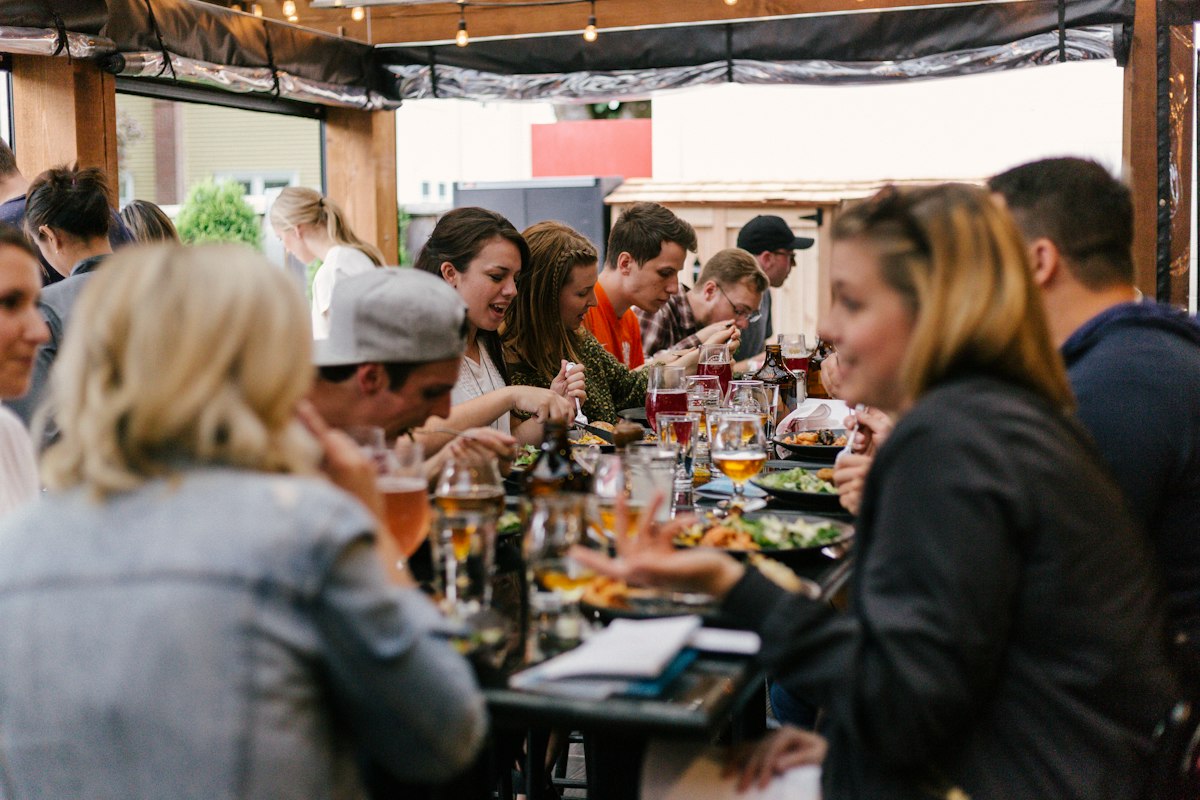
The Dish Everyone Brings: Themselves
There is something quietly radical about a meal where nobody is in charge. No single person slaving away in the kitchen for hours. No anxiety about whether the lamb is overdone. No bill at the end that makes you wince. Just a group of people, each carrying something they made or bought or picked up from the good bakery on the corner, arriving at a table with the shared understanding that this evening belongs to everyone equally.
That is the potluck — or, as we tend to say in Britain, the bring-a-dish supper. And it is having a moment.
Across the UK, from rented flats in Bristol to village halls in Norfolk, people are rediscovering the simple pleasure of communal eating where everyone contributes. It is not a new idea — the word "potluck" dates back to the sixteenth century, when it referred to whatever happened to be in the pot when an unexpected guest arrived. But the modern version, where each person brings a dish to share, has evolved into something more intentional: a way of eating together that is affordable, inclusive, and surprisingly good at building friendships.
Why Now? The Return of Bring-a-Dish Culture
Several things have converged to make the potluck feel newly relevant. The cost of living crisis has made dining out an increasingly fraught calculation. With eating out costing what it now does — and a dinner for two in many cities a genuine event-budget decision — the maths of regular socialising simply does not work for a lot of people. The average price of a pint has gone from under £3 to £5.17 in a decade.
At the same time, there is a growing hunger (pun intended) for social connection that goes beyond a quick drink or a scroll through the group chat. As we explored in our piece on how sharing a meal can change your social life, eating together appears to engage the endorphin system — the same machinery behind feelings of warmth, safety, and belonging, though in these studies endorphin release is inferred from raised pain thresholds rather than measured directly. The dinner table remains one of the most powerful social technologies we have. The potluck simply makes that technology more accessible.
Robin Dunbar's 2017 UK survey study "Breaking Bread" found that people who eat socially more often are happier, more trusting of others, and more engaged with their local communities — and that they have more friends they can depend on.
And then there is the cultural shift. After years of performative cooking — the Instagram-perfect dinner party, the competitive bake — many people are exhausted by the pressure of hosting alone. A potluck removes that pressure entirely. You do not need a kitchen island or a Le Creuset collection. You need a table, some chairs, and friends who are willing to bring a dish.
The Most Democratic Way to Eat
What makes the potluck genuinely special is its egalitarianism. In most social dining situations, there is a host and there are guests. The host does the work; the guests show up, eat, and say thank you. That dynamic is lovely, but it is also inherently unbalanced. Over time, the same people end up doing the heavy lifting, while others feel guilty for never reciprocating.
A potluck dissolves that hierarchy. Everyone contributes. Everyone participates. The person who brought a perfect homemade tagine sits next to the person who picked up hummus and flatbread from the supermarket on the way over, and both offerings are equally welcome. That matters more than people realise, because it means nobody needs to feel like they are not "good enough" to participate in social eating.
This connects to something we have written about before: the idea that building a support network requires spaces where everyone feels they have something to offer. A potluck creates exactly that kind of space. You do not have to be a brilliant cook. You do not have to be wealthy. You just have to show up with something — and the act of bringing something, however simple, gives you a stake in the evening.
The Food Is Actually Better
Here is the thing nobody tells you about potluck dinners: the food is often more interesting than a single-host dinner party.
When one person cooks, you get one person's repertoire. When ten people each bring a dish, you get ten different kitchens, ten different backgrounds, ten different comfort foods and family recipes and things they discovered on holiday. You end up with a table that looks like a food market — a Sri Lankan dhal next to a quiche Lorraine next to a Korean fried chicken next to a tray of brownies. It is gloriously unpredictable.
There is a reason potluck culture thrives in multicultural communities. American church suppers and community meals have long worked this way, and the result is not just a meal but a cultural exchange — a way of saying, "This is who I am, and I want to share it with you."
In the UK, we are seeing something similar happen. Community groups, workplace teams, parent networks, and friendship circles are using bring-a-dish suppers as a way to celebrate diversity without making a fuss about it. When someone brings their grandmother's jollof rice or their dad's shepherd's pie, they are sharing more than food. They are sharing a story.
If you are organising a potluck, set up a shared document or group message where everyone can note what they are bringing. This avoids the classic pitfall of ending up with seven salads and no main course. Assign categories — starters, mains, sides, desserts — and let people choose where they fit.
Potluck Culture: UK vs America
It is worth noting that the potluck tradition has evolved quite differently on either side of the Atlantic. In America, potlucks are deeply embedded in everyday culture — church suppers, neighbourhood block parties, office celebrations. The word itself is universally understood.
In Britain, we have historically been more reserved about the whole thing. We tend to say "bring a dish" or "everyone brings something" rather than using the word "potluck," which still feels slightly foreign to many British ears. There is also a lingering social anxiety about what to bring — a very British worry about not wanting to outdo the host or bring something too simple or too ambitious.
But that is changing. The rise of supper clubs, community meals, and informal gathering culture — driven partly by the cost of living squeeze and partly by a genuine desire for more meaningful socialising — has normalised the idea that meals can be collaborative rather than performative. Marks & Spencer now publish potluck menu guides. Community Facebook groups regularly organise bring-a-dish events. The formality barrier is crumbling.
What Britain adds to the potluck tradition is a certain warmth and self-deprecation. The best British potlucks involve someone apologising profusely for their "slightly dodgy" pavlova, which turns out to be absolutely delicious, and someone else bringing a cheese board because "I genuinely cannot cook, but I can buy cheese." That honesty is part of the charm.
How to Organise a Brilliant Potluck
If you are thinking of hosting a bring-a-dish supper, here are some practical tips drawn from people who do this regularly:
Choose a Theme (or Don't)
Themes can be brilliant — a Mediterranean night, a comfort food evening, a "food from your childhood" theme — because they give people a starting point and make the table feel cohesive. But they are not essential. Some of the best potlucks are completely unthemed, resulting in a beautiful chaos of flavours that somehow works.
Coordinate Without Controlling
The host's job at a potluck is logistics, not cooking. Set up a WhatsApp group or shared list where people can claim a category. You might say: "I'll do a big salad and provide plates and cutlery — can someone do a main, someone do bread, and someone do pudding?" This prevents duplication without micromanaging.
Handle Dietary Needs With Care
This is important and often overlooked. Ask everyone in advance about allergies, intolerances, and dietary preferences. Encourage people to label their dishes — even a small card noting "contains nuts" or "vegan" makes a big difference. If you know someone is gluten-free or vegetarian, make sure at least two or three dishes will work for them. Inclusivity at the table starts with making sure everyone can actually eat.
Welcome the Non-Cooks
Not everyone can cook, and that is absolutely fine. Someone who brings a brilliant bottle of wine, a selection of dips from the deli, a box of chocolates, or a loaf of good sourdough from the bakery is contributing just as meaningfully. The point is participation, not performance. You might also suggest that non-cooks handle drinks, bring ice, or set up the table. There is always a way to contribute.
Think About the Space
You do not need a dining room. Potlucks work brilliantly as buffets — food on the kitchen counter, plates on laps, people sitting wherever there is space. Some of the best ones happen in gardens, on picnic blankets, or in community spaces. The informality is the point.
Start Small
If you have never organised one before, start with six to eight people. Big enough to feel like an event, small enough that you can manage it comfortably. As you get more confident, you can scale up. If you want a more structured approach, our guide to building a monthly supper club with friends walks you through turning a one-off into a rhythm.
Make It a Recurring Thing
The real magic of potluck dinners comes from repetition. The first one is fun. The third one starts to feel like a tradition. By the sixth, people are bringing their signature dish, the group has in-jokes, and you've built something that looks a lot like community. The comfort of routine in chaotic times is something we've written about before — and a regular bring-a-dish evening is one of the easiest rituals to establish.
The Social Magic of Contribution
There is a psychological principle at work in potluck dinners that goes beyond the food. When people contribute to something, they feel more invested in it. There is a related principle in consumer psychology called the "IKEA effect" — demonstrated by Norton, Mochon and Ariely in 2012, who found people value objects more highly when they have laboured to create them. Their experiments were about flat-pack furniture and origami rather than dinner, but the analogy holds: a potluck dinner that you contributed to feels more like yours than one you simply attended.
That sense of ownership changes the social dynamic. People are more relaxed, more talkative, more willing to engage, because they feel like they belong. They are not guests being entertained — they are participants in a shared experience. And as we discussed in the power of showing up, the more often people show up and contribute to something, the stronger the bonds become.
This is why potluck suppers are particularly powerful for building new friendships. If you are new to an area or trying to expand your social circle, the potluck format gives you a role to play from the very first evening. You are not just a face at the table — you are the person who brought that incredible banana bread.
A 2019 study in Psychological Science found that people who ate from shared plates rather than separate ones went on to cooperate more, and compete less, in negotiations afterwards. How we eat changes how we behave toward each other.
What the newest dining research says
The potluck revival isn't happening in isolation. It's part of a broader shift in how Britain eats and socialises. A 2026 OpenTable survey, reported by The Scotsman, found that almost half of diners (44%) say they'd prefer eating with others over going solo. More than a third (36%) of Brits want to see more group and private dining options. And 79% say eating out helps them feel more connected to other people.
Interestingly, the same survey found that 56% of Brits prefer individual servings when they eat out — which is rather the point of the potluck. At a bring-a-dish supper you get both: your own plate, and ten kitchens' worth of choice to put on it. You can have the communal table without having to fight anyone for the last piece of flatbread. It's a distinction the restaurant sharing-plate trend has never quite resolved, from high-end London openings to gastropubs in Devon.
The 2025 World Happiness Report provides the academic underpinning. Drawing on Gallup World Poll data from more than 150,000 people across 142 countries, its researchers found that the number of meals you share explains as much variation in wellbeing as income or unemployment does. A potluck where someone brings supermarket hummus and someone else brings their grandmother's biryani is, on that measure, doing the same work as a Michelin-starred tasting menu. If you want to dig into the science of why sharing food bonds us at a biological level, we've written about that at length.
If you're nervous about hosting your first potluck, start with a theme night — "comfort food from your childhood" is a reliable winner. It gives people a starting point, sparks stories, and almost guarantees that the table will be full of dishes nobody else has tried. The conversation writes itself.
More Than a Meal
In the end, the potluck revival is about more than saving money or eating well, though it does both. It is about creating a form of socialising where nobody is excluded by cost, cooking ability, or confidence. It is about the pleasure of sitting down to a table that represents the collective effort of a group of people who care enough to show up with something to share.
In a time when social isolation is rising, when the cost of going out can feel prohibitive, and when so many of us are craving connection that feels real rather than performative — the bring-a-dish supper is a quiet act of resistance. It says: we do not need a restaurant, a budget, or a perfect menu. We just need each other, a table, and whatever we can bring. If you're socialising on a budget, the potluck is your secret weapon — all the warmth and connection of a dinner party at a fraction of the cost.
That feels like something worth coming back to.
If you love bringing people together over food, you might also be interested in becoming a Dinners With Friends Community Host — facilitating social dinners in your area and eating for free while you do it.