
You're Going to Lie on the Floor and Let Someone Hit a Gong at You
Let's get this out of the way early: a sound bath is not a bath. You won't get wet. You won't need to bring a towel — though you might want to bring a blanket. What you will do is lie on the floor in a dimly lit room while someone plays a collection of gongs, singing bowls, chimes, and other instruments around you, and the vibrations wash over your body like waves.
It sounds, frankly, a bit ridiculous. And if someone had described this to me five years ago, I'd have smiled politely and changed the subject. But sound baths have quietly become one of the most popular wellness experiences in the UK, and Devon — with its deep roots in alternative health and its population of people genuinely curious about wellbeing — has become a proper hotspot for them.
The question isn't really whether sound baths work. Enough people swear by them that something is clearly happening. The more interesting question is: what's actually going on, and why does the experience feel even better when you go with someone else?
What Actually Happens in a Sound Bath
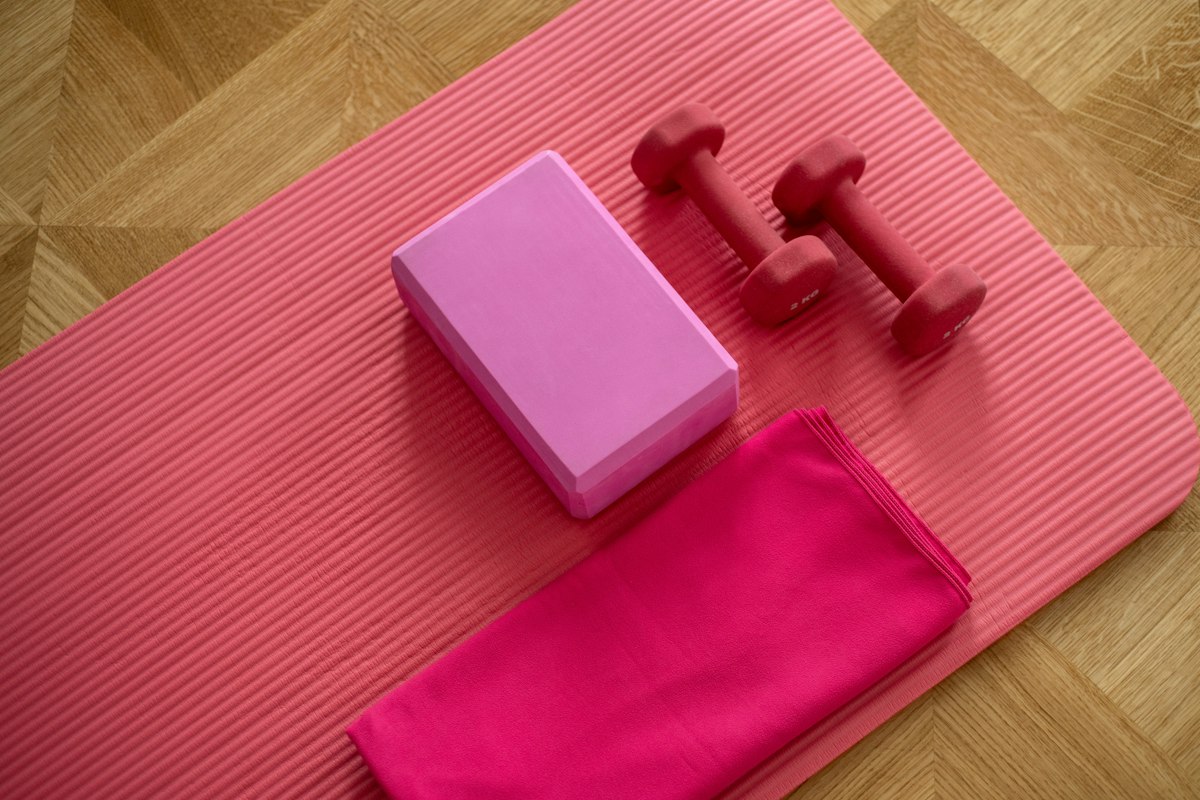
A typical session lasts between sixty and ninety minutes. You arrive at a studio, village hall, or wellness space that's been prepared with yoga mats, blankets, and bolsters. The lighting is low — often candles or warm fairy lights. The practitioner has arranged their instruments around the room: gongs of various sizes, Himalayan singing bowls, crystal bowls, chimes, bells, sometimes a shruti box or hand-pan.
You lie down on your back. You close your eyes. And then the sound begins.
It starts gently — a single bowl struck softly, the tone expanding outward through the room. Gradually, more instruments are introduced. The gongs produce deep, rolling waves of sound that you feel as much as hear. The crystal bowls create high, pure tones that seem to hover in the air. The chimes add texture. The practitioner moves around the room, shifting the sound landscape so it seems to come from different directions, different distances.
There's nothing you need to do. No technique to master. No correct way to breathe. You just lie there and let the sound do its work.
What people report feeling varies enormously. Some experience deep physical relaxation — a heaviness in the limbs, a warmth spreading through the body. Others notice tingling sensations, particularly in the hands, feet, or scalp. Some people see vivid colours or images behind their closed eyes. Some fall asleep. Some cry. And some people feel absolutely nothing the first time and wonder what all the fuss is about.
All of these responses are completely normal.
The Science: What We Know (and What We Don't)
Sound baths sit in that interesting space where ancient practice meets modern curiosity. The instruments used — particularly Tibetan singing bowls and gongs — have been part of meditative and healing traditions for centuries. But what does the science actually say?
The most credible mechanism is something called brainwave entrainment. Your brain produces electrical patterns at different frequencies depending on your state of alertness. When you're stressed and focused, you're in a beta state (13-30 Hz). When you're relaxed and calm, you shift into alpha (8-13 Hz). Deeper still is theta (4-8 Hz) — the state associated with meditation, creativity, and that floaty feeling just before you fall asleep. And then there's delta (0.5-4 Hz), the frequency of deep, dreamless sleep.
The theory behind sound baths is that the frequencies produced by the instruments encourage your brainwaves to slow down, shifting you from beta through alpha and into theta. Here is where we have to be honest with you, because this is the point at which sound bath marketing usually stops being careful.
Most of the entrainment research is on binaural beats — two slightly different tones delivered through headphones — which is not the same thing as a gong being struck across a village hall. And even on binaural beats the evidence is genuinely mixed. A 2023 systematic review in PLOS ONE looked at fourteen studies: five supported the entrainment hypothesis, eight contradicted it, and one was mixed. That is not a settled science. That is an open question.
A 2017 observational study in the Journal of Evidence-Based Complementary and Alternative Medicine found that 62 participants in a singing bowl meditation reported significant reductions in tension, anger, fatigue and depressed mood, along with increases in spiritual wellbeing. People new to the practice showed a particularly large drop in tension. It is worth knowing what kind of study that was: single-arm, self-reported, with no control group and no randomisation. It tells you what people said afterwards. It cannot tell you what caused it.
Small studies do suggest that singing bowl sessions shift the body towards the parasympathetic state — the "rest and digest" response that counteracts stress mode — measured through heart rate variability. Whether that is specifically because of anything the sound is doing, or simply because you are lying still in a dark room for an hour with nothing asked of you, is a question researchers have not answered.
Either way, the lived experience is real. People leave sound baths feeling profoundly relaxed, often more so than after a standard meditation session. Whether that needs a neuroscientific explanation to be worth an hour of your Saturday is up to you.
Where to Try a Sound Bath in Devon
Devon has a genuinely impressive range of sound bath practitioners and venues. Here are the ones worth knowing about.
Elk & Ether — Exeter and Topsham
Elk & Ether is one of the most established sound healing practices in the Exeter area. It is run by Lau, who describes herself as a qualified Sound Therapist registered with The College of Sound Healing and is separately HCPC-registered as an arts psychotherapist. The group gong baths run monthly — one Saturday evening in Topsham and one Sunday morning in Exeter.
The sessions feature a collection of sacred gongs supported by an impressive cast of accompanying instruments: hand-pan, singing bowls, bells, chimes, shruti box, drums, and more. Elk & Ether also offers psychotherapy and cacao ceremonies, so there's a holistic depth to their practice that goes beyond a one-off experience.
The Topsham sessions have a particularly lovely atmosphere. There's something about being in a small Devon town on a Saturday evening, walking from a gong bath into the quiet streets, that makes the whole experience feel like a proper escape from the week.
When: Monthly — Saturday evenings, 6pm to 7.30pm, at Kiva & Zen Studios in Topsham; Sunday mornings, 10am to 11.30am, in Exeter. £20 at the time of writing. Booking: Check elkandether.co.uk for upcoming dates.
Sound Gong Bath — Budleigh Salterton, Sidford, and Woodbury
Peter Whitehart, a College of Sound Healing gong practitioner based in Tiverton, has run gong baths at several village halls in East Devon — Knowle Village Hall in Budleigh Salterton, Sidford Social Hall, and Woodbury Village Hall. The village hall setting gives these sessions a distinctly Devon feel: you're not in a slick city wellness studio, you're in a community space, and that adds a groundedness to the experience. The practitioner uses primarily gongs, with each session designed to take you from full wakefulness to deep relaxation and back again.
One caveat, and it matters. His listings live on sound-gong-bath.co.uk, which is a worldwide gong bath directory rather than a Devon business, and the page carries no current dates — the most recent one we could find gives no year at all. Do not turn up at a village hall on the strength of this guide.
When: No current schedule is published. Ring Peter on 01884 251646 to ask whether sessions are running.
Rezenance — Sidmouth
Rezenance is Harie Graham's practice, based at a studio in central Sidmouth, offering both individual sound therapy treatments — including on-body Himalayan bowl work — and group sound baths at venues across East Devon and further afield.
What sets Rezenance apart is the breadth of the offering. Beyond sound baths, the practice incorporates bio-resonance, energy healing and mindfulness, making it a good option if you're interested in sound healing as part of a wider exploration of wellbeing practices. If those terms mean nothing to you, or you would rather they didn't, this may not be the door to come in through.
When: The website carries no current dates — Instagram is the live channel for upcoming sessions. Booking: Visit rezenance.co.uk for details and contact.
Lupton House — Brixham
For something with a bit of occasion, the Twilight Soundbath at Lupton House near Brixham is worth the drive. Lupton House is a grand historic property in its own grounds, and the sixty-minute sessions, run by Gemma, feature gongs, Himalayan and crystal bowls, body bass drums and other instruments.
The sessions combine breathwork with sound, beginning with techniques to settle the nervous system before the instruments take over. The setting elevates the experience from wellness event to something that feels genuinely special.
When: Run periodically rather than to a fixed schedule — at the time of writing the soundbath was not listed on the current what's-on page, though the house was running a Tuning Fork Experience Day. Ring the office on 01803 845800 to ask what is coming up. Booking: Visit discoverlupton.com for the current programme.
Sound baths pair beautifully with other Devon wellness experiences. If you're building a wellbeing day out, combine a sound bath with a forest bathing walk in Devon's ancient woods or a cold water swimming session. Your nervous system will thank you.
Why Going With Friends Makes It Better
Here's the thing about sound baths that nobody talks about enough: the shared weirdness of the experience is a bonding agent.
Think about it. You and a friend — or a group of friends — drive to a village hall on a Saturday afternoon. You lie on the floor in sleeping bags and blankets. Someone hits a gong at you for an hour. You emerge, blinking, into the daylight, and you look at each other and say, "What on earth just happened?"
That conversation — the debriefing, the comparison of experiences, the laughter about whether you fell asleep or saw purple fractals — is gold. It's the kind of conversation you simply can't have after watching a film or going to a restaurant. It's novel, it's personal, and it's slightly absurd. And those are exactly the ingredients that create memorable shared experiences.
There is a decent body of research behind this. Arthur Aron's work on what psychologists call self-expansion found that couples who did novel, mildly arousing activities together reported bigger improvements in relationship quality than those doing familiar, mundane ones. That work was on romantic couples rather than friends, so read it as a direction of travel rather than a law. But a sound bath is certainly novel for most people. It's slightly outside the comfort zone. And it gives you something genuinely interesting to talk about afterwards — which, if we're honest, is more than you can say for most social activities.
There's also the practical element. If you're nervous about trying a sound bath for the first time — and many people are — going with a friend removes the biggest barrier. You don't have to walk into a room of strangers alone. You have someone to sit next to, someone to whisper "is this normal?" to during the gong crescendo, someone to debrief with over a cup of tea afterwards.
What to Expect: A Guide for the Nervous First-Timer
If you've never been to a sound bath, here's what you need to know.
What to wear. Soft, comfortable layers. Think Sunday-morning-on-the-sofa clothing. Avoid anything with zips, buckles, or jewellery that jingles — you'll be hyper-aware of every small sound during the session, and so will everyone around you. Cosy socks are non-negotiable.
What to bring. Most venues provide mats and blankets, but bringing your own blanket and a small pillow never hurts. You'll be lying still for up to an hour, and the floor gets cold. An eye mask is a nice touch if you have one. A water bottle for afterwards. Leave your phone in the car or switch it to aeroplane mode — the single worst thing that can happen in a sound bath is someone's ringtone going off during a quiet passage.
What to eat beforehand. Something light, at least an hour before. A full stomach will make you uncomfortable lying flat, and an empty stomach will make you distracted. A banana and a cup of tea is perfect.
Arrive early. Ten to fifteen minutes before the start. You'll want time to find your spot, set up your blanket nest, and let your body begin to settle before the sound starts.
What if nothing happens? This is completely fine and more common than you think. Some people feel profound effects immediately. Others need two or three sessions before the practice clicks. Don't pressure yourself to have a transformative experience — sometimes the most valuable thing is simply lying still for an hour, which is something most of us almost never do.
Tell the practitioner if any of this applies to you. Sound therapists commonly ask about pregnancy, epilepsy or any seizure history, pacemakers and other implanted electronic devices, metal implants, recent surgery, and tinnitus or sound sensitivity. None of these is automatically a bar, and the guidance comes from practitioner bodies rather than clinical trials — but a good practitioner will want to know before you lie down, and will place instruments differently or not at all. If you are unsure, ring ahead and ask rather than turning up and hoping.
What if you fall asleep? Also completely fine. Falling asleep is your body telling you that it needs rest, and the sound will continue to work on your nervous system whether you're conscious or not. Snoring, however, is a different matter. If you're a snorer, consider propping yourself up slightly with a bolster.
If you enjoy the deep relaxation of a sound bath and want to explore more mindfulness-based activities, our guide to meditation groups in Exeter and Devon covers everything from Buddhist centres to secular mindfulness courses. And if you're looking for wellness apps to support your practice between sessions, we've reviewed the best UK options.
Beyond the Gong: Sound Baths as a Social Gateway
The wellness world can be intimidating. It has its own vocabulary, its own rituals, its own unspoken rules about what you're supposed to know and how you're supposed to behave. Sound baths, at their best, strip all of that away. You don't need to know anything. You don't need to do anything. You lie down, you listen, you leave.
That accessibility is precisely why sound baths work so well as a social activity. You can invite a friend who's never done any wellness practice in their life, and they won't feel out of their depth. There's no technique to learn, no flexibility required, no risk of embarrassment. The playing field is completely level.
And in a world where so much of our socialising revolves around eating, drinking, or staring at screens, a sound bath offers something genuinely different. It's an experience. It gives you a story. And the conversation that flows from it — about how it felt, what you noticed, whether you believe in it or think it's beautifully bonkers — is the kind of conversation that deepens a friendship.
Devon is full of brilliant practitioners doing this work with real skill and genuine care. Whether you try a Saturday evening gong bath in Topsham, a twilight session at a grand house near Brixham, or a village hall gathering in East Devon, you'll find something worth lying down for. Check the dates before you set off — sessions here run monthly at best, and more than one of these listings needs a phone call rather than a click.
Grab a friend. Bring blankets. Prepare to feel slightly ridiculous and surprisingly moved.